Painter, 1445 to 1510
Sandro Botticelli
In the 1490s Botticelli painted the dead Christ laid across his mother's lap, mourned by the Marys and by saints, in hard, bright colours far from the grace of the Primavera. The Lamentation is in the Alte Pinakothek.
- Born
- 1445, Florence, Italy
- Died
- 1510, Florence, Italy
- Movement
- Early Renaissance
- In Munich
- 1 work in 1 museum
Where to see Sandro Botticelli in Munich
Each work with the museum it hangs in. Museums move and lend their works, so check before a special journey.
Alte Pinakothek1 work
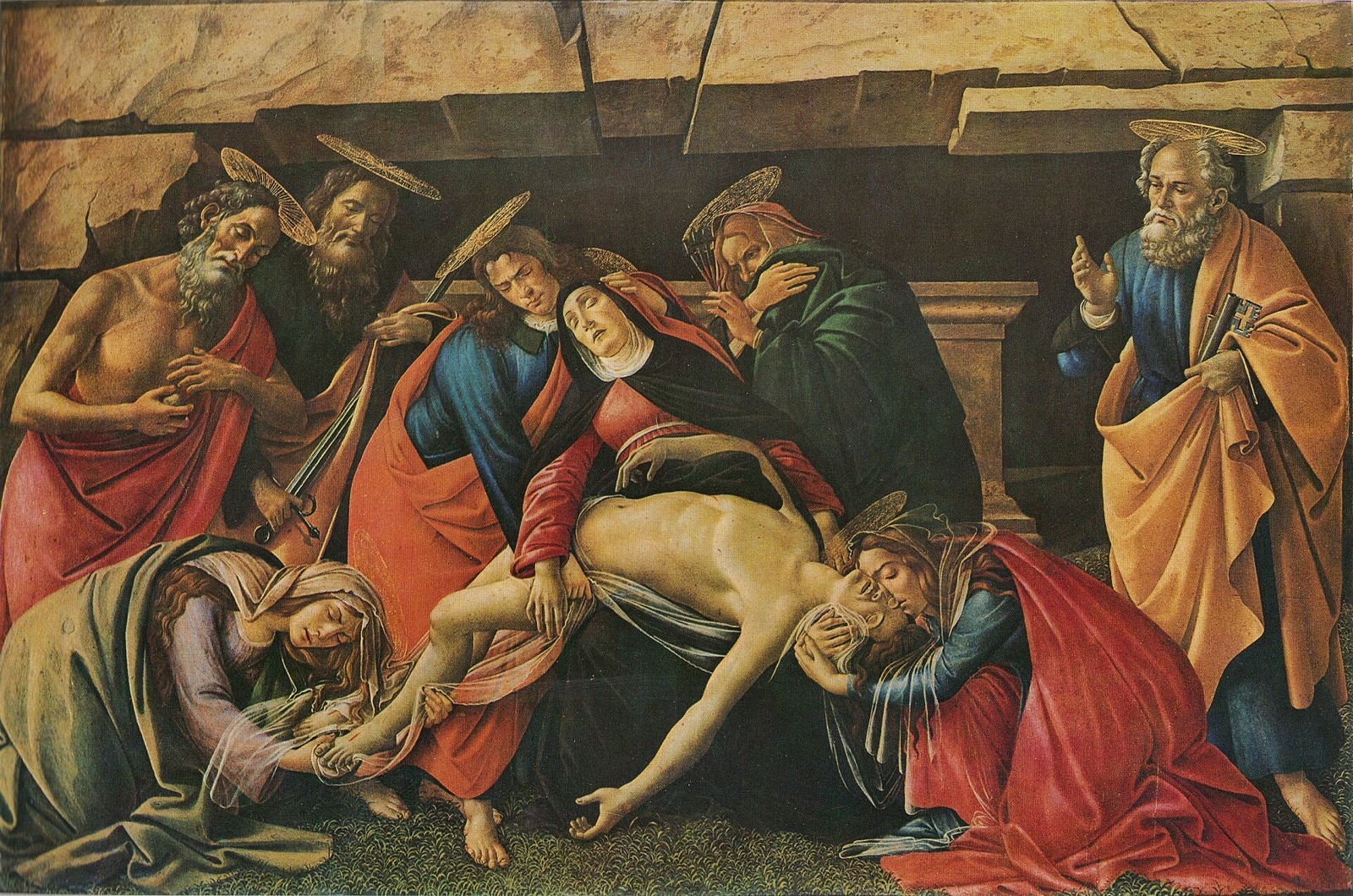
The Lamentation over the Dead Christ
about 1490 to 1495
The body of Christ across the Virgin's knees, with the mourners crowded round.
The life of Sandro Botticelli
Alessandro Filipepi, called Botticelli, was born in Florence around 1445 and spent almost all his life there, painting for the Medici and their circle. The Primavera and the Birth of Venus are in the Uffizi.
In 1481 Pope Sixtus IV summoned the best painters of Florence and Umbria to decorate his new chapel. Botticelli painted three of the scenes and several of the popes above them, and was home within a year.
What to know
- The Lamentation over the Dead Christ, about 1490 to 1495
- A late work
- In the Alte Pinakothek
- Born
- About 1445, Florence, Italy
- Died
- 17 May 1510, Florence, Italy
Sandro Botticelli: common questions
- Where can you see Sandro Botticelli in Munich?
- At the Alte Pinakothek: The Lamentation over the Dead Christ. Museums move and lend their works, so check before a special journey.
- What is Sandro Botticelli's most famous work in Munich?
- The Lamentation over the Dead Christ, of about 1490 to 1495, at the Alte Pinakothek. The body of Christ across the Virgin's knees, with the mourners crowded round.
- When and where was Sandro Botticelli born?
- About 1445, at Florence, Italy. Sandro Botticelli died on 17 May 1510, at Florence, Italy, aged about 65.
- What is Sandro Botticelli known for?
- The Lamentation over the Dead Christ, about 1490 to 1495. A late work. In the Alte Pinakothek. Sandro Botticelli was an Italian painter, of the Early Renaissance.
Tickets and tours: Sandro Botticelli in Munich
Things to do near the Alte Pinakothek
The nearest of this site's best things to do in the city. Distances are in a straight line.
- 11See modern art and design at the Pinakothek der Moderne200 m awayMuseum, 1.5 to 3 hours, ticket
- 17Learn how Nazism began at the NS-Documentation Centre350 m awayMuseum, 1.5 to 2.5 hours, free; a guided walk
- 12See Ludwig I's Greek and Roman sculpture at the Glyptothek400 m awayMuseum, 1 to 2 hours, ticket
- 3See the Blue Rider at the Lenbachhaus500 m awayMuseum, 1.5 to 2.5 hours, ticket, or a guided tour
Where to eat near the Alte Pinakothek
The nearest of the famous tables this site lists in Munich. Distances are in a straight line.
- Café Luitpold3.8Café, Brienner Strasse700 m away
- Löwenbräukeller4.4Beer hall, Stiglmaierplatz850 m away
- Conditorei Kreutzkamm3.6Pastry shop, Maffeistrasse1.1 km away
- Augustiner Stammhaus4.2Beer hall, Neuhauser Strasse1.1 km away
Hotels near the Alte Pinakothek
The five-star hotels closest to it, of those this site lists in Munich. Distances are in a straight line.
- The Charles Hotel4.7Five-star hotel, Old Botanical Garden850 m away
- Rosewood Munich4.4Five-star hotel, Kardinal-Faulhaber-Strasse850 m away
- Hotel Bayerischer Hof4.4Five-star hotel, Promenadeplatz950 m away
- Hotel Koenigshof4.4Five-star hotel, Karlsplatz1.0 km away
Other artists
Picture: Yelkrokoyade, CC BY-SA 4.0
Painter, 1399 to 1464
Rogier van der Weyden
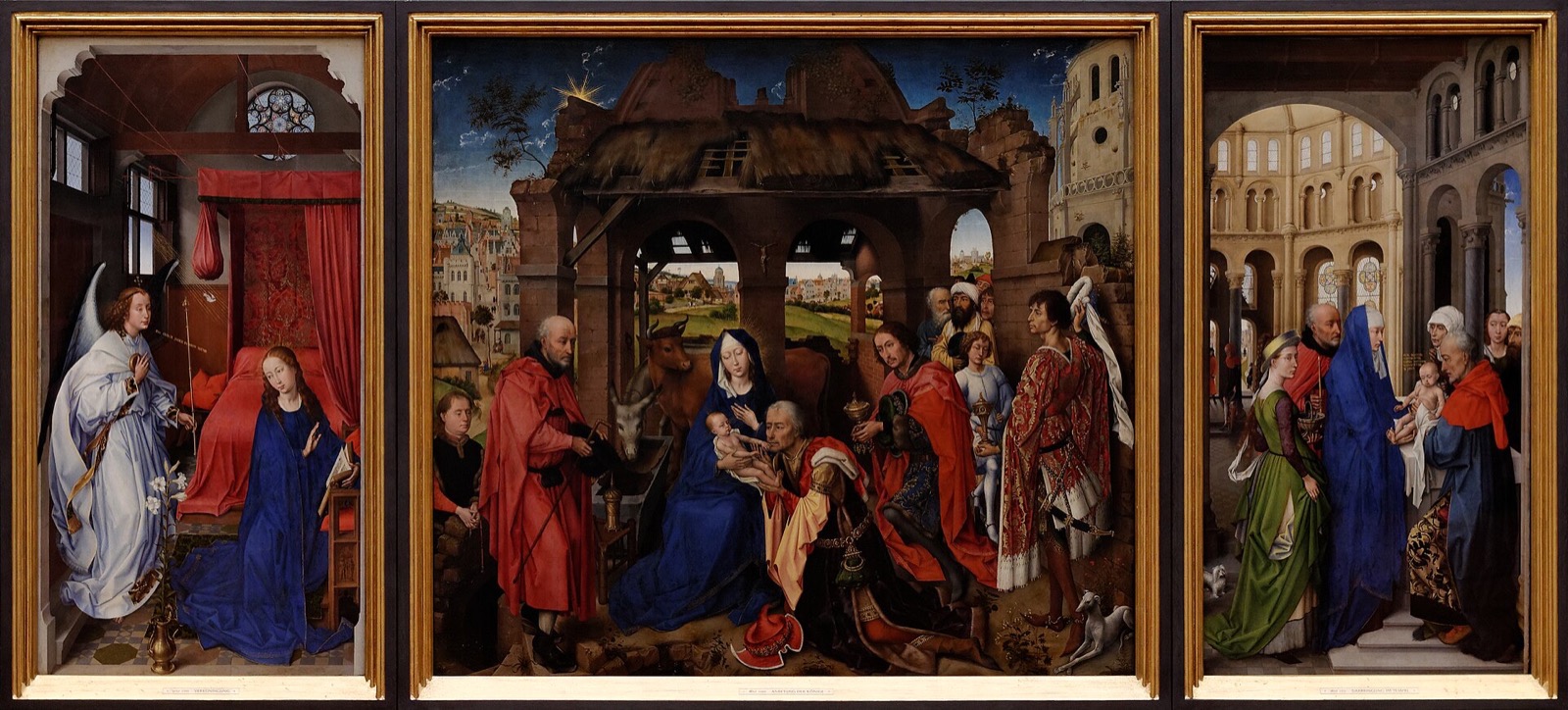
The Alte Pinakothek has Rogier van der Weyden's St Columba Altarpiece, a triptych of the Adoration of the Magi.
Early Netherlandish. 1 work in 1 museum
See the artist
Painter, 1452 to 1519
Leonardo da Vinci
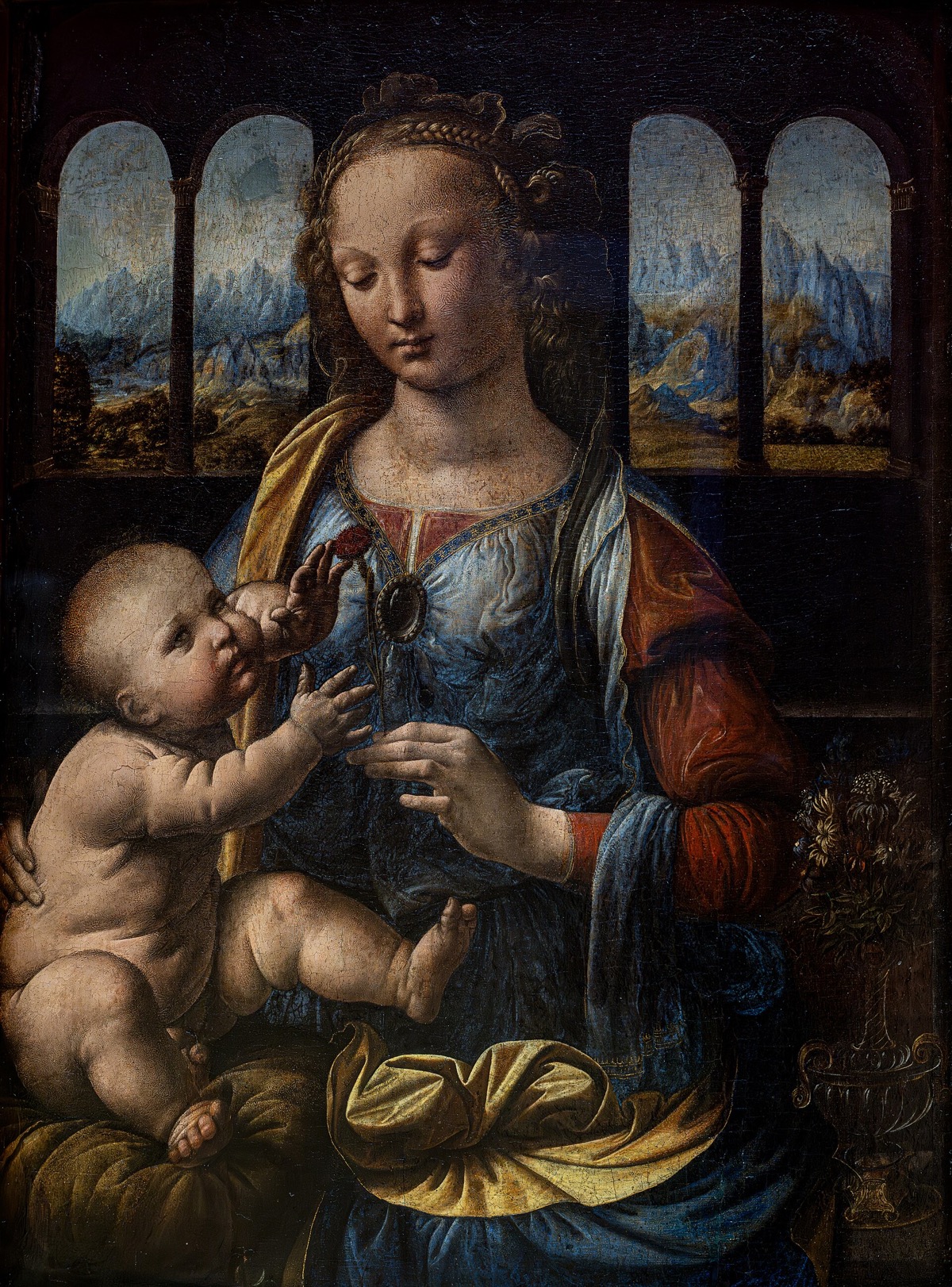
The Alte Pinakothek has Leonardo's Madonna of the Carnation, one of his earliest paintings, made in Florence about 1478 to 1480.
High Renaissance. 1 work in 1 museum
See the artist
Painter, 1471 to 1528
Albrecht Dürer
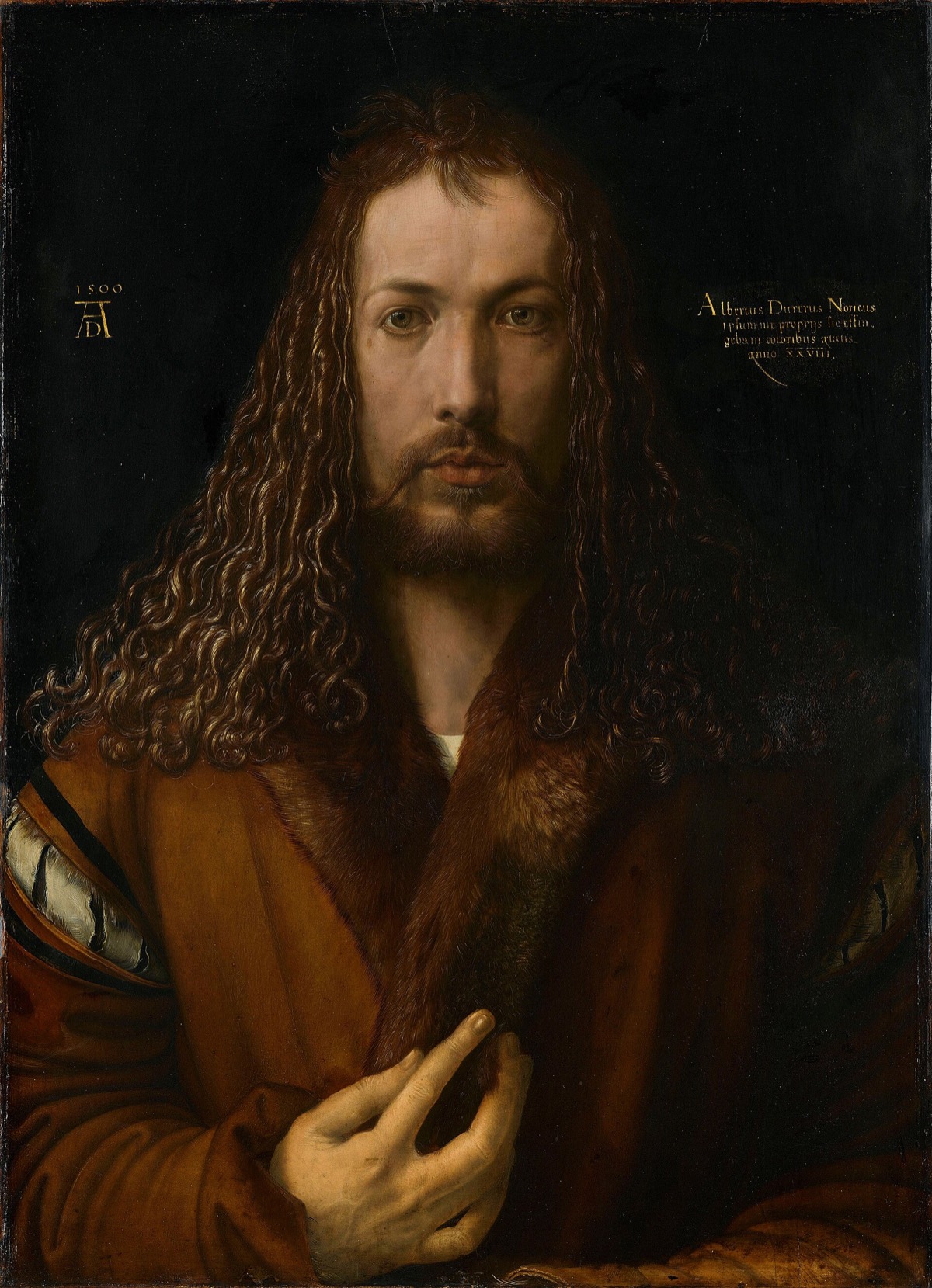
The Alte Pinakothek has Dürer's self-portrait of 1500, the most famous of his face, and the Four Apostles he gave to Nuremberg.
Northern Renaissance. 2 works in 1 museum
See the artist