Painter, 1617 to 1682
Bartolomé Esteban Murillo
Besides his altarpieces, Murillo painted the poor children of Seville: boys in rags eating, playing and counting coins. The Grape and Melon Eaters, of about 1645, is one of the best known, and the Alte Pinakothek has others.
- Born
- 1617, Seville, Spain
- Died
- 1682, Seville
- Movement
- Baroque
- In Munich
- 1 work in 1 museum
Where to see Bartolomé Esteban Murillo in Munich
Each work with the museum it hangs in. Museums move and lend their works, so check before a special journey.
Alte Pinakothek1 work
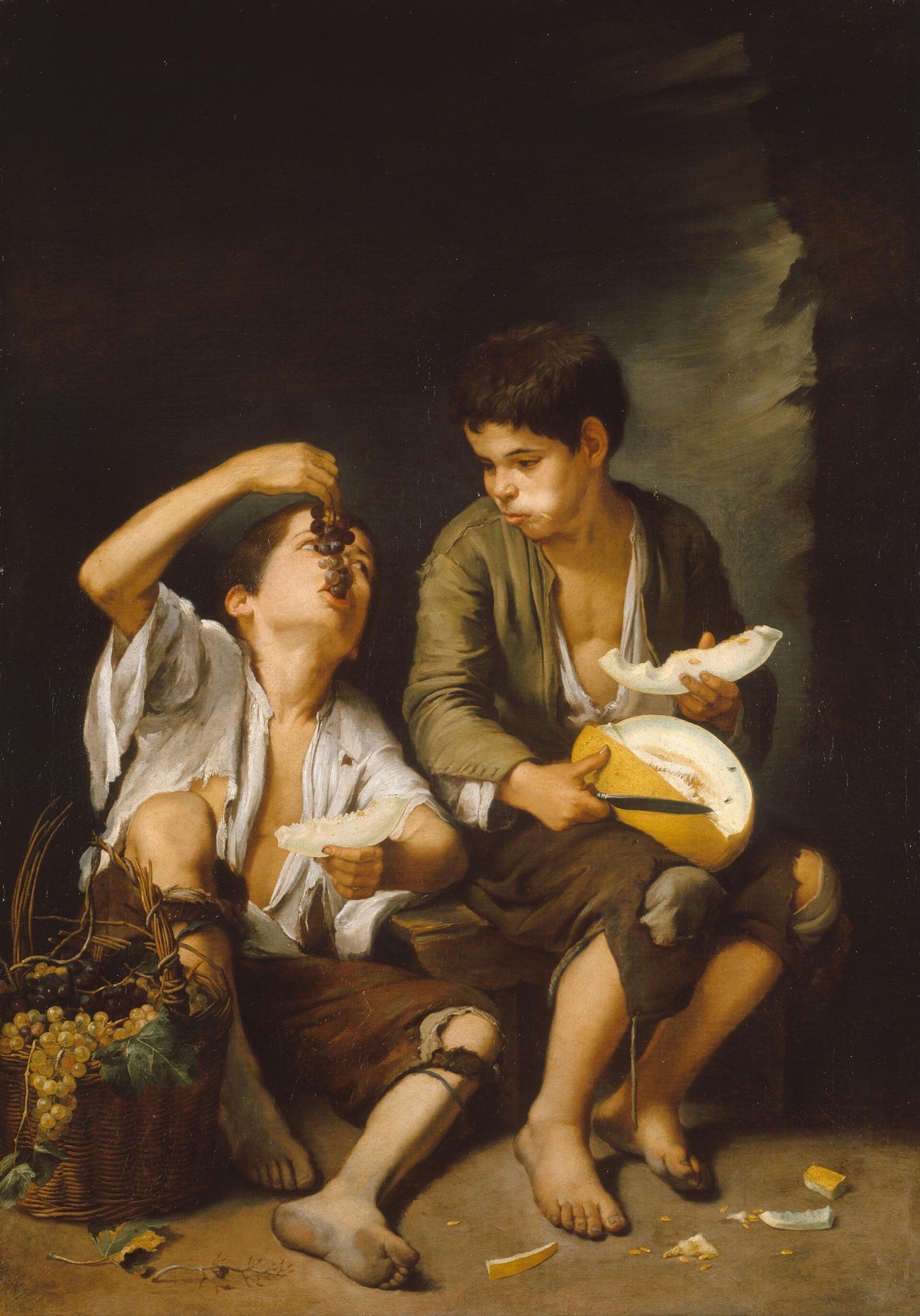
Grape and Melon Eaters
about 1645
Two ragged boys sit in the street, one stuffing grapes into his mouth, the other eating melon.
The life of Bartolomé Esteban Murillo
Bartolomé Esteban Murillo was born in Seville at the end of 1617 and spent nearly all his life there, painting for its churches, convents and charities. He took his surname from his mother's family.
His soft colour and tenderness made him famous, and his pictures of beggar children and flower girls were bought all over Europe. He died in Seville in 1682, after a fall from scaffolding, it was said.
What to know
- Grape and Melon Eaters, about 1645
- The street children of Seville
- In the Alte Pinakothek
- Born
- Late December 1617, Seville, Spain
- Died
- 3 April 1682, Seville
Bartolomé Esteban Murillo: common questions
- Where can you see Bartolomé Esteban Murillo in Munich?
- At the Alte Pinakothek: Grape and Melon Eaters. Museums move and lend their works, so check before a special journey.
- What is Bartolomé Esteban Murillo's most famous work in Munich?
- Grape and Melon Eaters, of about 1645, at the Alte Pinakothek. Two ragged boys sit in the street, one stuffing grapes into his mouth, the other eating melon.
- When and where was Bartolomé Esteban Murillo born?
- Late December 1617, at Seville, Spain. Bartolomé Esteban Murillo died on 3 April 1682, at Seville, aged about 65.
- What is Bartolomé Esteban Murillo known for?
- Grape and Melon Eaters, about 1645. The street children of Seville. In the Alte Pinakothek. Bartolomé Esteban Murillo was a Spanish painter, of the Baroque.
Tickets and tours: Bartolomé Esteban Murillo in Munich
Things to do near the Alte Pinakothek
The nearest of this site's best things to do in the city. Distances are in a straight line.
- 11See modern art and design at the Pinakothek der Moderne200 m awayMuseum, 1.5 to 3 hours, ticket
- 17Learn how Nazism began at the NS-Documentation Centre350 m awayMuseum, 1.5 to 2.5 hours, free; a guided walk
- 12See Ludwig I's Greek and Roman sculpture at the Glyptothek400 m awayMuseum, 1 to 2 hours, ticket
- 3See the Blue Rider at the Lenbachhaus500 m awayMuseum, 1.5 to 2.5 hours, ticket, or a guided tour
Where to eat near the Alte Pinakothek
The nearest of the famous tables this site lists in Munich. Distances are in a straight line.
- Café Luitpold3.8Café, Brienner Strasse700 m away
- Löwenbräukeller4.4Beer hall, Stiglmaierplatz850 m away
- Conditorei Kreutzkamm3.6Pastry shop, Maffeistrasse1.1 km away
- Augustiner Stammhaus4.2Beer hall, Neuhauser Strasse1.1 km away
Hotels near the Alte Pinakothek
The five-star hotels closest to it, of those this site lists in Munich. Distances are in a straight line.
- The Charles Hotel4.7Five-star hotel, Old Botanical Garden850 m away
- Rosewood Munich4.4Five-star hotel, Kardinal-Faulhaber-Strasse850 m away
- Hotel Bayerischer Hof4.4Five-star hotel, Promenadeplatz950 m away
- Hotel Koenigshof4.4Five-star hotel, Karlsplatz1.0 km away
Other artists
Painter, 1606 to 1669
Rembrandt
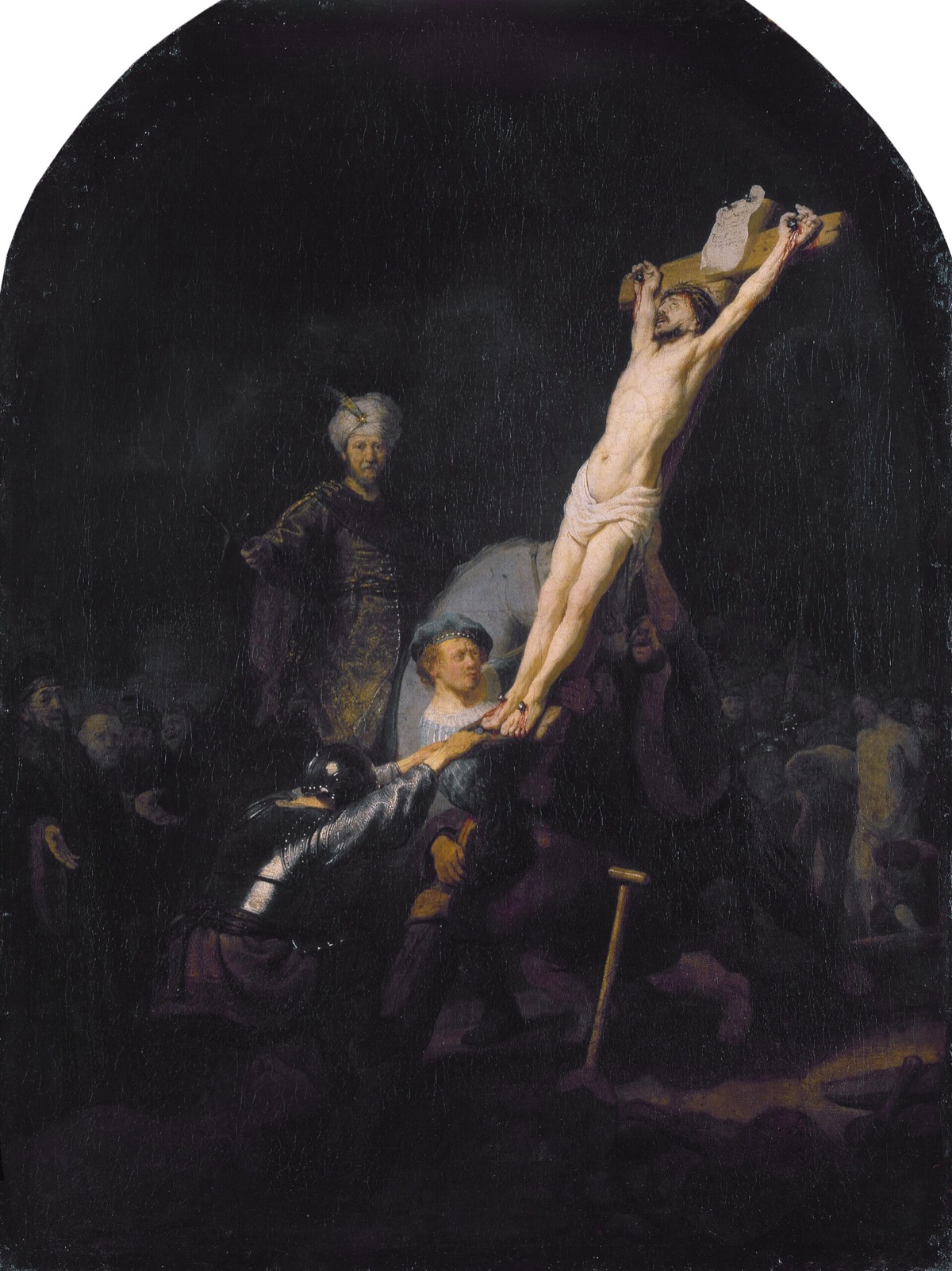
The Alte Pinakothek has Rembrandt's Raising of the Cross, painted in 1633 for the Prince of Orange, with the painter himself among the men at the cross.
Dutch Golden Age. 1 work in 1 museum
See the artist
Painter, 1866 to 1944
Wassily Kandinsky
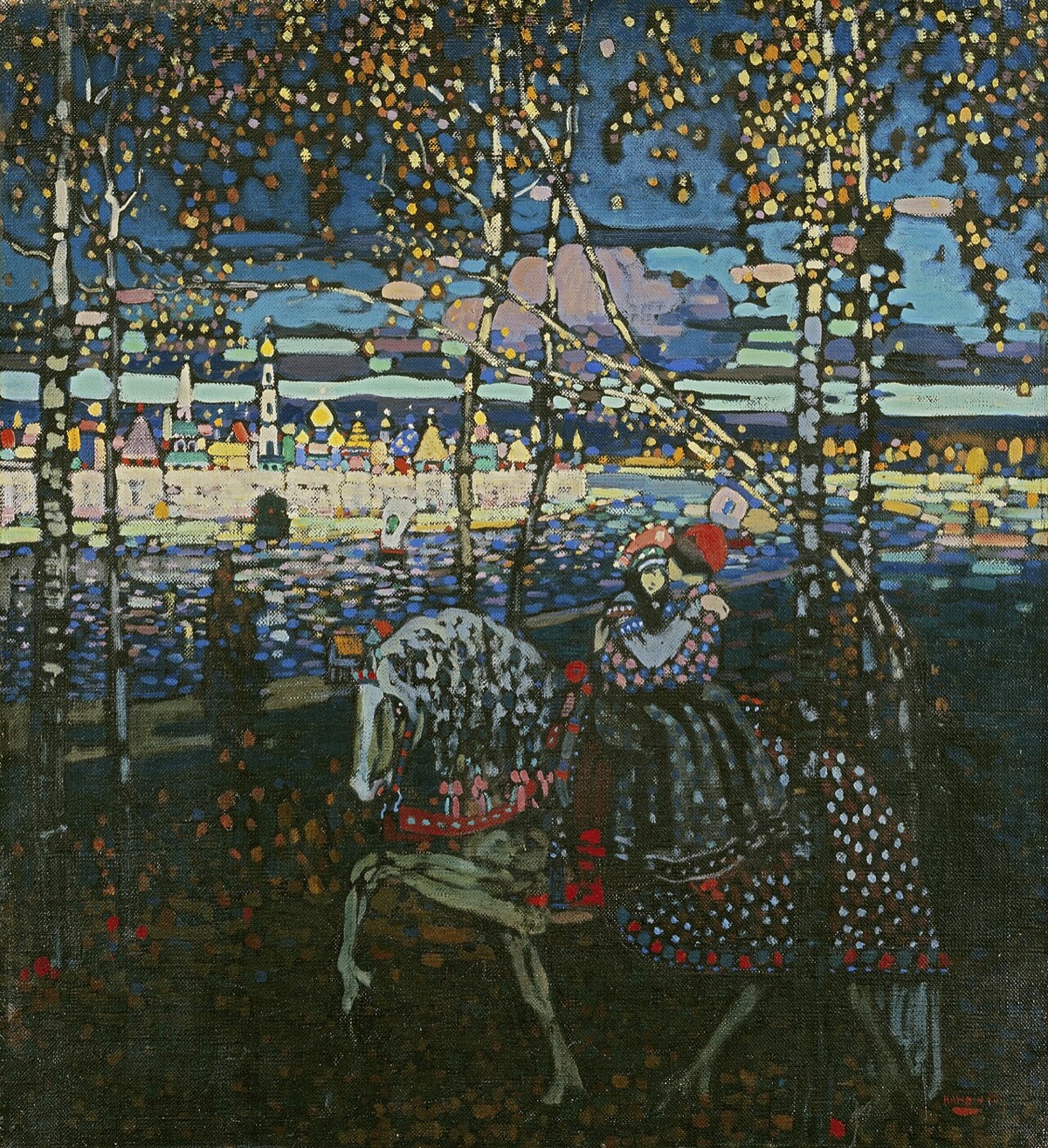
The Lenbachhaus has the largest collection of Kandinsky's Munich years, from the bright early pictures to the first abstractions, given by Gabriele Münter.
Abstract art. 2 works in 1 museum
See the artist
Painter, 1879 to 1940
Paul Klee
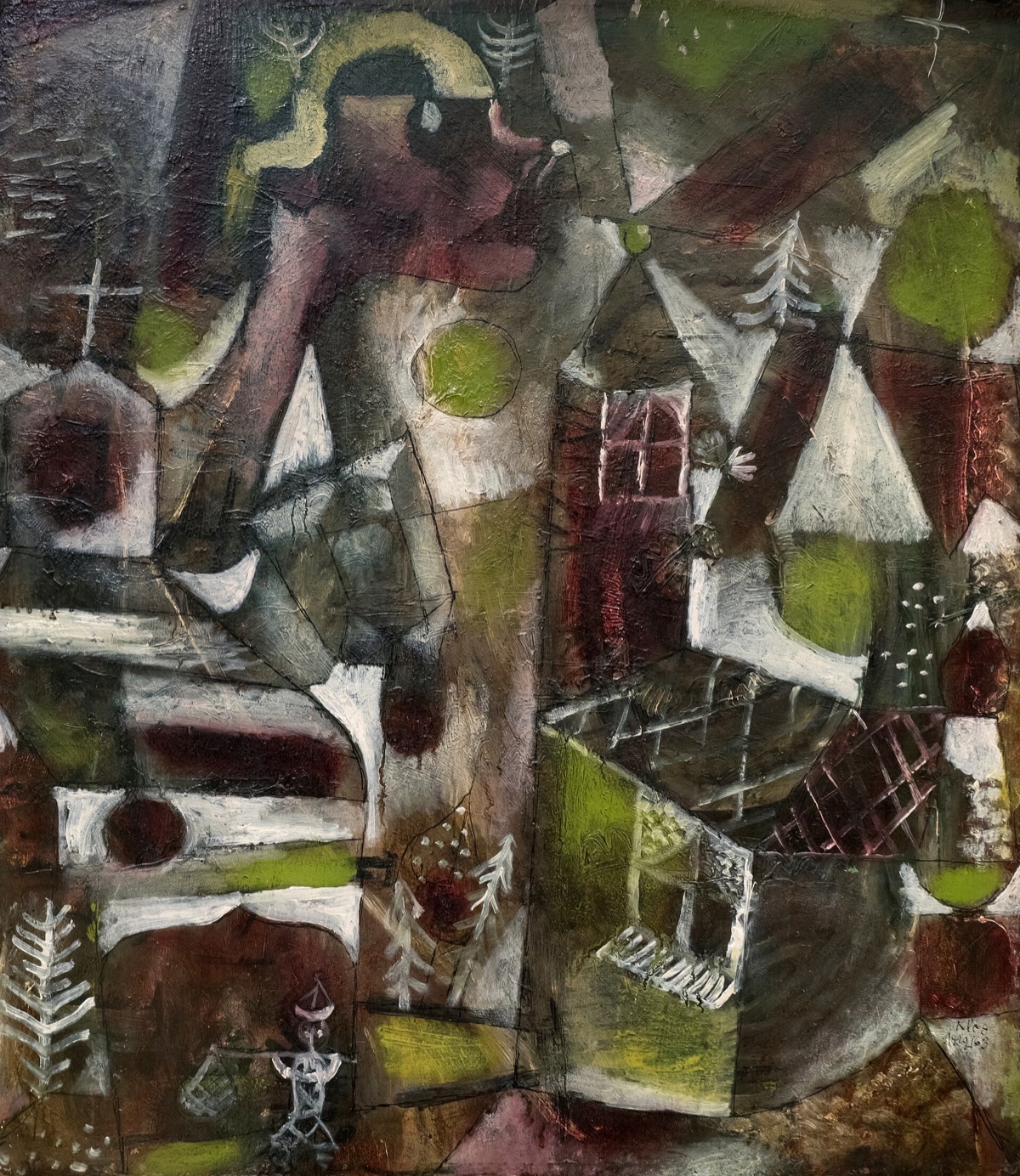
The Swiss-born painter who learned his art in Munich and showed with the Blue Rider, whose Swamp Legend is in the Lenbachhaus.
Modernism, the Blue Rider. 1 work in 1 museum
See the artist