Painter, 1840 to 1926
Claude Monet
Monet came to London in the autumn of 1870 to escape the war with Prussia. He was thirty, had no money, and found a subject he came back to for thirty years: the river in fog.
- Born
- 1840, Paris, France
- Died
- 1926, Giverny, France
- Movement
- Impressionism
- In London
- 2 works in 1 museum
Where to see Claude Monet in London
Each work with the museum it hangs in. Museums move and lend their works, so check before a special journey.
The National Gallery2 works
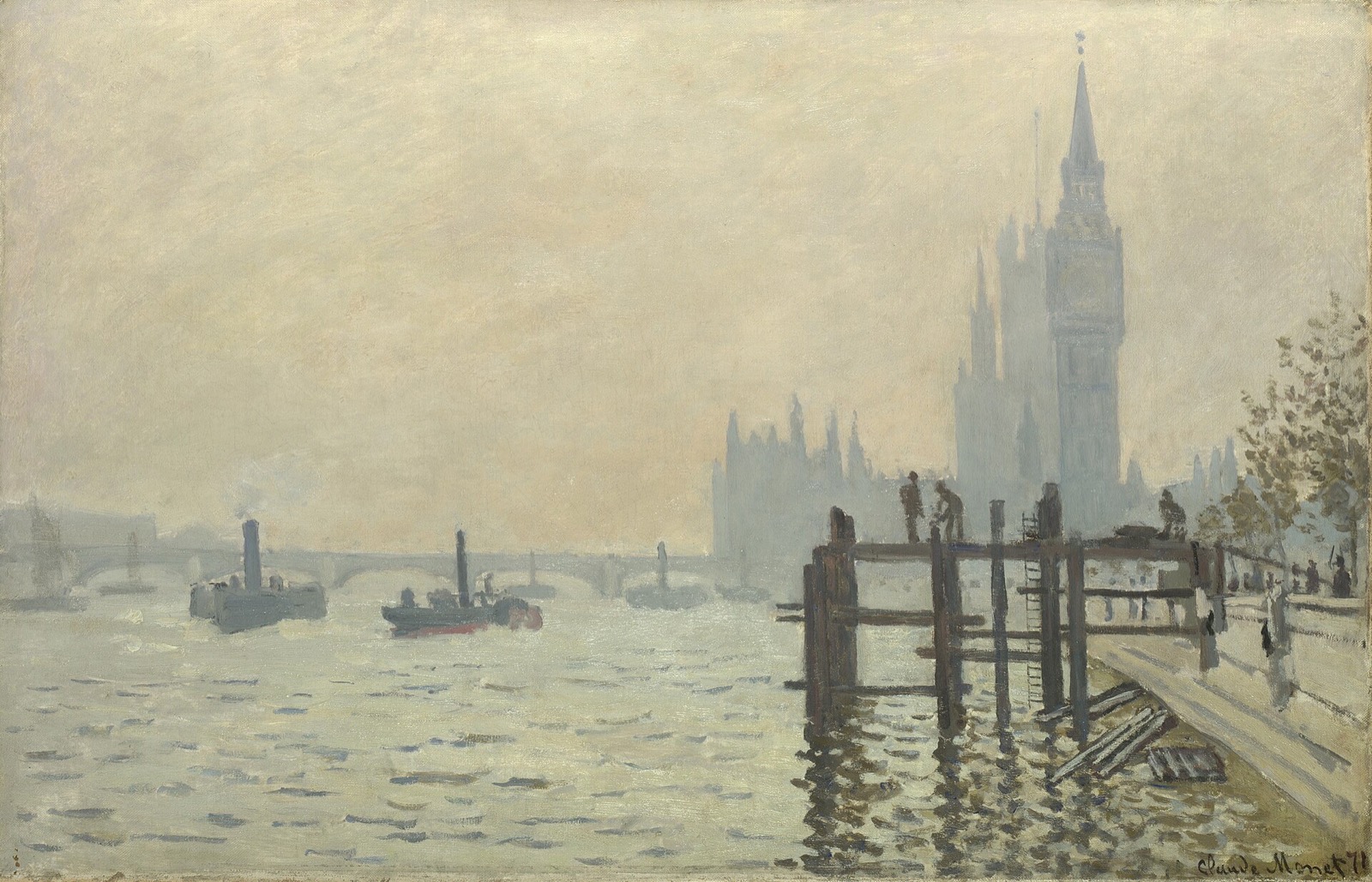
The Thames below Westminster
about 1871
The new Houses of Parliament and Westminster Bridge are grey shapes in the mist, and a wooden jetty stands dark in front of them. The embankment he painted from had been open a year.
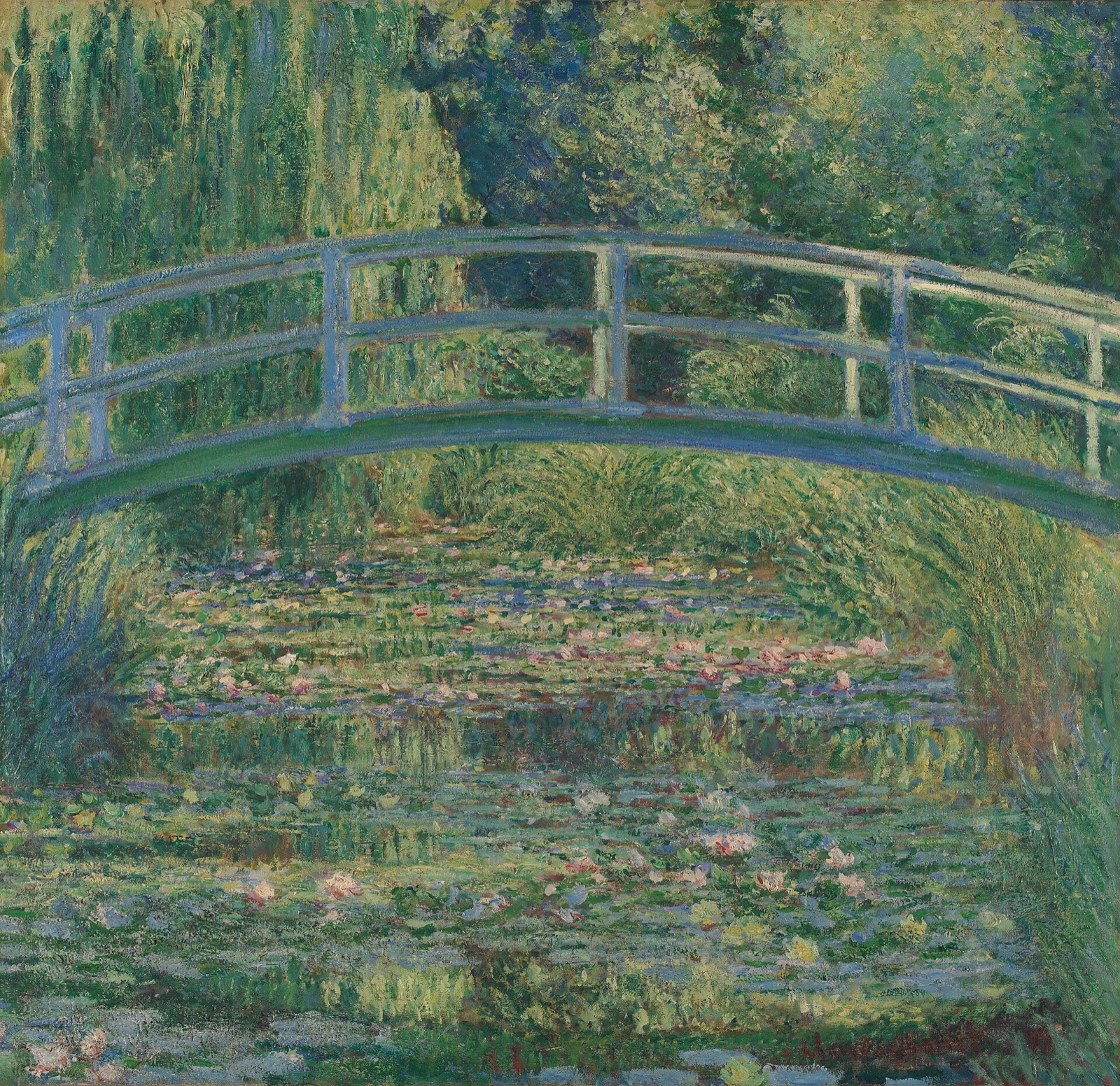
The Water-Lily Pond
1899
The Japanese footbridge in his garden at Giverny, arching over water so full of lilies and reflections that there is no sky in the picture at all.
The life of Claude Monet
Monet was born in Paris in 1840 and grew up in Le Havre, on the Channel coast. In 1874 he and his friends held their own exhibition, and a critic mocking his Impression, Sunrise called them all Impressionists. Monet spent his life chasing what light does to a thing from one hour to the next, and painted the same subject over and over to catch it: haystacks, poplars, the front of Rouen Cathedral.
In 1883 he settled at Giverny, in Normandy, and made the garden and the lily pond that he painted for the last thirty years of his life. The day after the armistice of 1918 he offered the nation a set of vast Water Lilies. He died at Giverny in 1926, and the Orangerie opened with them the next year.
What to know
- Painted The Thames below Westminster during his first stay in London
- Returned from 1899 to paint the river from a room at the Savoy
- The Courtauld Gallery has more of his work a mile away
- Born
- 14 November 1840, Paris, France
- Died
- 5 December 1926, Giverny, France
Claude Monet: common questions
- Where can you see Claude Monet in London?
- At the National Gallery: The Thames below Westminster and The Water-Lily Pond. Museums move and lend their works, so check before a special journey.
- What is Claude Monet's most famous work in London?
- The Thames below Westminster, of about 1871, at the National Gallery. The new Houses of Parliament and Westminster Bridge are grey shapes in the mist, and a wooden jetty stands dark in front of them. The embankment he painted from had been open a year.
- When and where was Claude Monet born?
- On 14 November 1840, at Paris, France. Claude Monet died on 5 December 1926, at Giverny, France, aged about 86.
- What is Claude Monet known for?
- Painted The Thames below Westminster during his first stay in London. Returned from 1899 to paint the river from a room at the Savoy. The Courtauld Gallery has more of his work a mile away. Claude Monet was a French painter, of Impressionism.
Tickets and tours: Claude Monet in London
Things to do near the National Gallery
The nearest of this site's best things to do in the city. Distances are in a straight line.
- 16Spend an evening in Covent Garden and the West End450 m awayShow, 2 to 5 hours, free to walk, theatre ticket
- 14Go underground at the Churchill War Rooms750 m awayUnderground, 1.5 to 2 hours, ticket
- 6Ride the London Eye900 m awayMonument, 1 to 1.5 hours, ticket
- 11Hear Big Ben strike at the Houses of Parliament950 m awayMonument, 45 to 150 minutes, free outside, ticket to go in
Where to eat near the National Gallery
The nearest of the famous tables this site lists in London. Distances are in a straight line.
- Ochre4.4Museum restaurant, Trafalgar Square50 m away
- J Sheekey4.5Fish restaurant, Covent Garden250 m away
- Gordon's Wine Bar4.6Wine bar, Embankment350 m away
- Rules4.6Grand restaurant, Covent Garden400 m away
Hotels near the National Gallery
The five-star hotels closest to it, of those this site lists in London. Distances are in a straight line.
- Corinthia London4.7Five-star hotel, Whitehall Place, by the Embankment400 m away
- Raffles London at The OWO4.7Five-star hotel, Whitehall, opposite Horse Guards450 m away
- The Savoy4.7Five-star hotel, The Strand, on the Thames550 m away
- The Ritz London4.6Five-star hotel, Piccadilly, beside Green Park950 m away
Other artists
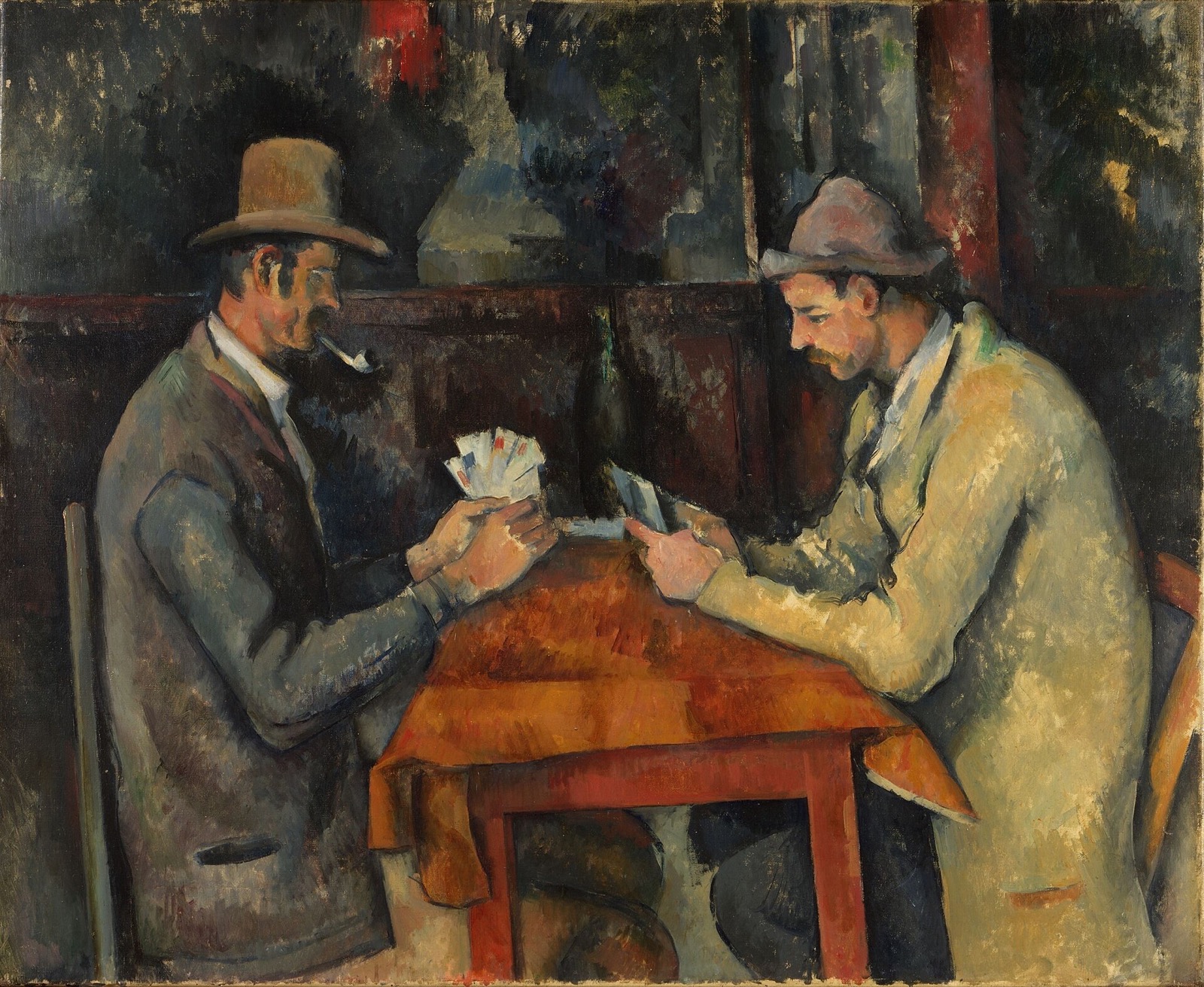
Painter, 1839 to 1906
Paul Cézanne
The Courtauld Gallery has the finest group of Cézannes in Britain, with one of his Card Players. The National Gallery has one of the three great Bathers he was painting when he died.
Post-Impressionism. 2 works in 2 museums
See the artist
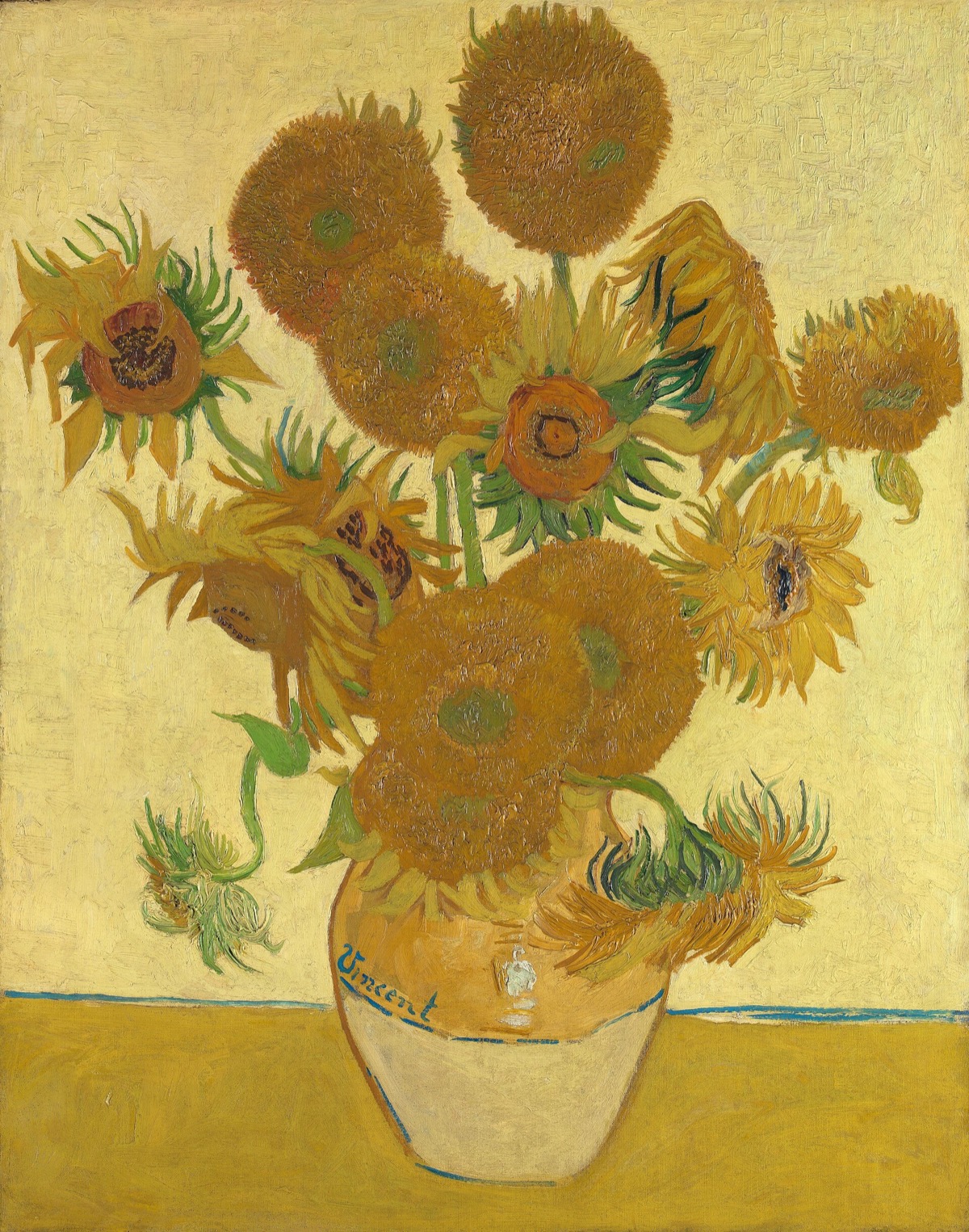
Painter, 1853 to 1890
Vincent van Gogh
The National Gallery has Van Gogh's Sunflowers and the yellow chair he painted for himself at Arles. The Courtauld Gallery has the self-portrait with a bandaged ear.
Post-Impressionism. 3 works in 2 museums
See the artist
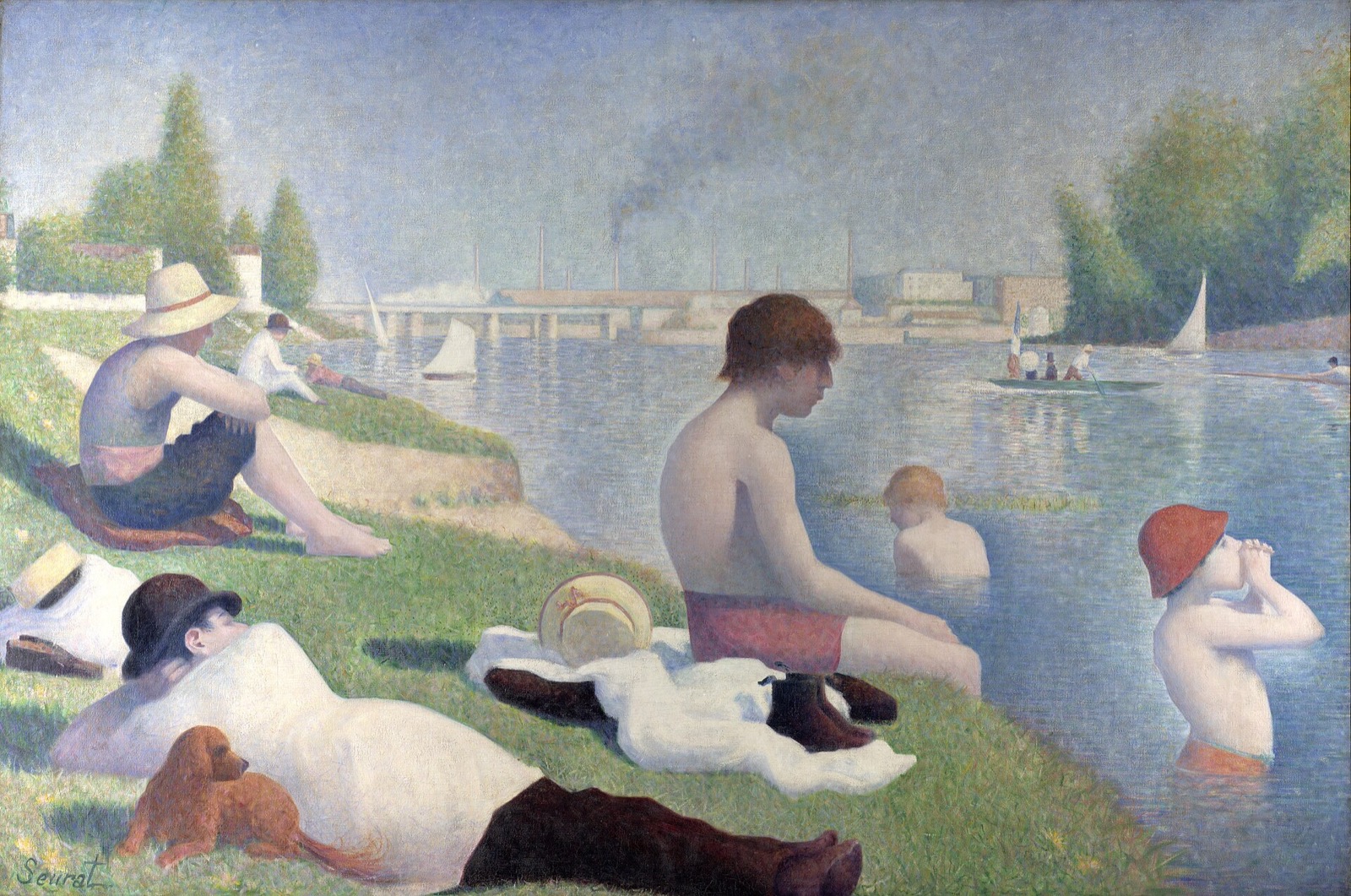
Painter, 1859 to 1891
Georges Seurat
The National Gallery has Bathers at Asnières, the first of Seurat's great canvases, painted at twenty-four. The Courtauld Gallery has Young Woman Powdering Herself.
Neo-Impressionism. 2 works in 2 museums
See the artist