Painter, 1746 to 1828
Francisco Goya
Goya came to Madrid at twenty-seven to paint designs for tapestries and stayed fifty years. The city keeps his whole life, from the court portraits to the nightmares he painted on the walls of his house.
- Born
- 1746, Fuendetodos, Spain
- Died
- 1828, Bordeaux, France
- Movement
- Romanticism
- In Madrid
- 6 works in 4 museums
Where to see Francisco Goya in Madrid
Each work with the museum it hangs in. Museums move and lend their works, so check before a special journey.
Museo del Prado3 works
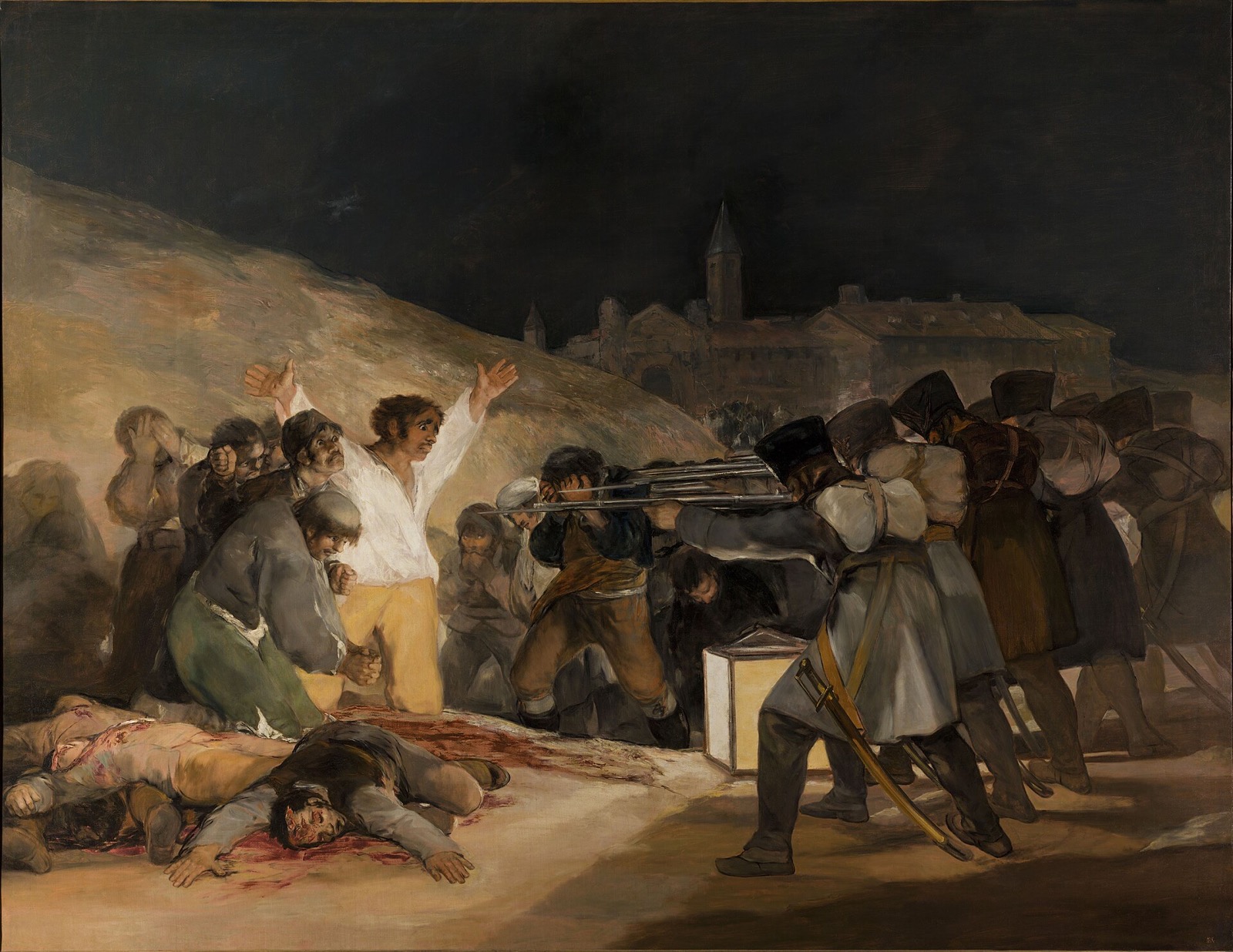
The Third of May 1808
1814
French soldiers shooting the men of Madrid by lantern light on the night after the rising. The man in the white shirt throws out his arms as if on a cross.
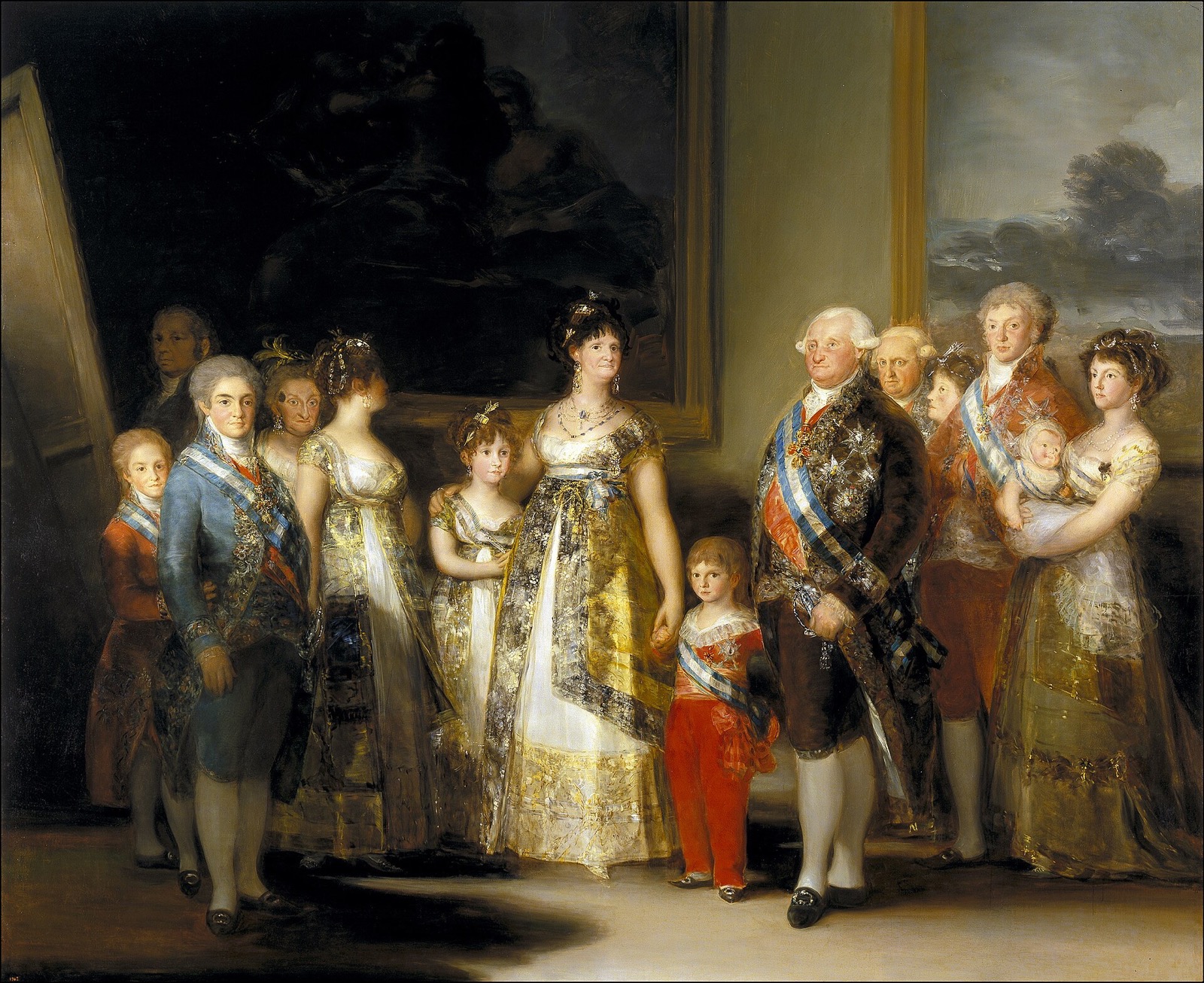
The Family of Charles IV
1800 to 1801
The king, the queen and their family in their finery, painted with a frankness that has made people wonder ever since whether Goya was mocking them. He painted himself at his easel in the shadows at the left.
Saturn Devouring His Son
1820 to 1823
One of the Black Paintings from the walls of his house: the god, wild-eyed, tearing at the body of one of his children.
Real Academia de Bellas Artes de San Fernando1 work
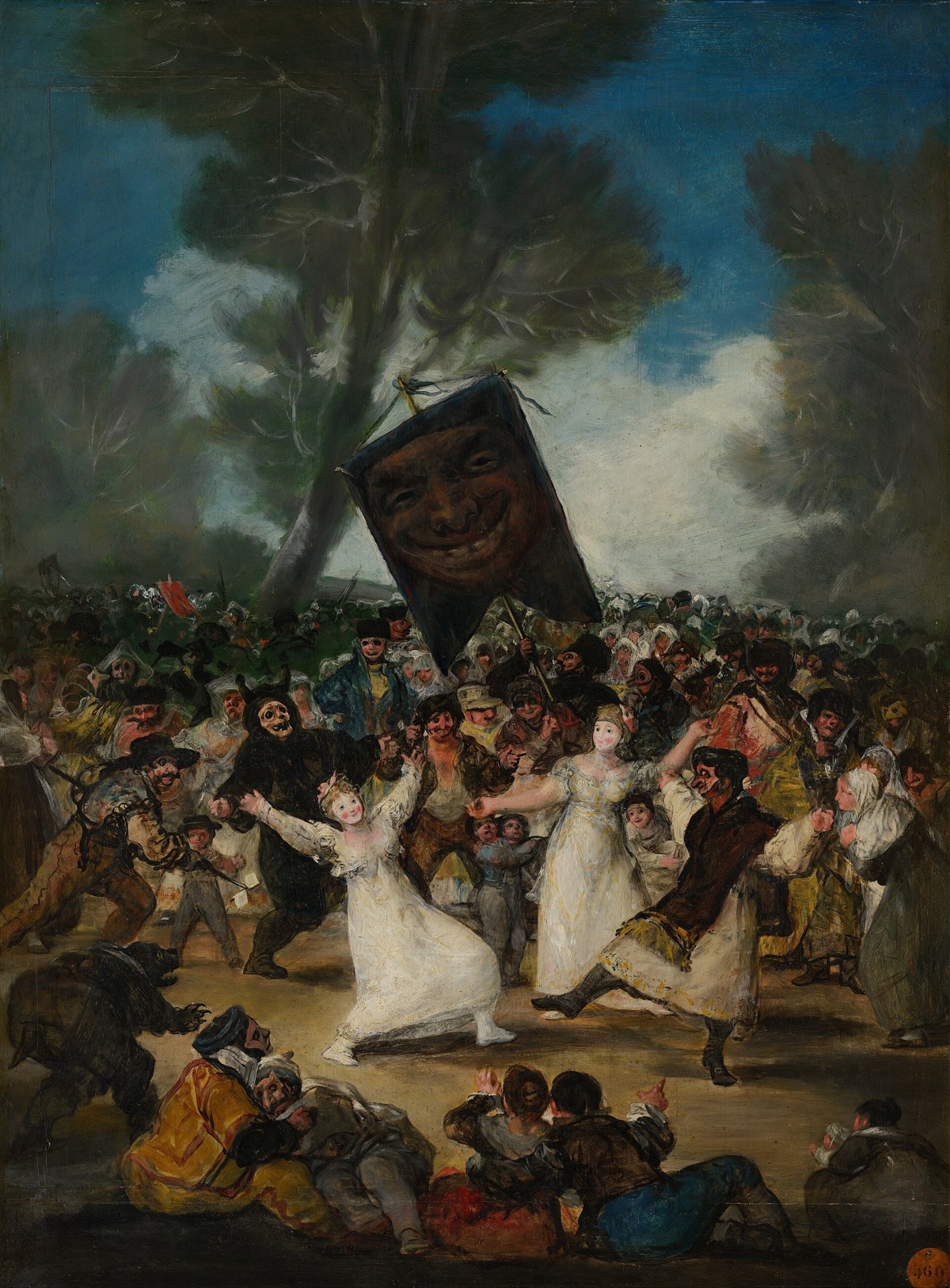
The Burial of the Sardine
about 1812 to 1819
A carnival crowd in masks dancing in the open air under a banner with a grinning face, the feast that ends Carnival on Ash Wednesday.
Lázaro Galdiano Museum1 work
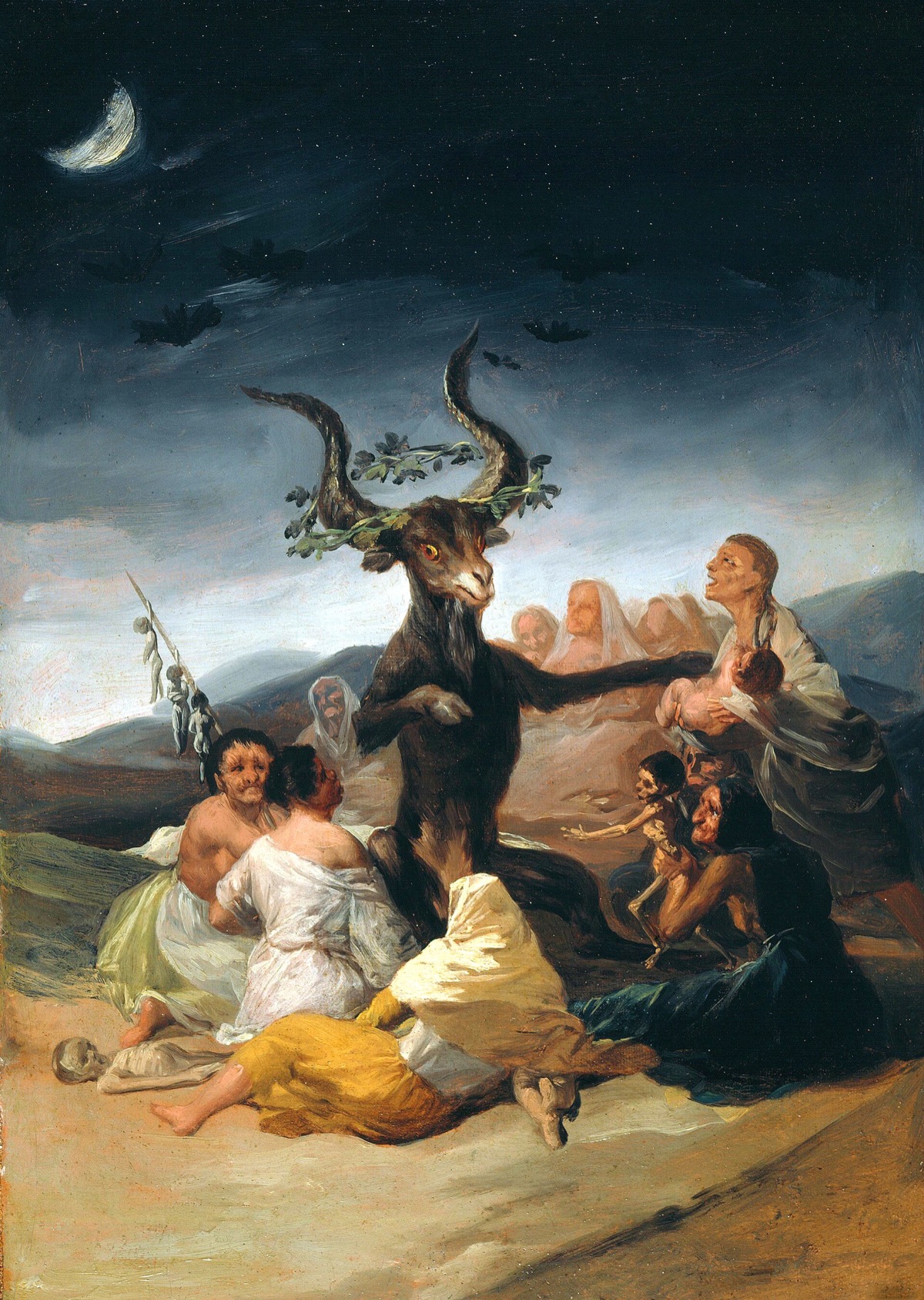
The Witches' Sabbath
1797 to 1798
A great he-goat crowned with leaves sits among witches who offer it children, under a pale moon. One of six small scenes of witchcraft painted for the Duke and Duchess of Osuna.
San Antonio de la Florida1 work
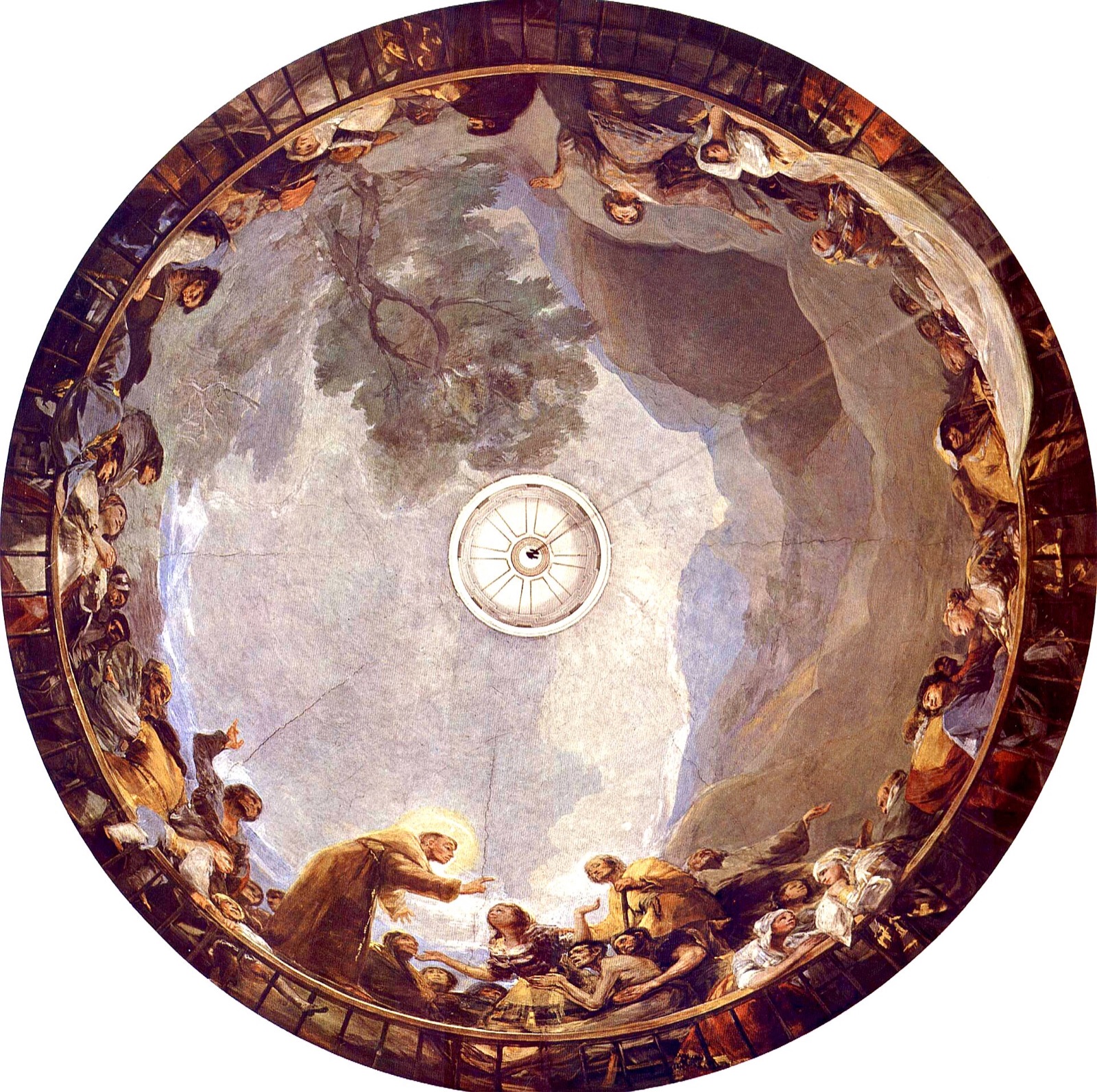
The frescoes of the dome
1798
Saint Anthony of Padua raising a dead man, watched by a crowd of Madrileños leaning over a painted railing. Goya is buried beneath it.
The life of Francisco Goya
Goya came to Madrid in 1774 to paint cartoons for the Royal Tapestry Factory, and rose to be first painter to the court of Charles IV. He painted the royal family without flattery, and the city's people in its streets and fiestas.
When Napoleon's army occupied Madrid in 1808 he saw the rising and its repression, and painted them in 1814. Deaf, in his house across the Manzanares, he covered its walls with the Black Paintings, before leaving for France, where he died.
What to know
- The Prado has the largest collection of his paintings anywhere
- His Black Paintings were taken off the walls of his house after his death
- He is buried under the dome he painted in San Antonio de la Florida
- Born
- 30 March 1746, Fuendetodos, Spain
- Died
- 16 April 1828, Bordeaux, France
Francisco Goya: common questions
- Where can you see Francisco Goya in Madrid?
- At the Museo del Prado: The Third of May 1808, The Family of Charles IV and Saturn Devouring His Son. At the Real Academia de Bellas Artes de San Fernando: The Burial of the Sardine. At the Lázaro Galdiano Museum: The Witches' Sabbath. At San Antonio de la Florida: The frescoes of the dome. Museums move and lend their works, so check before a special journey.
- What is Francisco Goya's most famous work in Madrid?
- The Third of May 1808, of 1814, at the Museo del Prado. French soldiers shooting the men of Madrid by lantern light on the night after the rising. The man in the white shirt throws out his arms as if on a cross.
- When and where was Francisco Goya born?
- On 30 March 1746, at Fuendetodos, Spain. Francisco Goya died on 16 April 1828, at Bordeaux, France, aged about 82.
- What is Francisco Goya known for?
- The Prado has the largest collection of his paintings anywhere. His Black Paintings were taken off the walls of his house after his death. He is buried under the dome he painted in San Antonio de la Florida. Francisco Goya was a Spanish painter, of Romanticism.
Tickets and tours: Francisco Goya in Madrid
Things to do near the Prado
The nearest of this site's best things to do in the city. Distances are in a straight line.
- 4Walk seven centuries of painting at the Thyssen350 m awayMuseum, 2 to 3.5 hours, ticket, free on mondays
- 17Look over Madrid's rooftops from the Círculo de Bellas Artes600 m awayMonument, 45 to 90 minutes, ticket for the roof
- 3Stand in front of Guernica at the Reina Sofía700 m awayMuseum, 1.5 to 3 hours, ticket, free in the evenings
- 5Row a boat on the lake in the Retiro750 m awayGarden, 1 to 3 hours, free, boats extra
Where to eat near the Prado
The nearest of the famous tables this site lists in Madrid. Distances are in a straight line.
- Horcher4.6Restaurant, Retiro600 m away
- Viva Madrid4.5Tavern, Barrio de las Letras650 m away
- Casa Alberto4.4Tavern, Barrio de las Letras700 m away
- Antigua Pastelería del Pozo4.5Pastry shop, Puerta del Sol800 m away
Hotels near the Prado
The five-star hotels closest to it, of those this site lists in Madrid. Distances are in a straight line.
- Mandarin Oriental Ritz, Madrid4.7Five-star hotel, Plaza de la Lealtad200 m away
- The Palace, Madrid4.6Five-star hotel, Plaza de las Cortes300 m away
- Gran Hotel Inglés4.7Five-star hotel, Barrio de las Letras700 m away
- The Principal Madrid4.5Five-star hotel, Gran Vía750 m away
Other artists
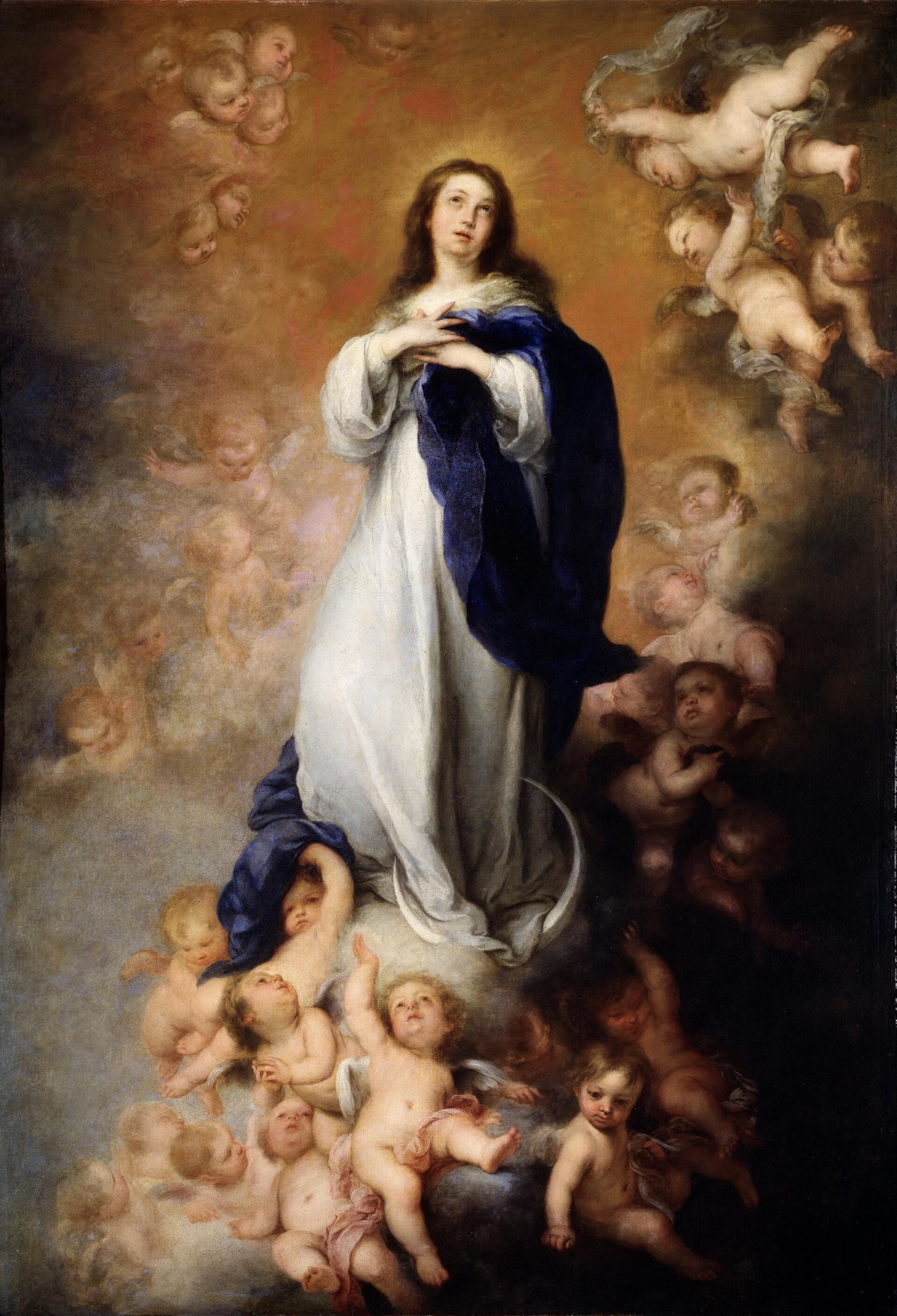
Painter, 1617 to 1682
Bartolomé Esteban Murillo
The painter of Seville's Immaculate Conceptions and its street children. The Prado has the Immaculate Conception of Los Venerables and the Holy Family with a Little Bird.
Baroque. 2 works in 1 museum
See the artist
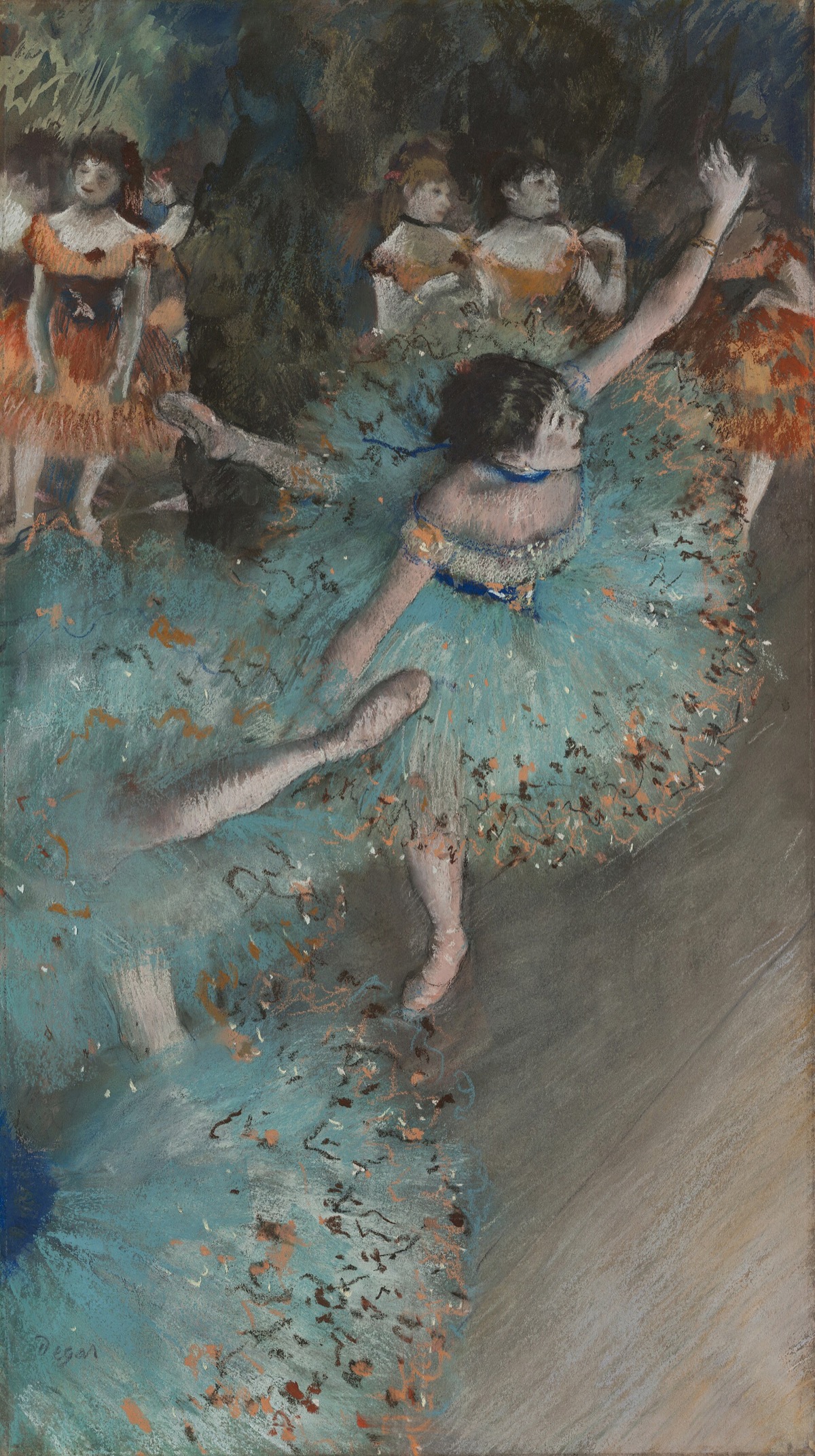
Painter and sculptor, 1834 to 1917
Edgar Degas
The Thyssen has Degas's Swaying Dancer, a pastel of a ballerina in green seen from above.
Impressionism. 1 work in 1 museum
See the artist
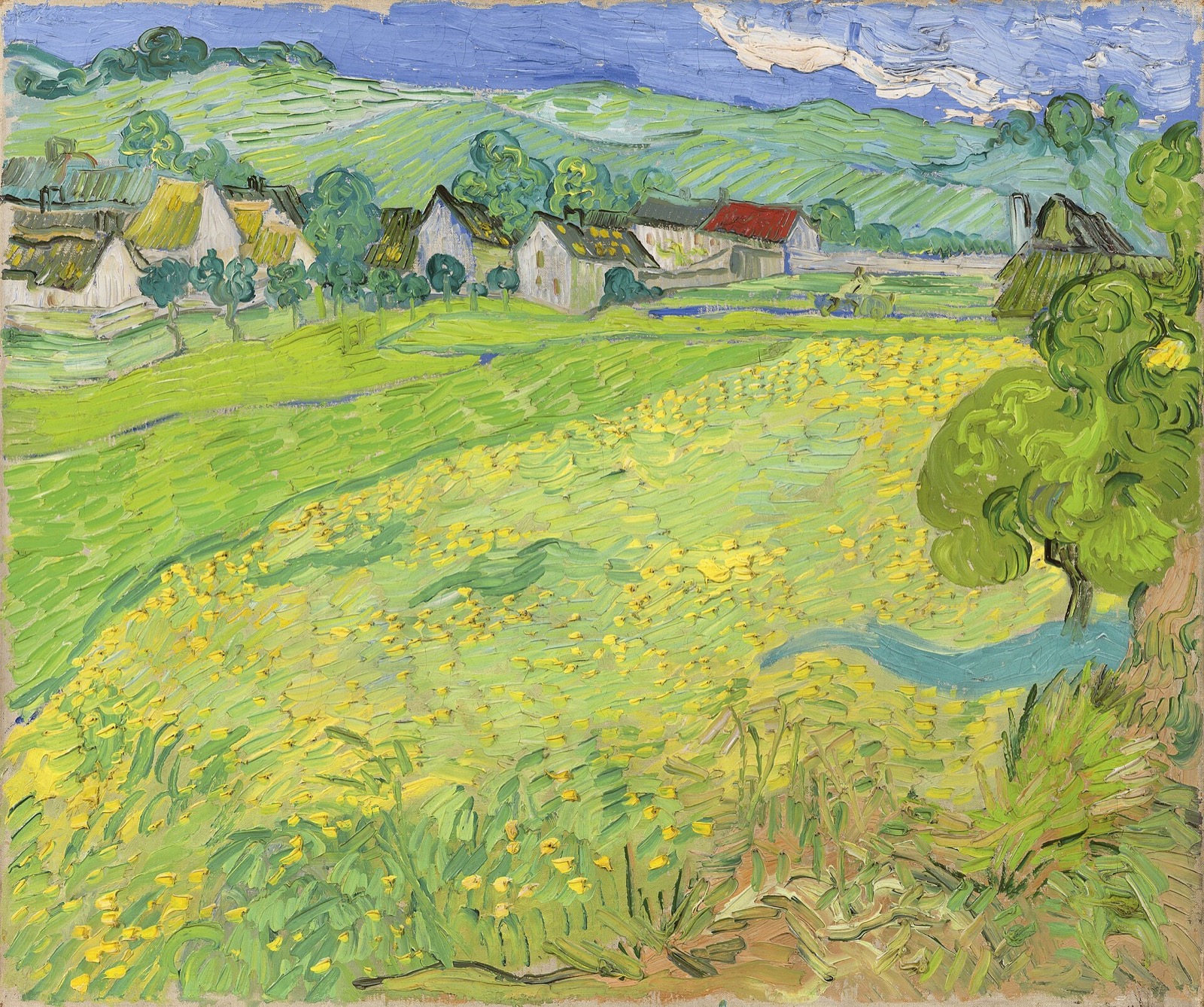
Painter, 1853 to 1890
Vincent van Gogh
The Thyssen has Les Vessenots in Auvers, painted in the last weeks of Van Gogh's life.
Post-Impressionism. 1 work in 1 museum
See the artist