Painter, 1591 to 1652
Jusepe de Ribera
Ribera left Spain young and never came back, but his paintings did: the Spanish viceroys of Naples sent them home, and the Prado has dozens, from brutal martyrdoms to the quiet Jacob's Dream.
- Born
- 1591, Xàtiva, Spain
- Died
- 1652, Naples
- Movement
- Baroque
- In Madrid
- 2 works in 1 museum
Where to see Jusepe de Ribera in Madrid
Each work with the museum it hangs in. Museums move and lend their works, so check before a special journey.
Museo del Prado2 works
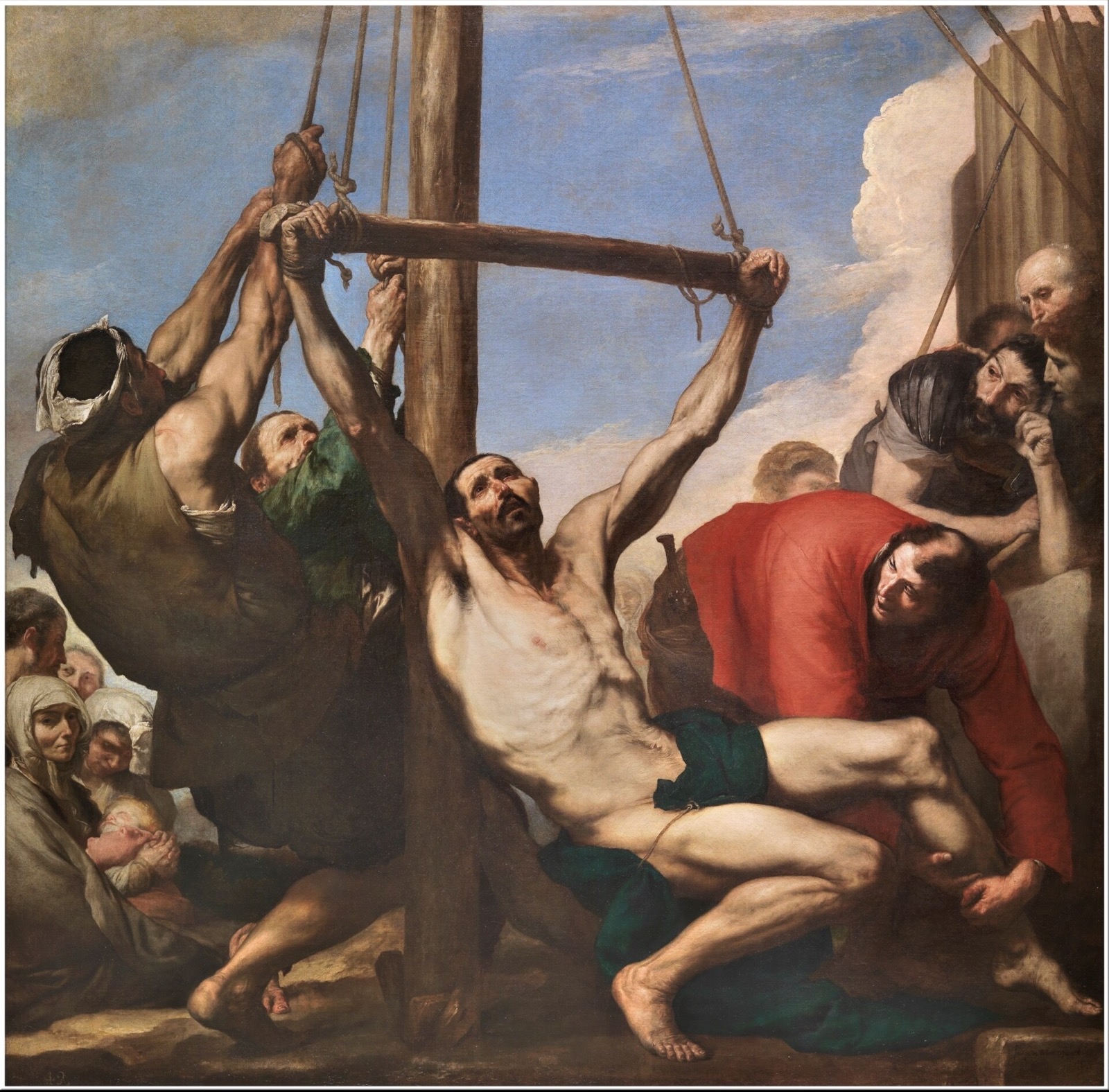
The Martyrdom of Saint Philip
1639
The apostle, stripped, is hauled up on ropes by his executioners while a crowd watches. The heavy body against the sky is the centre of the picture.
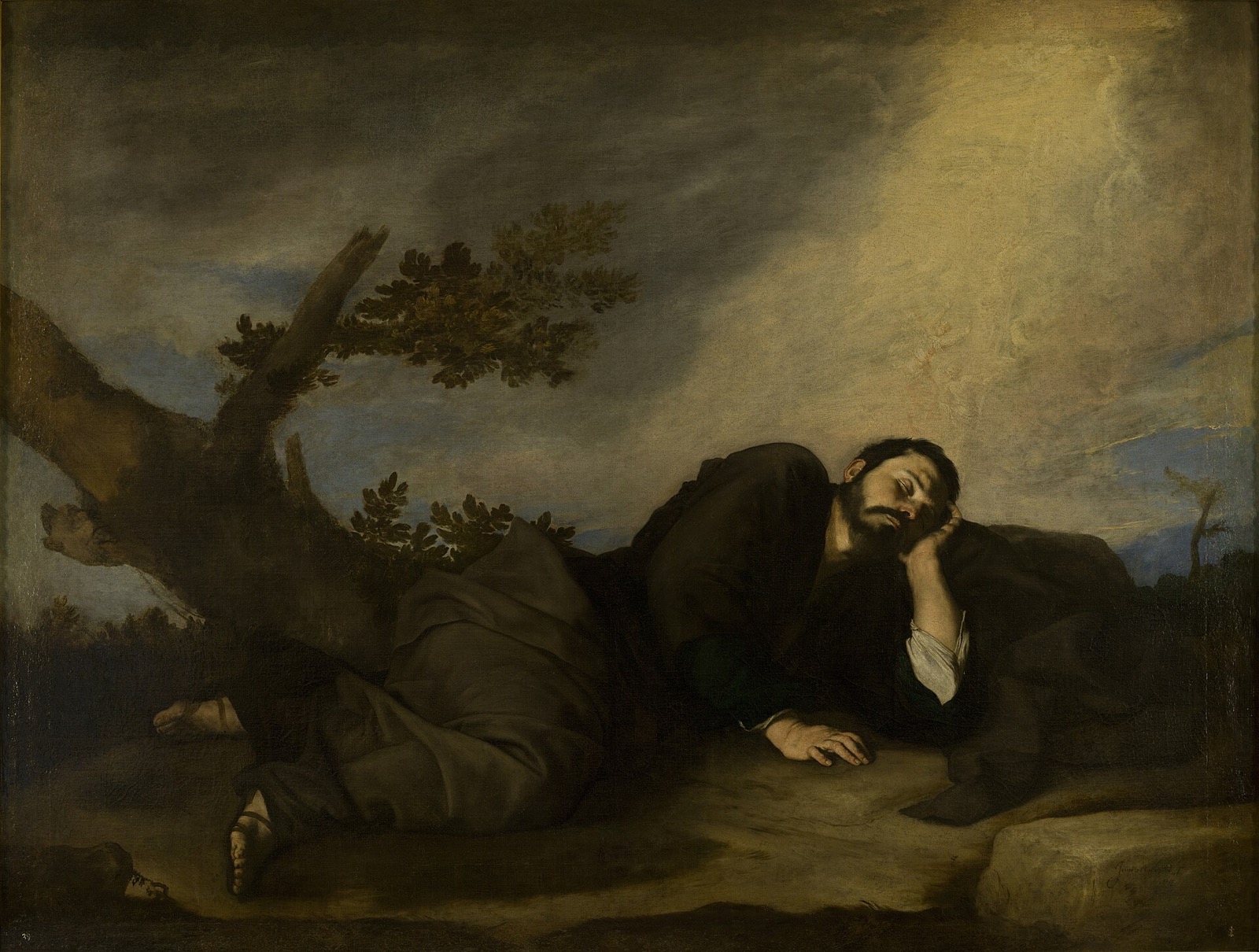
Jacob's Dream
1639
The young shepherd asleep under a tree, his head on his arm. The ladder of angels he dreams of is only a faint golden light in the sky.
The life of Jusepe de Ribera
Jusepe de Ribera was born near Valencia in 1591 and went to Italy as a young man. He settled in Naples, then ruled by Spain, where he was called Lo Spagnoletto, the little Spaniard, and became the leading painter of the city.
He is best known for his scenes of martyrdom, painted with the hard light and dark of Caravaggio, and for his half-length beggars posed as philosophers and saints.
What to know
- Called Lo Spagnoletto in Naples
- Counted with Velázquez, Zurbarán and Murillo among the masters of Spanish Baroque painting
- Many of his paintings were sent to Spain by the viceroys of Naples
- Born
- Baptised 17 February 1591, Xàtiva, Spain
- Died
- 3 November 1652, Naples
Jusepe de Ribera: common questions
- Where can you see Jusepe de Ribera in Madrid?
- At the Museo del Prado: The Martyrdom of Saint Philip and Jacob's Dream. Museums move and lend their works, so check before a special journey.
- What is Jusepe de Ribera's most famous work in Madrid?
- The Martyrdom of Saint Philip, of 1639, at the Museo del Prado. The apostle, stripped, is hauled up on ropes by his executioners while a crowd watches. The heavy body against the sky is the centre of the picture.
- When and where was Jusepe de Ribera born?
- Baptised 17 February 1591, at Xàtiva, Spain. Jusepe de Ribera died on 3 November 1652, at Naples, aged about 61.
- What is Jusepe de Ribera known for?
- Called Lo Spagnoletto in Naples. Counted with Velázquez, Zurbarán and Murillo among the masters of Spanish Baroque painting. Many of his paintings were sent to Spain by the viceroys of Naples. Jusepe de Ribera was a Spanish painter, of the Baroque.
Tickets and tours: Jusepe de Ribera in Madrid
Things to do near the Prado
The nearest of this site's best things to do in the city. Distances are in a straight line.
- 4Walk seven centuries of painting at the Thyssen350 m awayMuseum, 2 to 3.5 hours, ticket, free on mondays
- 17Look over Madrid's rooftops from the Círculo de Bellas Artes600 m awayMonument, 45 to 90 minutes, ticket for the roof
- 3Stand in front of Guernica at the Reina Sofía700 m awayMuseum, 1.5 to 3 hours, ticket, free in the evenings
- 5Row a boat on the lake in the Retiro750 m awayGarden, 1 to 3 hours, free, boats extra
Where to eat near the Prado
The nearest of the famous tables this site lists in Madrid. Distances are in a straight line.
- Horcher4.6Restaurant, Retiro600 m away
- Viva Madrid4.5Tavern, Barrio de las Letras650 m away
- Casa Alberto4.4Tavern, Barrio de las Letras700 m away
- Antigua Pastelería del Pozo4.5Pastry shop, Puerta del Sol800 m away
Hotels near the Prado
The five-star hotels closest to it, of those this site lists in Madrid. Distances are in a straight line.
- Mandarin Oriental Ritz, Madrid4.7Five-star hotel, Plaza de la Lealtad200 m away
- The Palace, Madrid4.6Five-star hotel, Plaza de las Cortes300 m away
- Gran Hotel Inglés4.7Five-star hotel, Barrio de las Letras700 m away
- The Principal Madrid4.5Five-star hotel, Gran Vía750 m away
Other artists
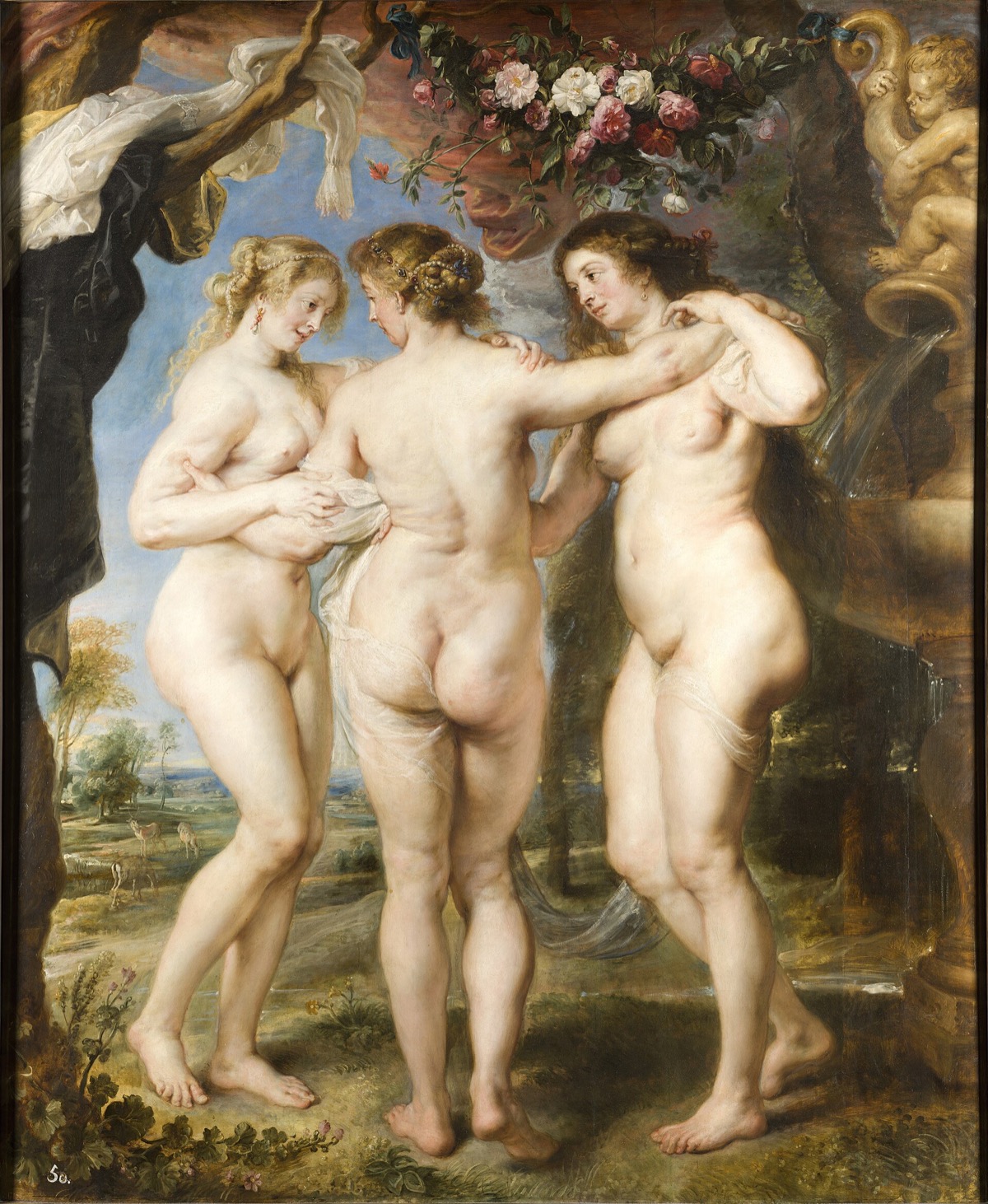
Painter, 1577 to 1640
Peter Paul Rubens
The Prado has more than ninety paintings by Rubens, bought by Philip IV, among them The Three Graces and The Garden of Love.
Baroque. 2 works in 1 museum
See the artist
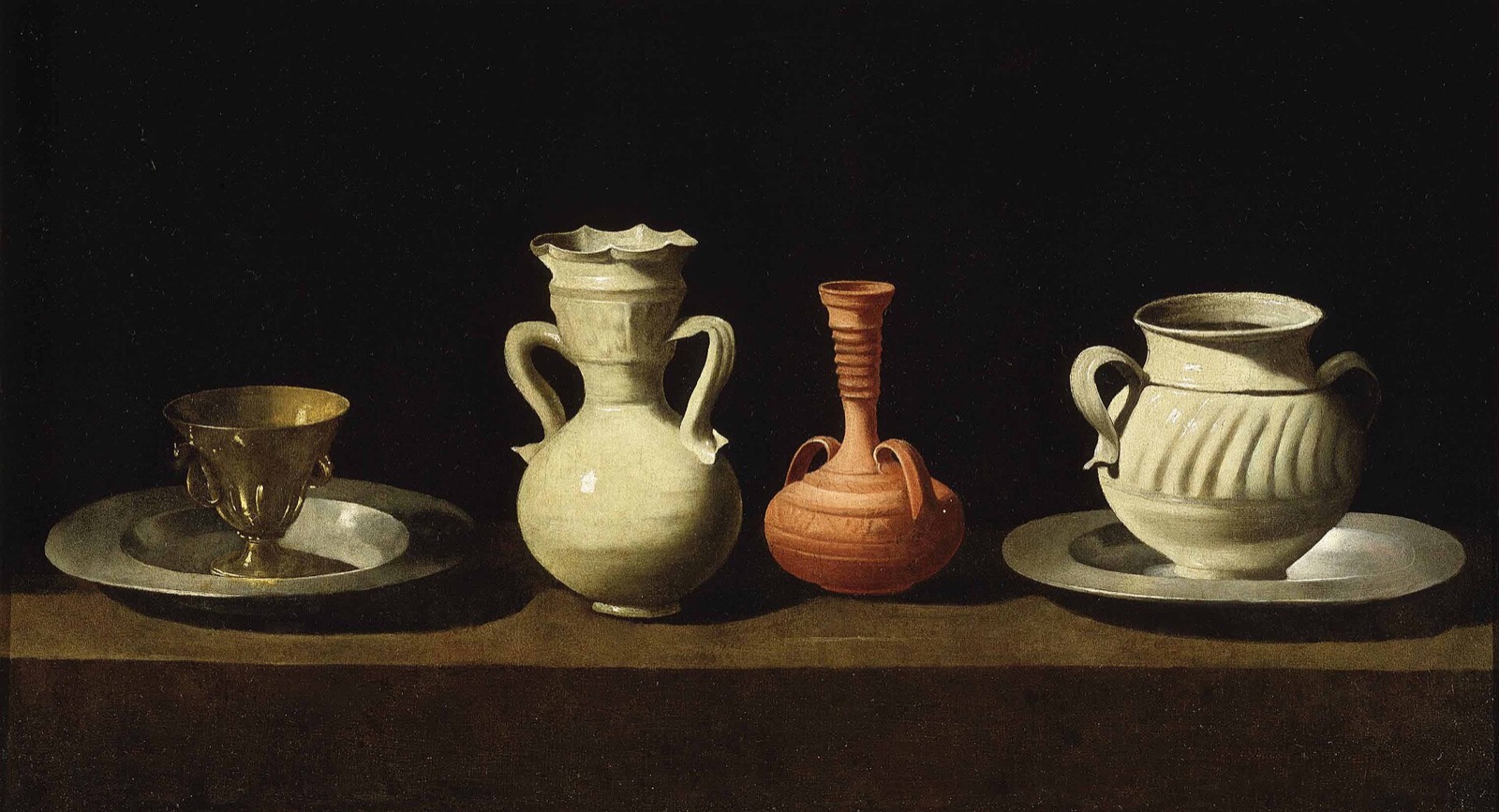
Painter, 1598 to 1664
Francisco de Zurbarán
The painter of monks and still lifes, called the Spanish Caravaggio. The Prado has his Still Life with Four Vessels, and the Academy his white-robed friars.
Baroque. 3 works in 3 museums
See the artist
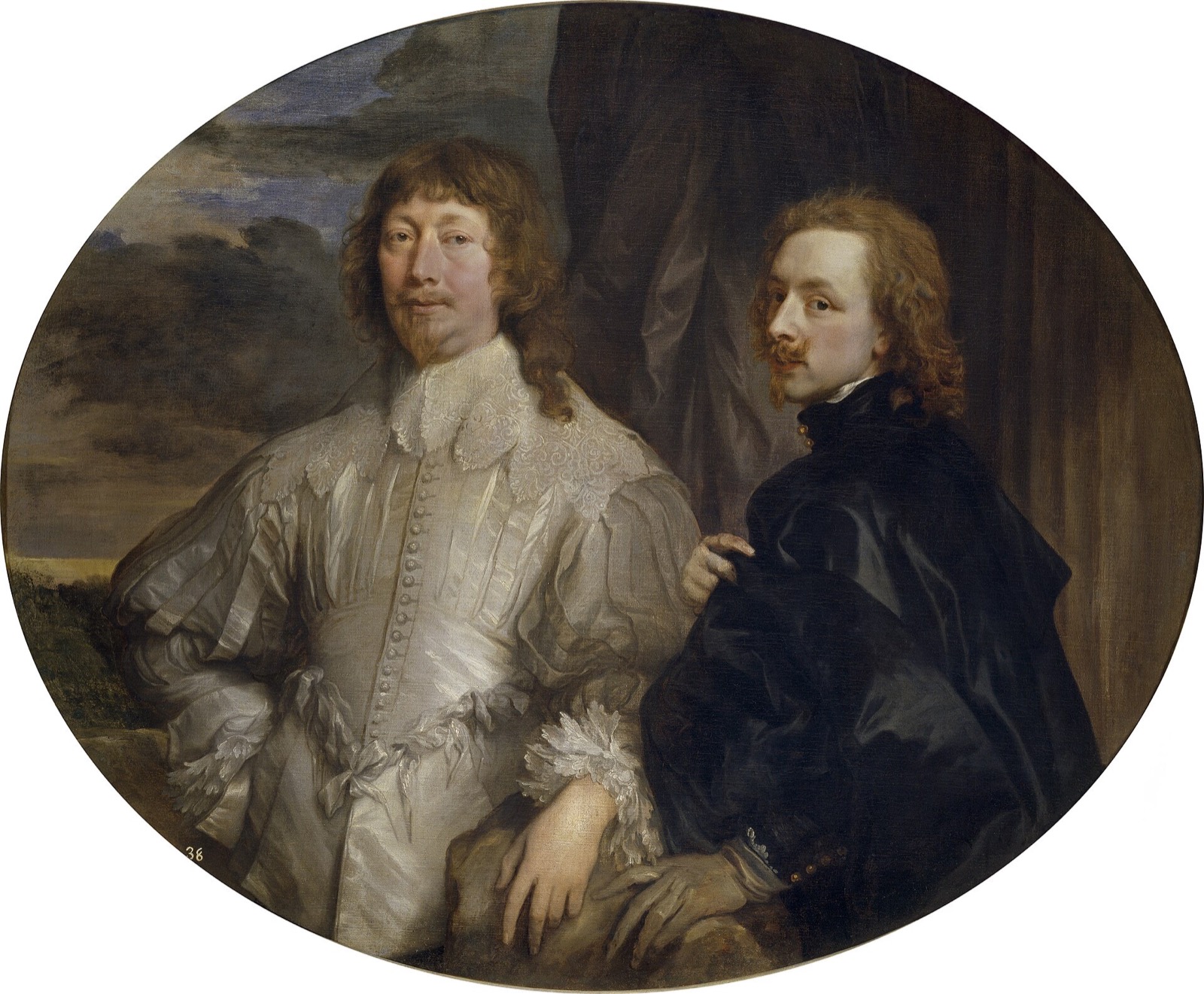
Painter, 1599 to 1641
Anthony van Dyck
The Prado has Van Dyck's double portrait of himself with his friend Endymion Porter, the only self-portrait he painted with someone else.
Baroque. 1 work in 1 museum
See the artist