Painter, 1882 to 1967
Edward Hopper
Hopper lived and worked for more than fifty years in the same top-floor studio on Washington Square. He painted New York as a city of empty streets, lit windows and people alone, and New York has kept most of what he made.
- Born
- 1882, Nyack, New York
- Died
- 1967, New York
- Movement
- American Realism
- In New York
- 6 works in 3 museums
Where to see Edward Hopper in New York
Each work with the museum it hangs in. Museums move and lend their works, so check before a special journey.
Whitney Museum of American Art3 works
Early Sunday Morning
1930
A row of shopfronts on Seventh Avenue with the sun raking along it and no one about. Hopper said it was almost a literal translation of the street, and that he had not meant it to be Sunday.
A Woman in the Sun
1961
A woman stands naked in a bare bedroom with a cigarette, in a long rectangle of morning light. His wife, then in her late seventies, posed for it.
Seven A.M.
1948
A white shopfront with a clock in its window at the edge of a dark wood, at the hour when nothing has started yet.
The Museum of Modern Art2 works
House by the Railroad
1925
A Victorian mansion with a mansard tower stands alone behind a railway embankment. It was the first painting the Museum of Modern Art acquired, and Hitchcock is said to have had it in mind for the house in Psycho.
Gas
1940
A man tends three red petrol pumps at dusk, where the lit forecourt of a filling station meets a road going into the woods.
The Metropolitan Museum of Art1 work
The Lighthouse at Two Lights
1929
A lighthouse and its keeper's house on the coast of Maine, seen from below against a hard blue sky.
The life of Edward Hopper
Edward Hopper was born in 1882 at Nyack, up the Hudson from New York, and earned his living as an illustrator until he was past forty. Success came in the 1920s. In 1930 his House by the Railroad became the first painting to enter the collection of the new Museum of Modern Art, and the Whitney bought Early Sunday Morning within months of its being painted.
He painted slowly, one or two canvases a year, with his wife Josephine as the model for every woman in them. When she died in 1968, ten months after him, she left everything in the studio to the Whitney. His best-known picture, Nighthawks, is not in New York: it has been in Chicago since 1942. His works are still under copyright and are not pictured here.
What to know
- Lived at 3 Washington Square North from 1913 until his death
- His widow left more than three thousand of his works to the Whitney
- Nighthawks is at the Art Institute of Chicago, not in New York
- Born
- 22 July 1882, Nyack, New York
- Died
- 15 May 1967, New York
Edward Hopper: common questions
- Where can you see Edward Hopper in New York?
- At the Whitney Museum of American Art: Early Sunday Morning, A Woman in the Sun and Seven A.M.. At the Museum of Modern Art: House by the Railroad and Gas. At the Metropolitan Museum of Art: The Lighthouse at Two Lights. Museums move and lend their works, so check before a special journey.
- What is Edward Hopper's most famous work in New York?
- Early Sunday Morning, of 1930, at the Whitney Museum of American Art. A row of shopfronts on Seventh Avenue with the sun raking along it and no one about. Hopper said it was almost a literal translation of the street, and that he had not meant it to be Sunday.
- When and where was Edward Hopper born?
- On 22 July 1882, at Nyack, New York. Edward Hopper died on 15 May 1967, at New York, aged about 85.
- What is Edward Hopper known for?
- Lived at 3 Washington Square North from 1913 until his death. His widow left more than three thousand of his works to the Whitney. Nighthawks is at the Art Institute of Chicago, not in New York. Edward Hopper was an American painter, of American Realism.
Tickets and tours: Edward Hopper in New York
Things to do near the Whitney
The nearest of this site's best things to do in the city. Distances are in a straight line.
- 10Walk the High Line1.0 km awayGarden, 1 to 2 hours, free
- 16Get lost in Greenwich Village1.4 km awayWalk, 2 to 3 hours, free
- 3Go up the Empire State Building2.2 km awayMonument, 1.5 to 2 hours, ticket
- 19Eat your way through Chinatown and Little Italy2.8 km awayWalk, 2 to 3 hours, free
Where to eat near the Whitney
The nearest of the famous tables this site lists in New York. Distances are in a straight line.
- John's of Bleecker Street4.6Pizzeria, Greenwich Village1.0 km away
- McSorley's Old Ale House4.7Ale house, East Village2.0 km away
- Balthazar4.4Brasserie, SoHo2.1 km away
- Keens Steakhouse4.6Steakhouse, Herald Square2.3 km away
Hotels near the Whitney
The five-star hotels closest to it, of those this site lists in New York. Distances are in a straight line.
- Crosby Street Hotel4.6Five-star hotel, SoHo2.1 km away
- The Greenwich Hotel4.7Five-star hotel, Tribeca2.2 km away
- The Langham, New York, Fifth Avenue4.6Five-star hotel, Fifth Avenue at 36th Street2.4 km away
- Four Seasons Hotel New York Downtown4.7Five-star hotel, Tribeca, by the World Trade Center3.0 km away
Other artists
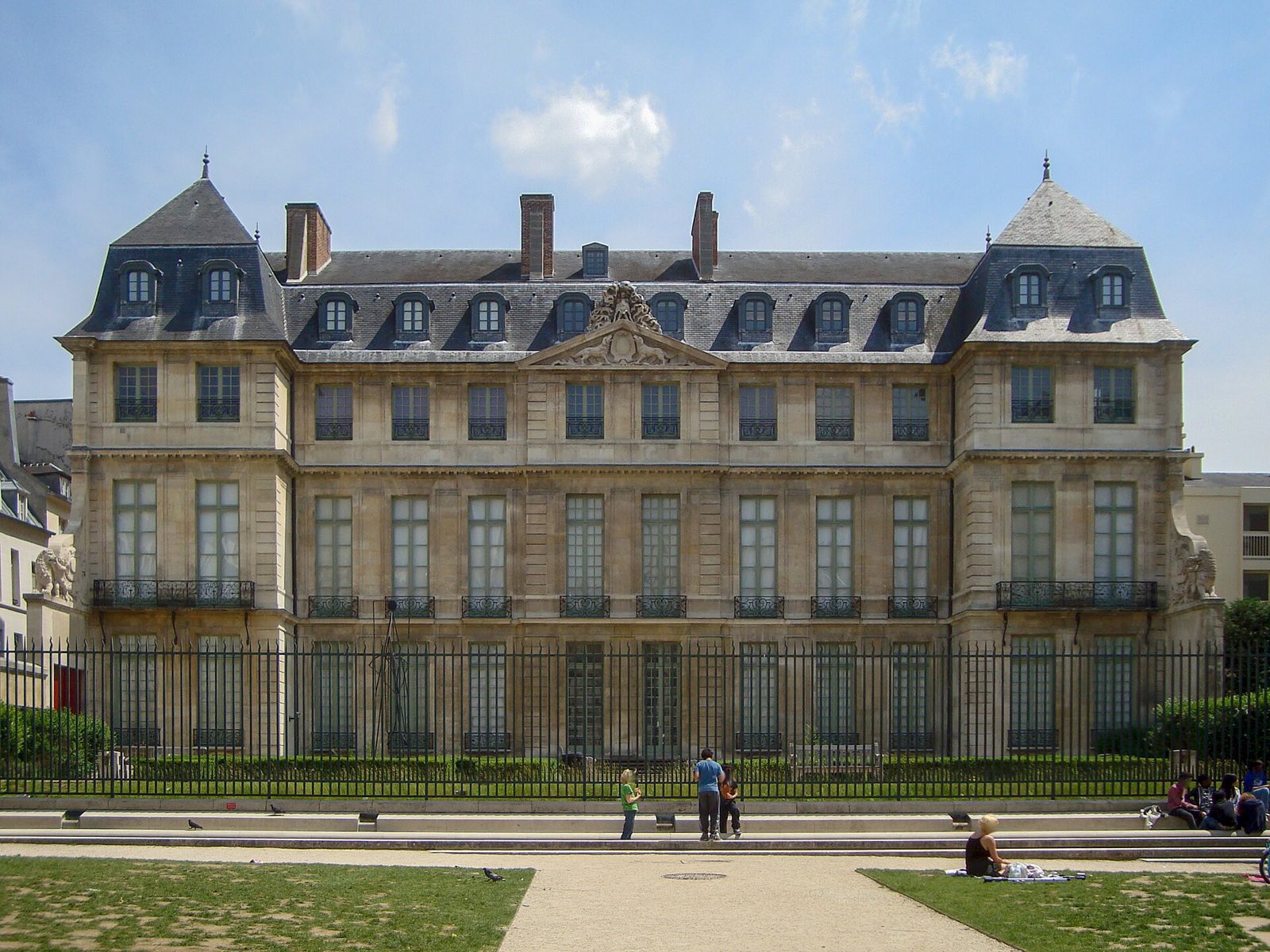
Picture: LPLT, CC BY-SA 3.0
Painter and sculptor, 1881 to 1973
Pablo Picasso
Les Demoiselles d'Avignon, the painting from which Cubism followed, is at the Museum of Modern Art. The Met has his portrait of Gertrude Stein, and the Guggenheim more than thirty works.
Cubism. 6 works in 3 museums
See the artist
Painter, 1912 to 1956
Jackson Pollock
Two of the largest paintings Pollock ever poured, both from the autumn of 1950, hang two miles apart: One: Number 31, 1950 at MoMA and Autumn Rhythm at the Met.
Abstract Expressionism. 4 works in 3 museums
See the artist
Painter, 1928 to 1987
Andy Warhol
The thirty-two Campbell's Soup Cans that began Pop art are at the Museum of Modern Art, with Gold Marilyn Monroe. The Whitney has his Coca-Cola bottles.
Pop art. 3 works in 2 museums
See the artist