Painter, 1748 to 1825
Jacques-Louis David
David's huge canvases of the Revolution and of Napoleon never left France. The two paintings of his in New York are from just before, and are among the finest he made.
- Born
- 1748, Paris, France
- Died
- 1825, Brussels, Belgium
- Movement
- Neoclassicism
- In New York
- 2 works in 1 museum
Where to see Jacques-Louis David in New York
Each work with the museum it hangs in. Museums move and lend their works, so check before a special journey.
The Metropolitan Museum of Art2 works
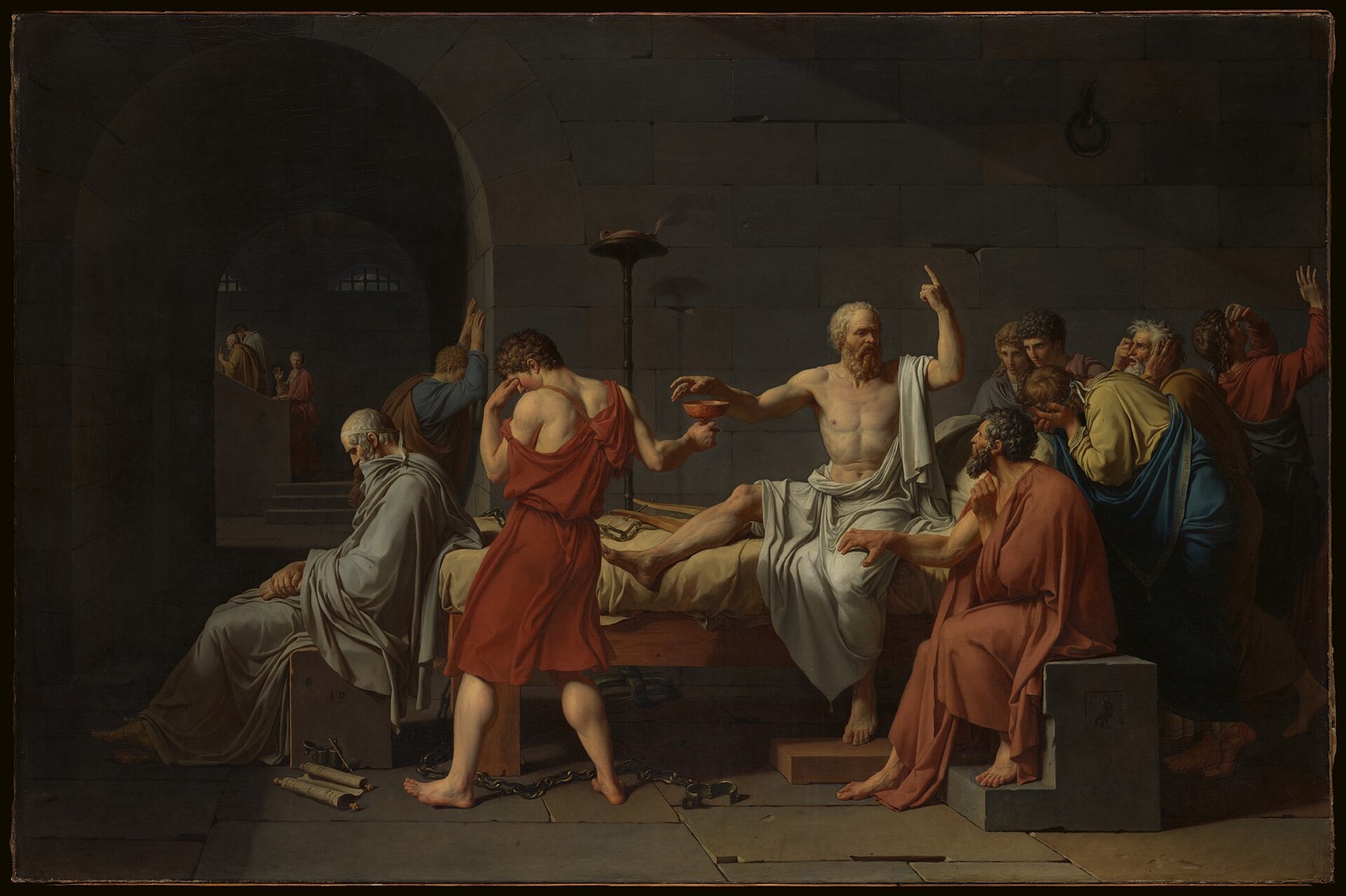
The Death of Socrates
1787
Condemned by Athens, the philosopher reaches for the cup of hemlock without looking at it, still talking, one finger raised, while his followers weep. Plato, who was not there, sits at the foot of the bed.
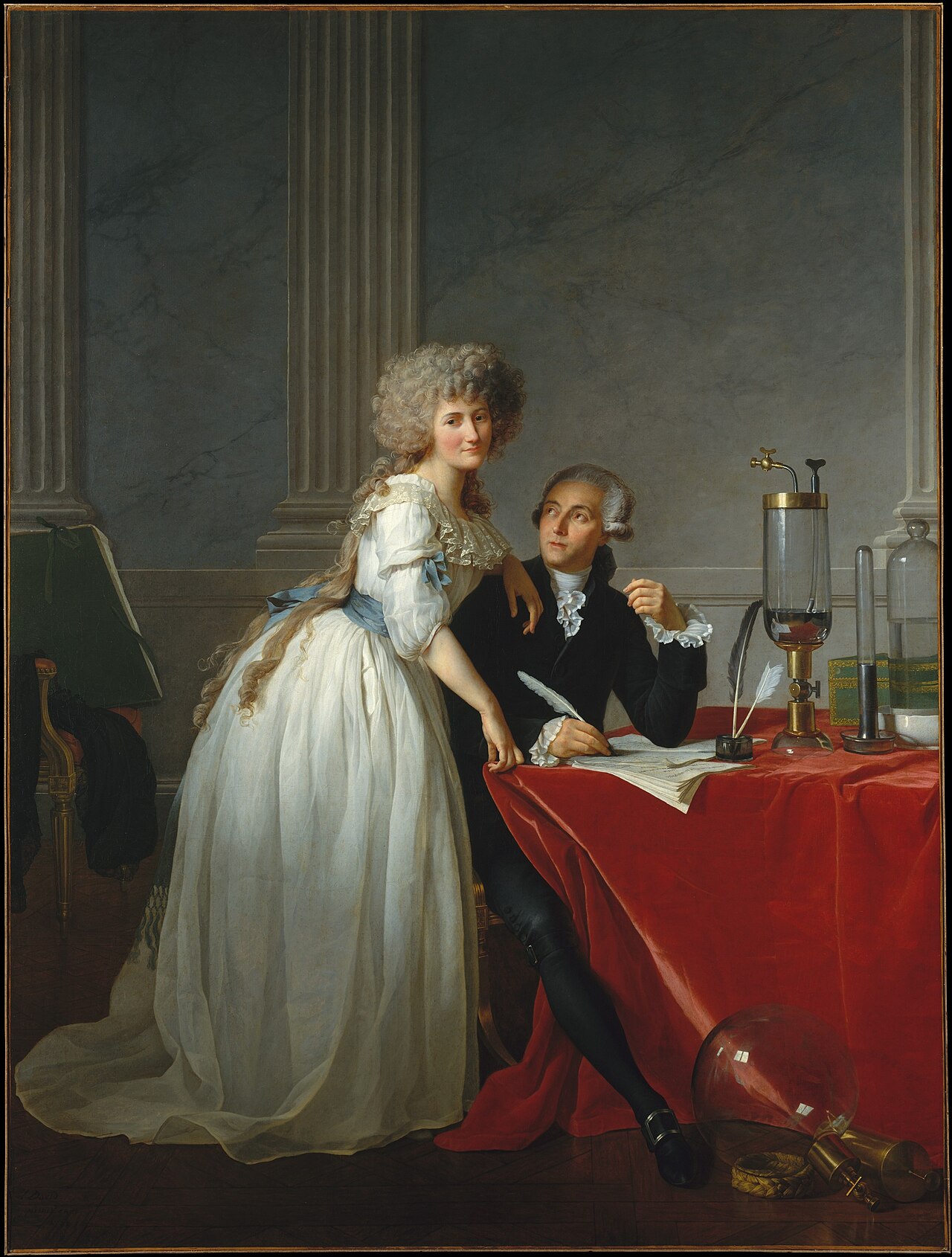
Antoine-Laurent Lavoisier and His Wife
1788
The founder of modern chemistry at his desk among his instruments, looking up at his wife, who was his collaborator and David's pupil. It is more than two and a half metres high.
The life of Jacques-Louis David
Jacques-Louis David was born in Paris in 1748 and formed his severe style in Rome. In the 1780s he was the most admired painter in France, and his pictures of Greek and Roman virtue were read as a rebuke to the court. He voted for the death of the king, painted the Revolution's martyrs, and later became the painter of Napoleon.
The Metropolitan Museum bought The Death of Socrates in 1931. The portrait of Antoine Lavoisier and Marie-Anne Paulze came to it in 1977: it had belonged for half a century to the Rockefeller Institute, to which John D. Rockefeller had given it.
What to know
- The Death of Socrates was shown at the Paris Salon of 1787
- The portrait of the Lavoisiers was kept from the Salon of 1789 for political reasons
- Lavoisier was guillotined six years after he sat for it
- Born
- 30 August 1748, Paris, France
- Died
- 29 December 1825, Brussels, Belgium
Jacques-Louis David: common questions
- Where can you see Jacques-Louis David in New York?
- At the Metropolitan Museum of Art: The Death of Socrates and Antoine-Laurent Lavoisier and His Wife. Museums move and lend their works, so check before a special journey.
- What is Jacques-Louis David's most famous work in New York?
- The Death of Socrates, of 1787, at the Metropolitan Museum of Art. Condemned by Athens, the philosopher reaches for the cup of hemlock without looking at it, still talking, one finger raised, while his followers weep. Plato, who was not there, sits at the foot of the bed.
- When and where was Jacques-Louis David born?
- On 30 August 1748, at Paris, France. Jacques-Louis David died on 29 December 1825, at Brussels, Belgium, aged about 77.
- What is Jacques-Louis David known for?
- The Death of Socrates was shown at the Paris Salon of 1787. The portrait of the Lavoisiers was kept from the Salon of 1789 for political reasons. Lavoisier was guillotined six years after he sat for it. Jacques-Louis David was a French painter, of Neoclassicism.
Tickets and tours: Jacques-Louis David in New York
Things to do near the Met
The nearest of this site's best things to do in the city. Distances are in a straight line.
- 13Walk down the spiral of the Guggenheim550 m awayMuseum, 1.5 to 2 hours, ticket
- 4Walk through Central Park900 m awayGarden, 2 to 4 hours, free
- 11Meet the dinosaurs at the Museum of Natural History950 m awayMuseum, 2.5 to 4 hours, ticket
- 18See the Frick's Vermeers in the house they were bought for1.0 km awayMuseum, 1.5 to 2 hours, ticket
Where to eat near the Met
The nearest of the famous tables this site lists in New York. Distances are in a straight line.
- Café Sabarsky4.3Viennese café, Inside the Neue Galerie300 m away
- Barney Greengrass4.4Appetizing shop and restaurant, Upper West Side1.4 km away
- Tavern on the Green4.4Restaurant in the park, Inside Central Park1.4 km away
- P.J. Clarke's4.5Saloon, Midtown East2.3 km away
Hotels near the Met
The five-star hotels closest to it, of those this site lists in New York. Distances are in a straight line.
- The Mark4.5Five-star hotel, Madison Avenue at 77th Street450 m away
- The Surrey4.4Five-star hotel, Madison Avenue at 76th Street550 m away
- The Pierre4.5Five-star hotel, Fifth Avenue at 61st Street1.7 km away
- The Sherry-Netherland4.6Five-star hotel, Fifth Avenue at 59th Street1.8 km away
Other artists
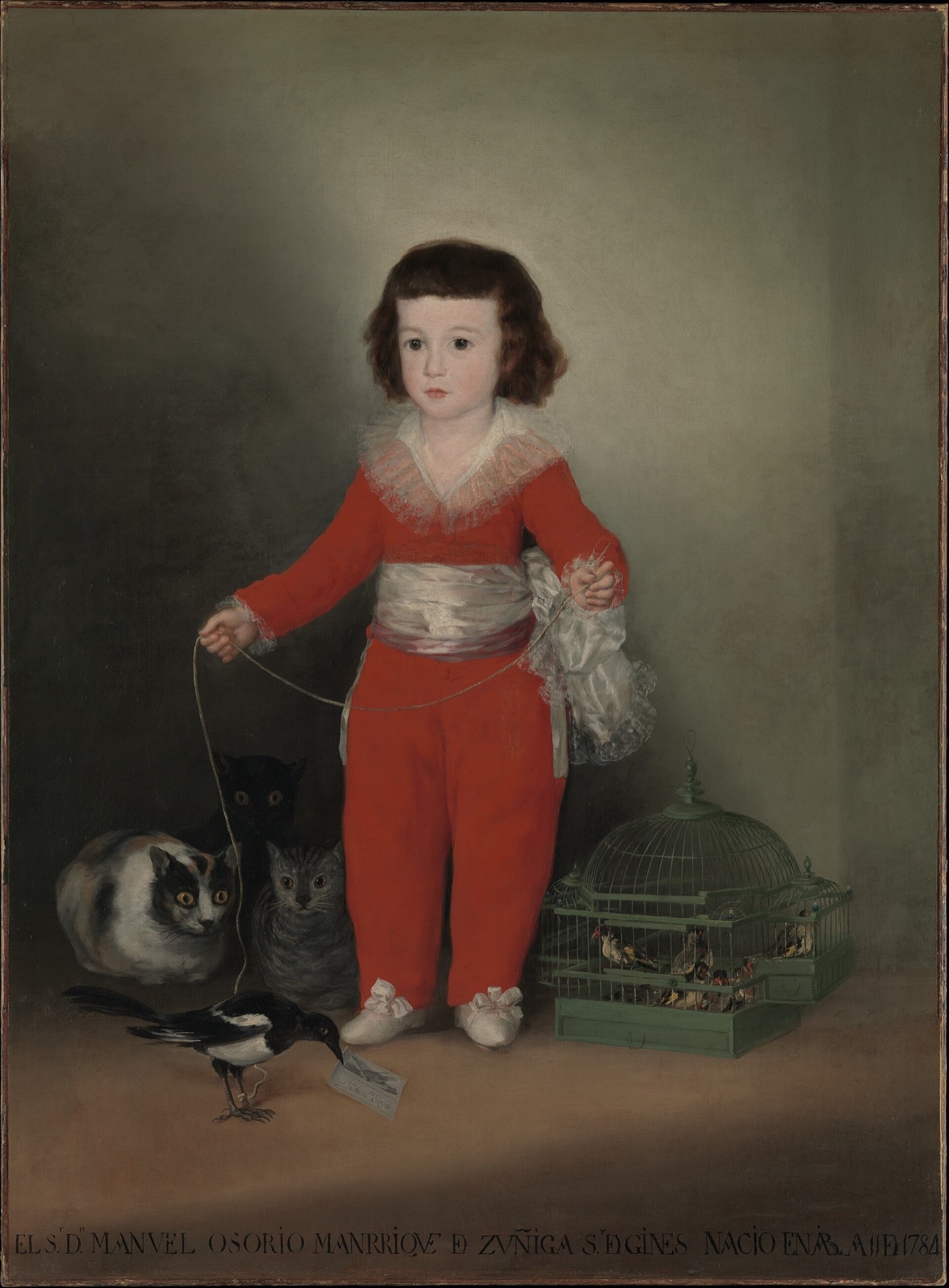
Painter, 1746 to 1828
Francisco Goya
The Met has Goya's portrait of a small boy in red with his pet magpie and three cats, one of the best-loved pictures in the museum. The Frick has The Forge.
Romanticism. 3 works in 2 museums
See the artist
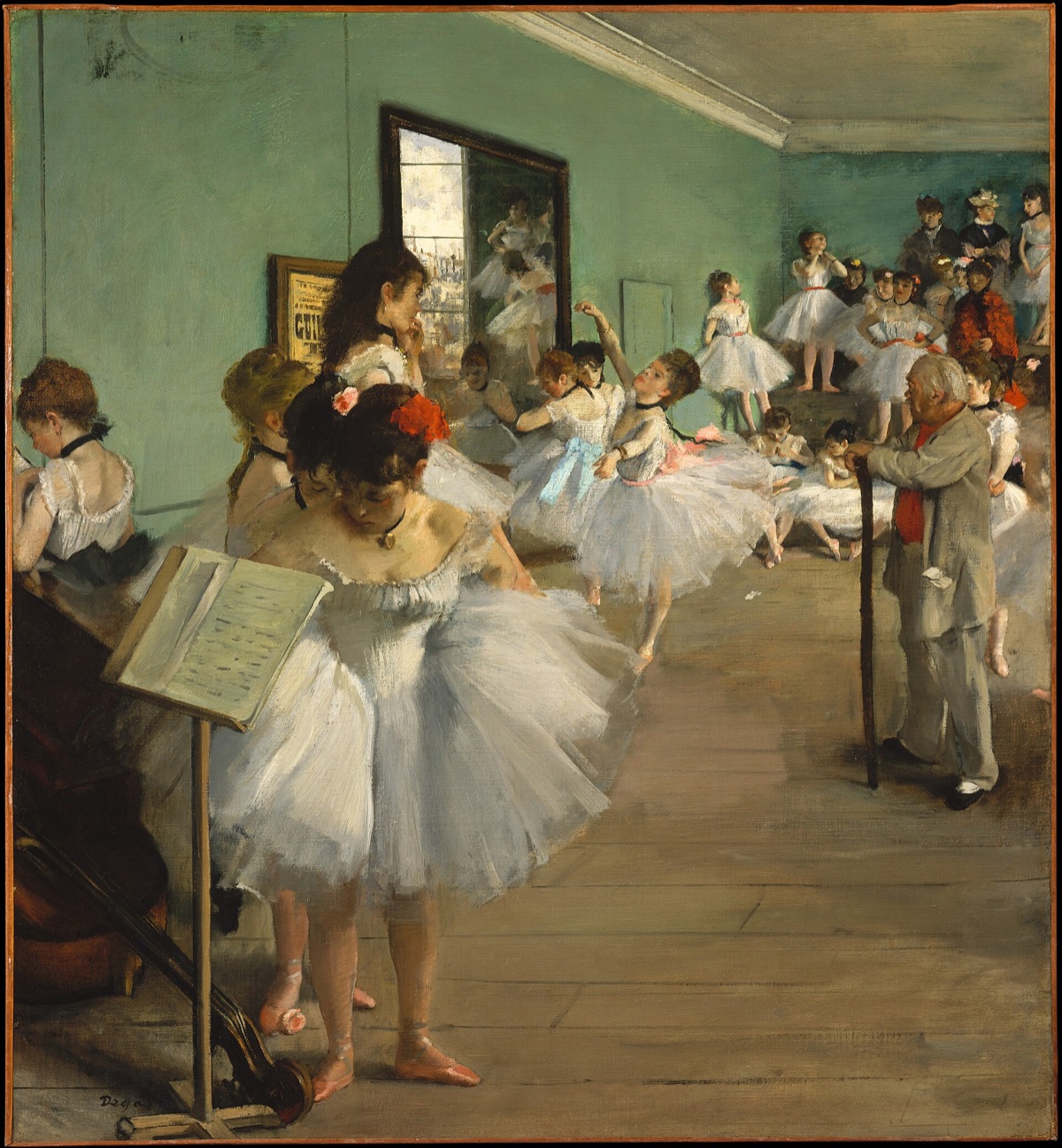
Painter and sculptor, 1834 to 1917
Edgar Degas
The Met has one of the largest collections of Degas anywhere: The Dance Class, the bronze Little Dancer in her cloth skirt, and rooms of pastels and sculpture.
Impressionism. 4 works in 2 museums
See the artist
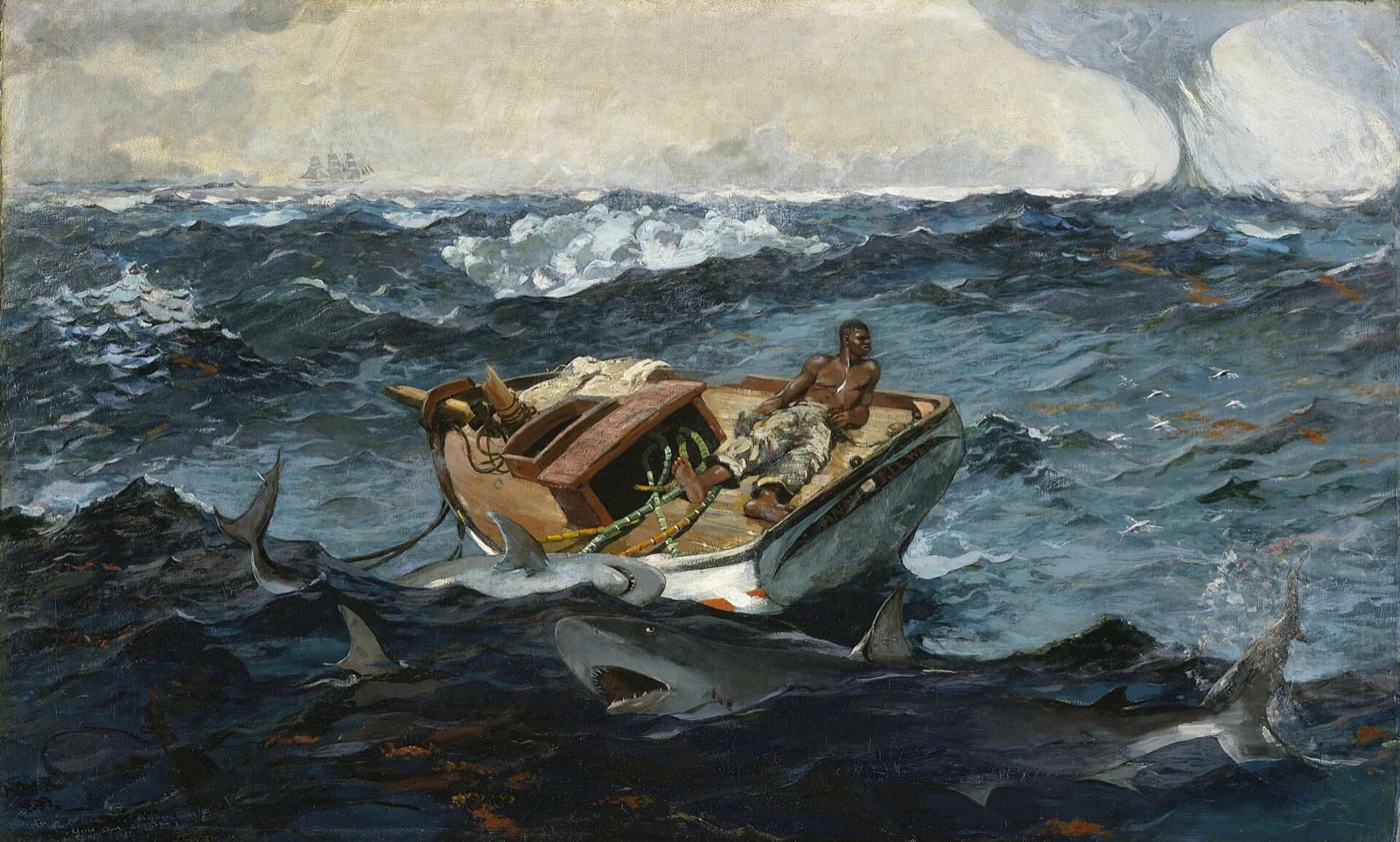
Painter, 1836 to 1910
Winslow Homer
The Met's American Wing has Homer's The Gulf Stream, a man adrift among sharks, and Northeaster, a single wave breaking on the rocks of Maine.
American Realism. 3 works in 1 museum
See the artist