Painter, 1430 to 1516
Giovanni Bellini
Bellini was a Venetian and never came to Florence. The Sacred Allegory reached the Uffizi long after his death.
- Born
- 1430, Venice
- Died
- 1516, Venice
- Movement
- Venetian Renaissance
- In Florence
- 1 work in 1 museum
Where to see Giovanni Bellini in Florence
Each work with the museum it hangs in. Museums move and lend their works, so check before a special journey.
Uffizi Gallery1 work
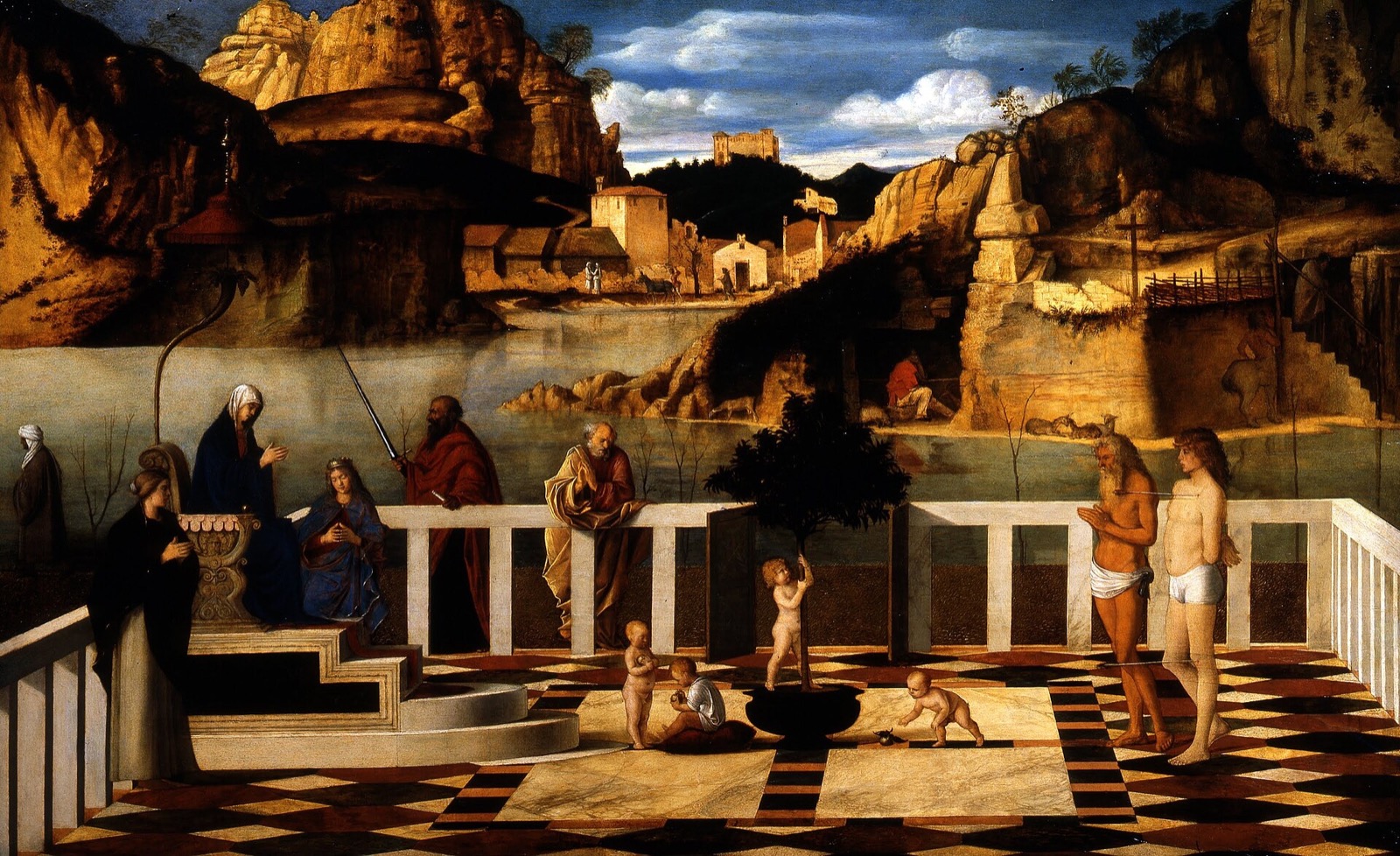
Sacred Allegory
about 1490 to 1500
Saints and children on a marble terrace beside a still lake, with a hermit and a centaur on the far shore. It may be a meditation on paradise. It is, in any case, a picture of perfect quiet.
The life of Giovanni Bellini
Giovanni was the son of one painter, the brother of another and the brother-in-law of a third, Mantegna. He took up the oil technique that had come from the north and used it to paint light: the first Italian whose skies look like weather.
He was official painter to the Republic of Venice, and the portrait of its doge is the best picture that office produced.
What to know
- Painted the Sacred Allegory about 1490 to 1500
- Scholars have argued about its subject for more than a century
- Born
- About 1430 to 1435, Venice
- Died
- 29 November 1516, Venice
Giovanni Bellini: common questions
- Where can you see Giovanni Bellini in Florence?
- At the Uffizi Gallery: Sacred Allegory. Museums move and lend their works, so check before a special journey.
- What is Giovanni Bellini's most famous work in Florence?
- Sacred Allegory, of about 1490 to 1500, at the Uffizi Gallery. Saints and children on a marble terrace beside a still lake, with a hermit and a centaur on the far shore. It may be a meditation on paradise. It is, in any case, a picture of perfect quiet.
- When and where was Giovanni Bellini born?
- About 1430 to 1435, at Venice. Giovanni Bellini died on 29 November 1516, at Venice, aged about 86.
- What is Giovanni Bellini known for?
- Painted the Sacred Allegory about 1490 to 1500. Scholars have argued about its subject for more than a century. Giovanni Bellini was an Italian painter, of the Venetian Renaissance.
Tickets and tours: Giovanni Bellini in Florence
Things to do near the Uffizi
The nearest of this site's best things to do in the city. Distances are in a straight line.
- 5Cross the Ponte Vecchio at sunset200 m awayWalk, 20 to 45 minutes, free
- 4Walk the halls of the Palazzo Vecchio200 m awayMonument, 1.5 to 2.5 hours, square free, ticket for the palace
- 9See Donatello's David at the Bargello350 m awayMuseum, 1.3 to 2 hours, ticket
- 7See Raphael and Titian at the Pitti Palace500 m awayMuseum, 2 to 3 hours, ticket
Where to eat near the Uffizi
The nearest of the famous tables this site lists in Florence. Distances are in a straight line.
- Trattoria Antico Fattore4.5Trattoria, Uffizi100 m away
- Rivoire3.8Café and chocolate maker, Piazza della Signoria200 m away
- Perché no!4.6Gelateria, Orsanmichele350 m away
- Antico Ristorante Paoli4.7Restaurant, Orsanmichele350 m away
Hotels near the Uffizi
The five-star hotels closest to it, of those this site lists in Florence. Distances are in a straight line.
- Portrait Firenze4.8Five-star hotel, Ponte Vecchio250 m away
- Hotel Bernini Palace4.7Five-star hotel, Piazza della Signoria250 m away
- Hotel Lungarno4.7Five-star hotel, Oltrarno300 m away
- Porta Rossa4.8Five-star hotel, Via Porta Rossa350 m away
Other artists
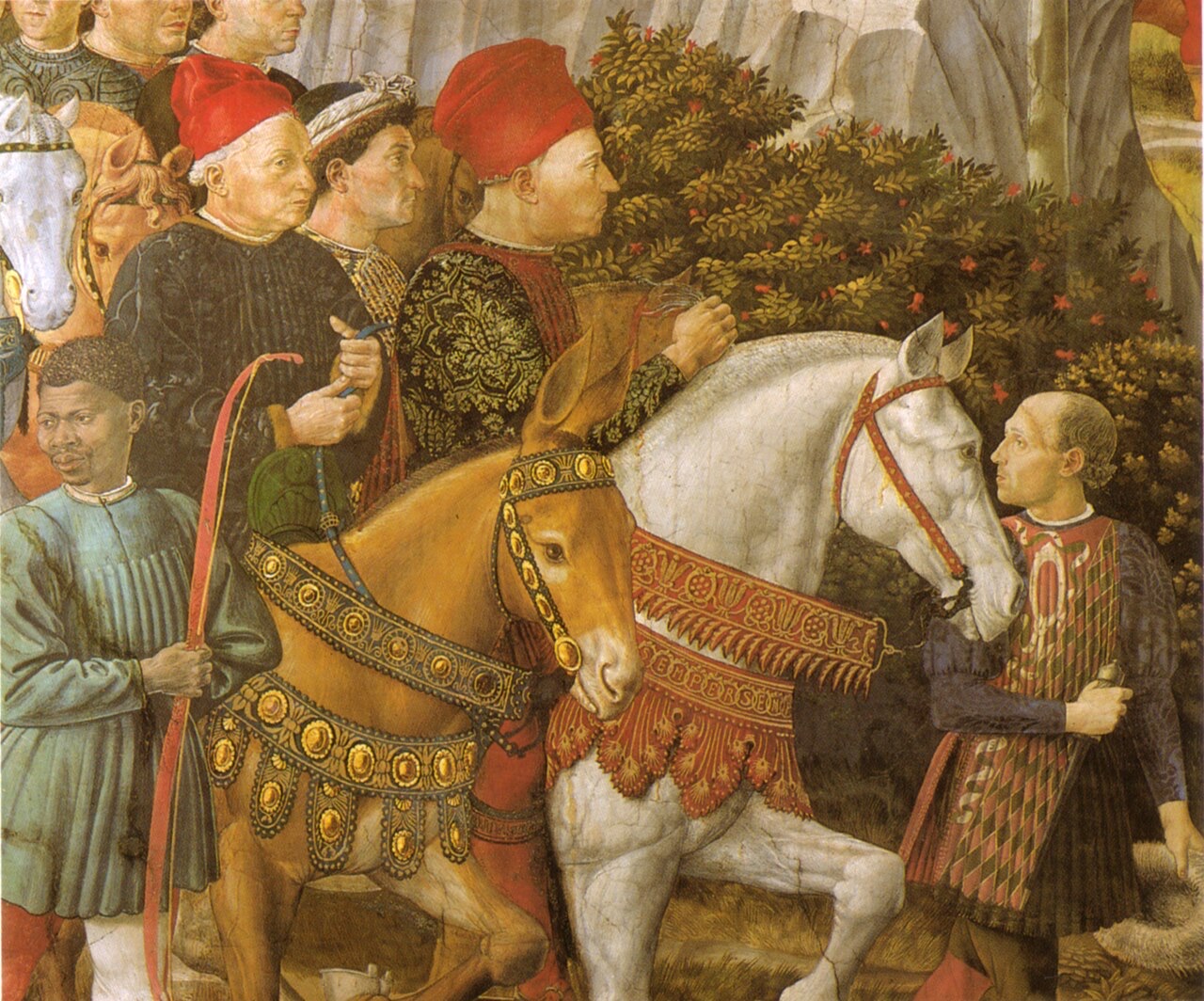
Painter, 1421 to 1497
Benozzo Gozzoli
Gozzoli painted one room that everyone remembers: the chapel of the Medici palace, where the three kings ride to Bethlehem through Tuscany with the Medici in their train.
Early Renaissance. 1 work in 1 museum
See the artist
Picture: Rufus46, CC BY-SA 3.0
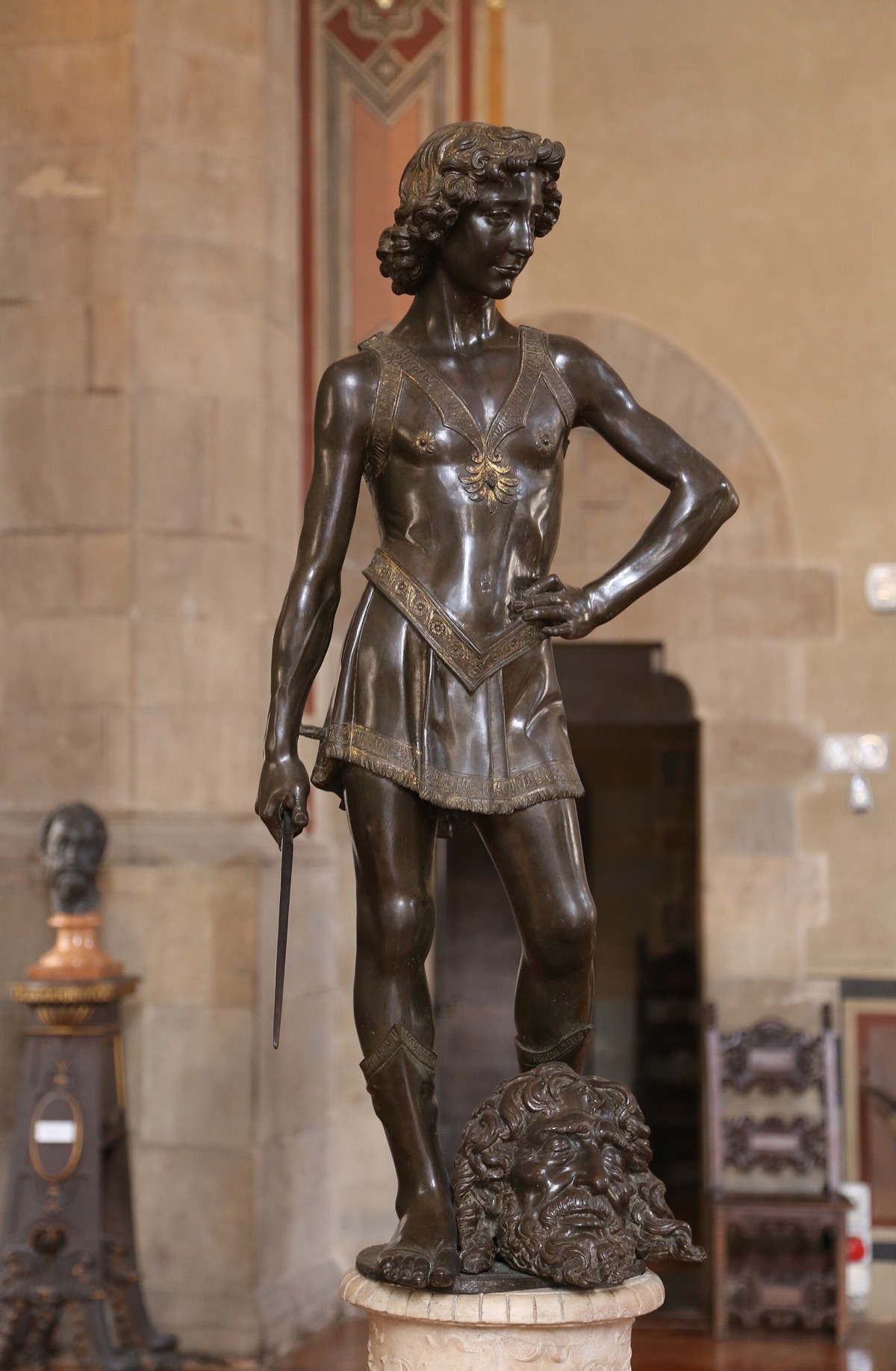
Painter and sculptor, 1435 to 1488
Andrea del Verrocchio
The master of the workshop where Leonardo trained. The Bargello has his bronze David, the Uffizi the Baptism he painted with his pupil, and the Palazzo Vecchio his boy with a dolphin.
Early Renaissance. 4 works in 4 museums
See the artist
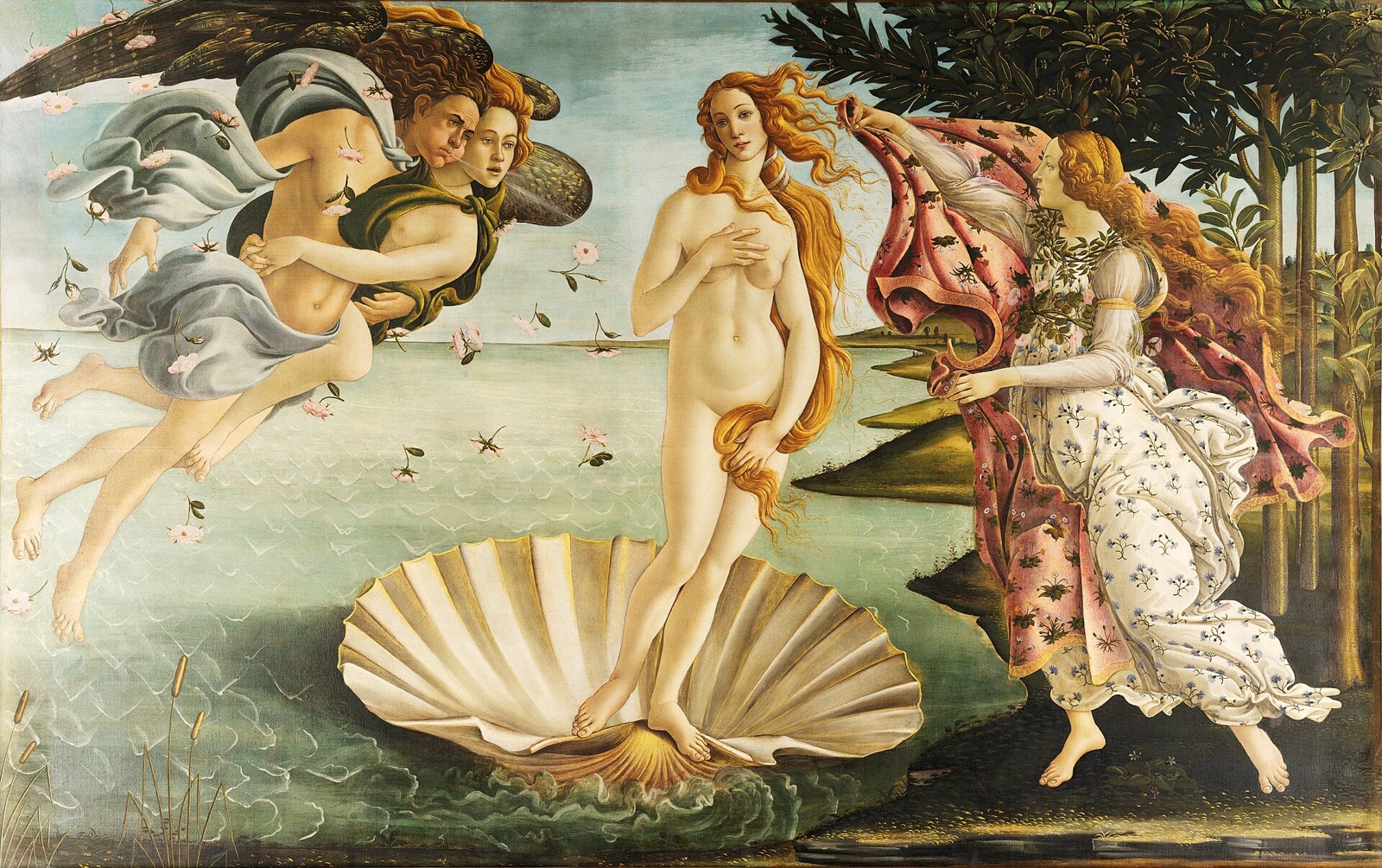
Painter, 1445 to 1510
Sandro Botticelli
Botticelli lived and died in Florence, and the Uffizi has the best of him in two rooms: the Birth of Venus, the Primavera and the Adoration of the Magi in which he painted himself among the Medici.
Early Renaissance. 5 works in 2 museums
See the artist