30 artists in the museums, in order of birthArtists to see in Florence
The most famous artists in the museums of Florence, and where to stand in front of their work: who they were, what they made, and the museum it hangs in.
- 30
- Artists, in order of birth
- 91
- Works to look for
- 22
- Museums that hold them
- 1240
- The earliest born: Cimabue
Artists to see in Florence
Show
All 30
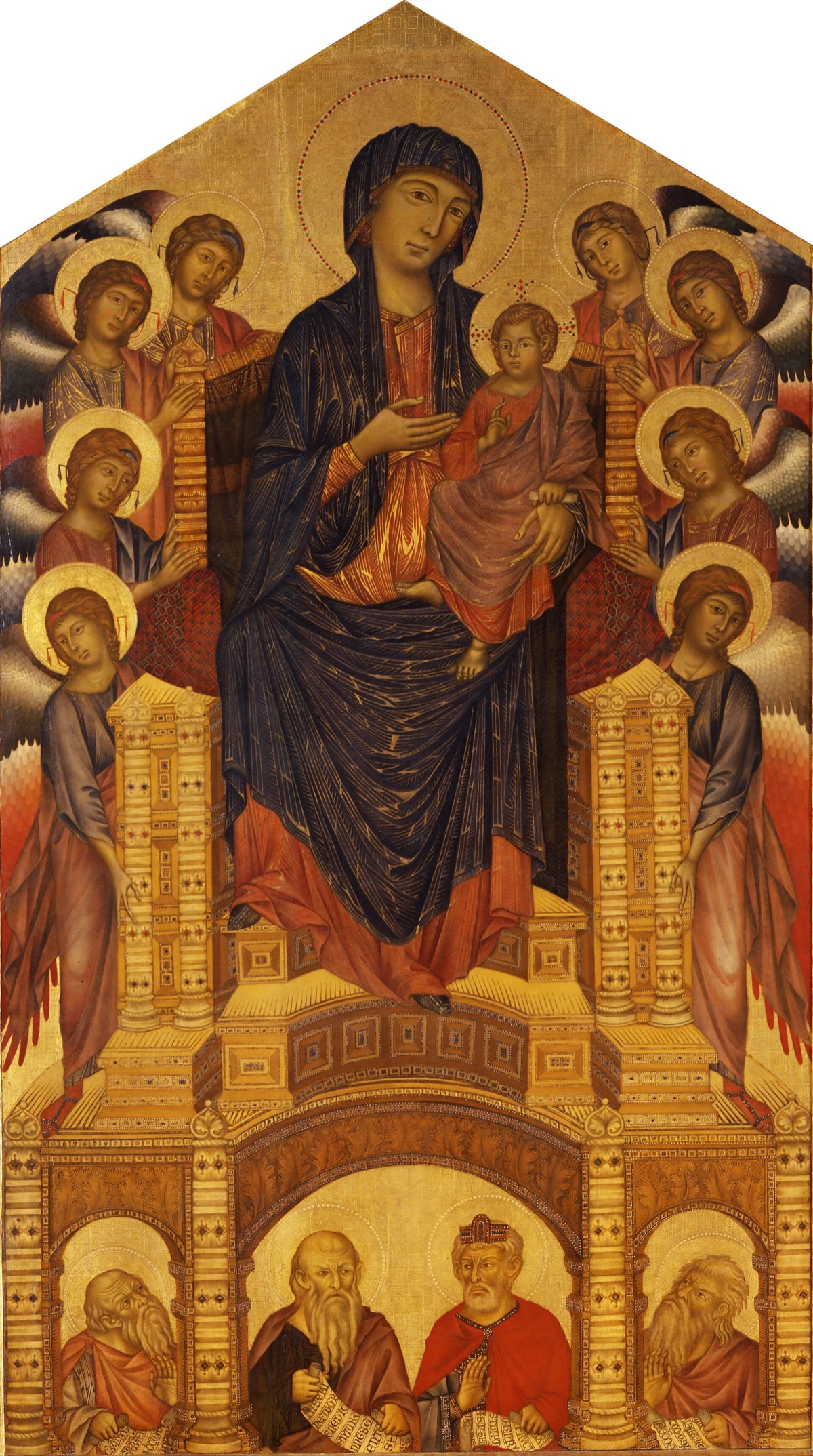
Painter, 1240 to 1302
Cimabue
The painter Florence puts at the head of its history. The Uffizi has his great Madonna from Santa Trinita, and Santa Croce has the Crucifix that the flood of 1966 half destroyed.
Italo-Byzantine. 2 works in 2 museums
See the artist
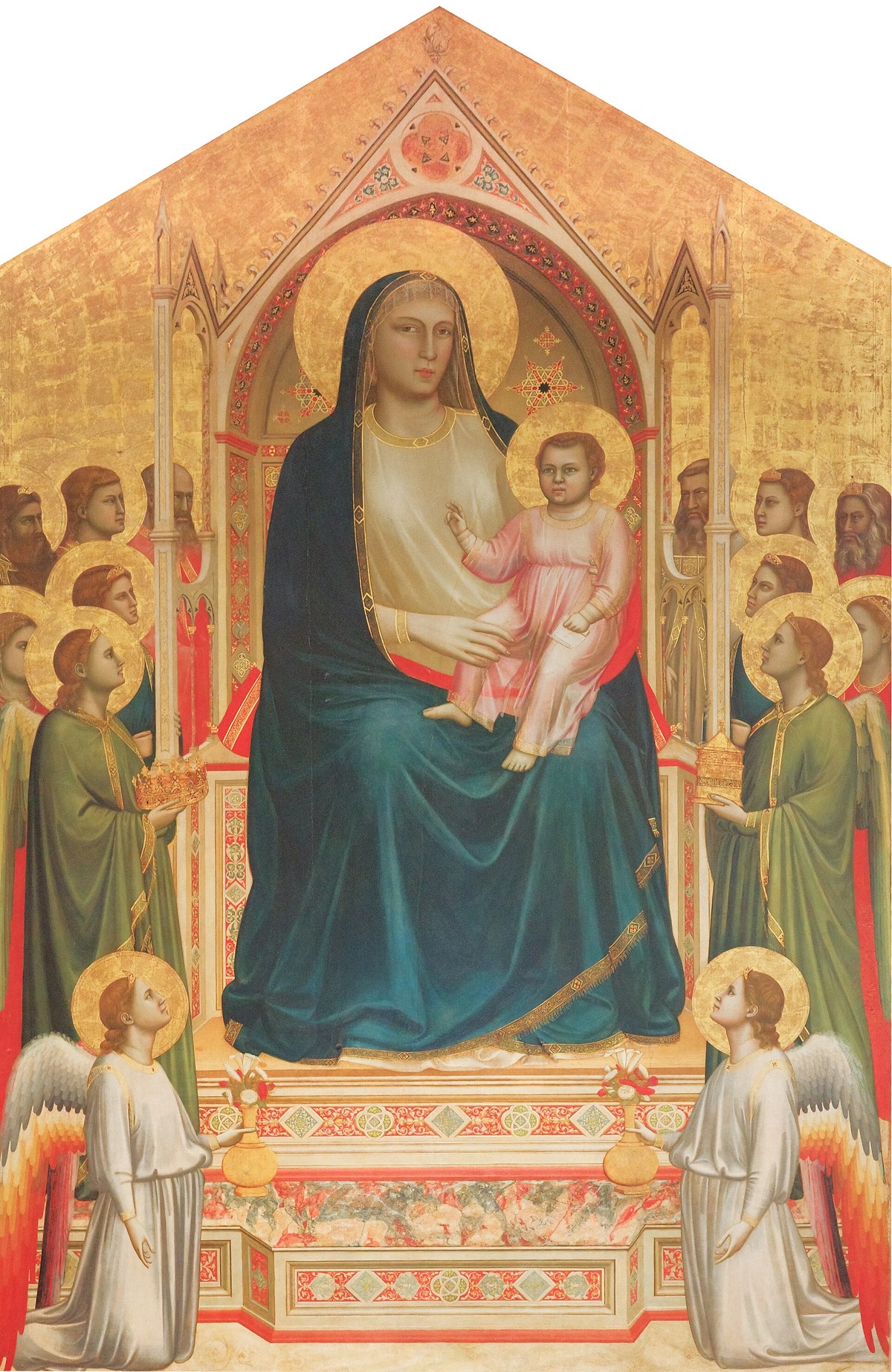
Painter, 1267 to 1337
Giotto
Giotto was a Florentine. The Uffizi has his great Madonna, Santa Croce has two chapels he frescoed, Santa Maria Novella has his Crucifix, and the bell tower beside the cathedral is his design.
Proto-Renaissance. 4 works in 4 museums
See the artist
Picture: Yair Haklai, CC BY-SA 4.0
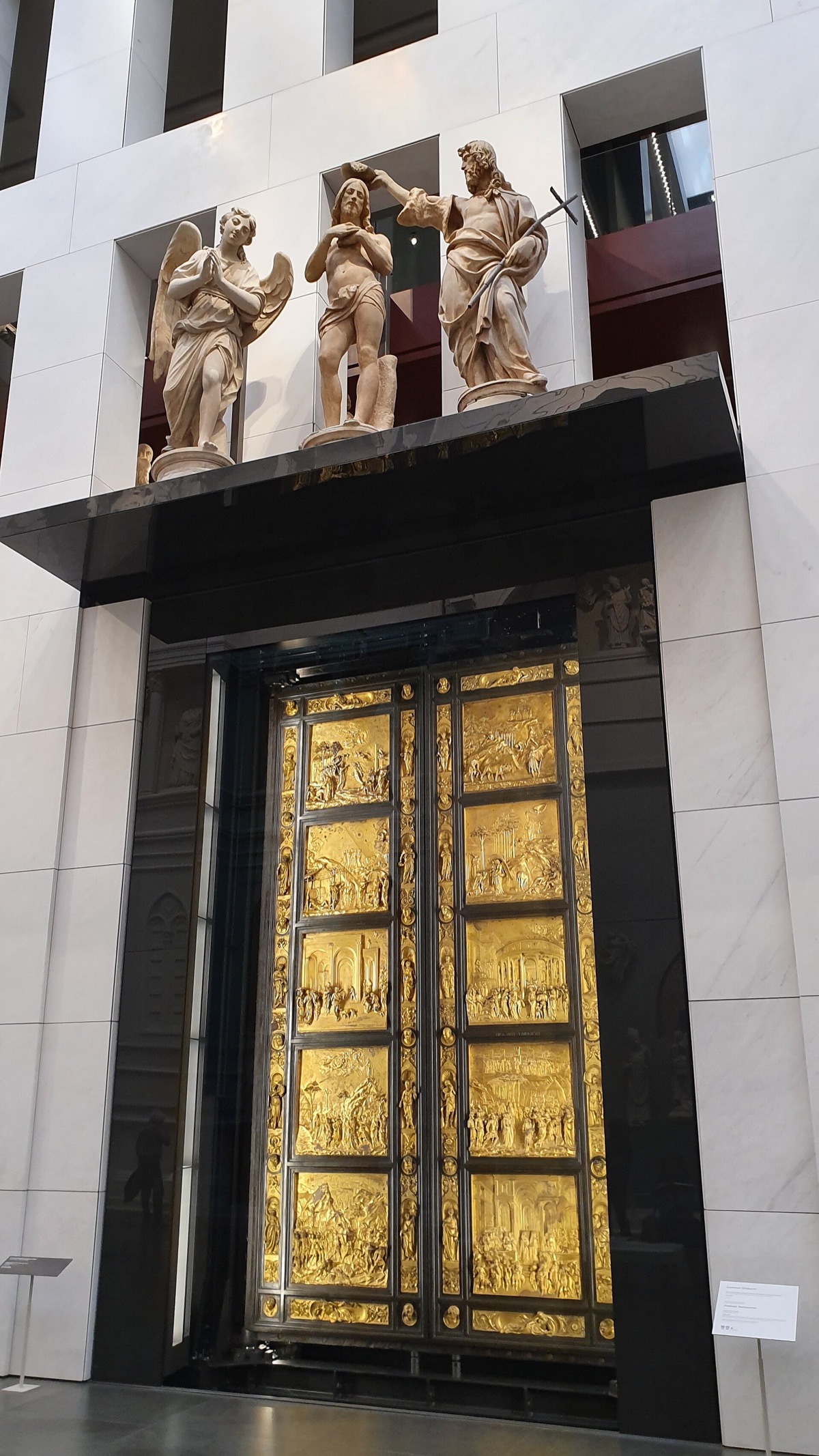
Sculptor, 1378 to 1455
Lorenzo Ghiberti
Ghiberti gave almost fifty years to two pairs of bronze doors for the baptistery of Florence. The second pair are the Gates of Paradise, and the originals are in the cathedral museum.
Early Renaissance. 3 works in 2 museums
See the artist
Picture: Rufus46, CC BY 3.0
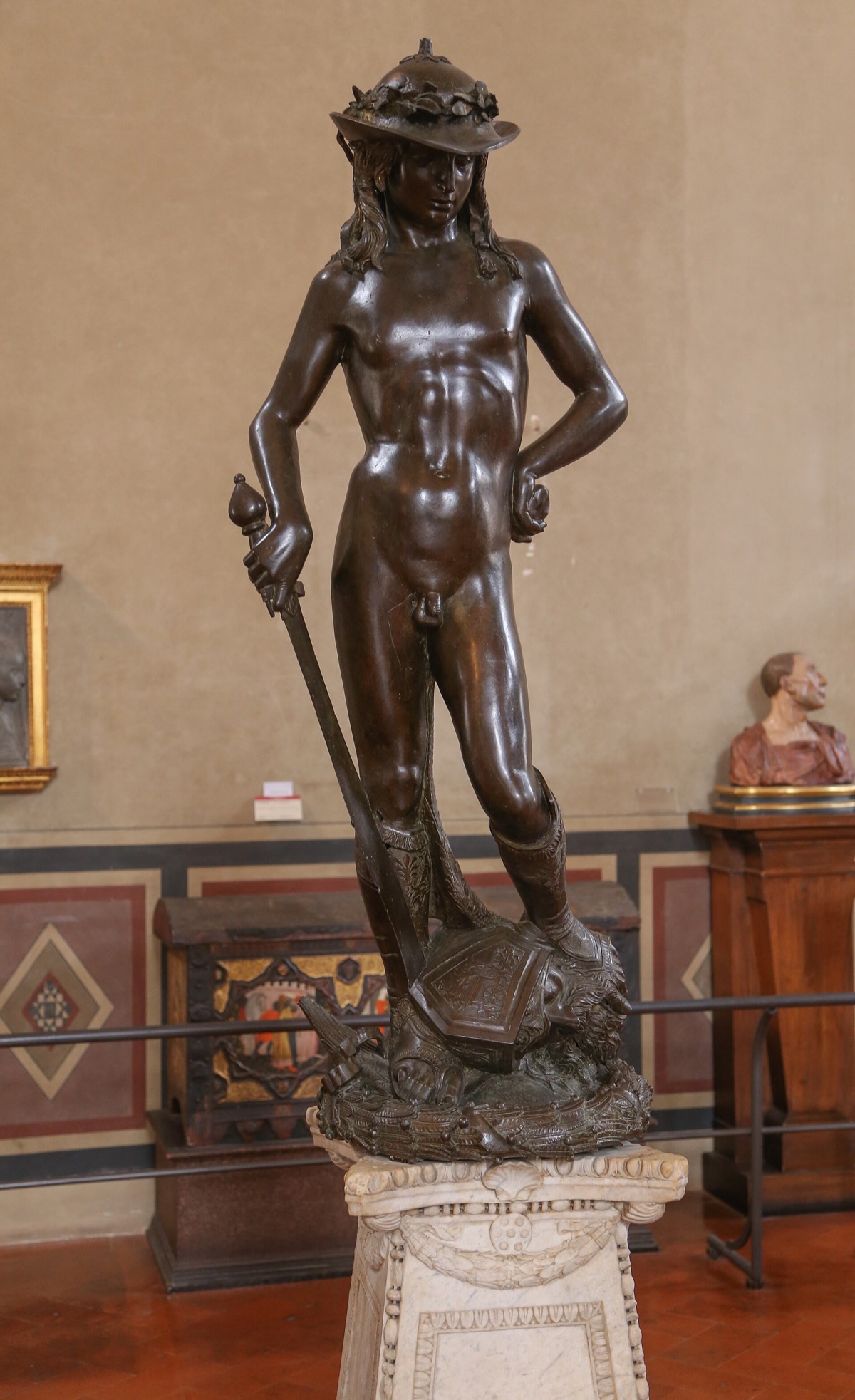
Sculptor, 1386 to 1466
Donatello
The greatest sculptor of the fifteenth century was a Florentine, and the city has kept his work: the bronze David and Saint George in the Bargello, the Magdalene in the cathedral museum, the Judith in the Palazzo Vecchio.
Early Renaissance. 5 works in 3 museums
See the artist
Painter, 1395 to 1455
Fra Angelico
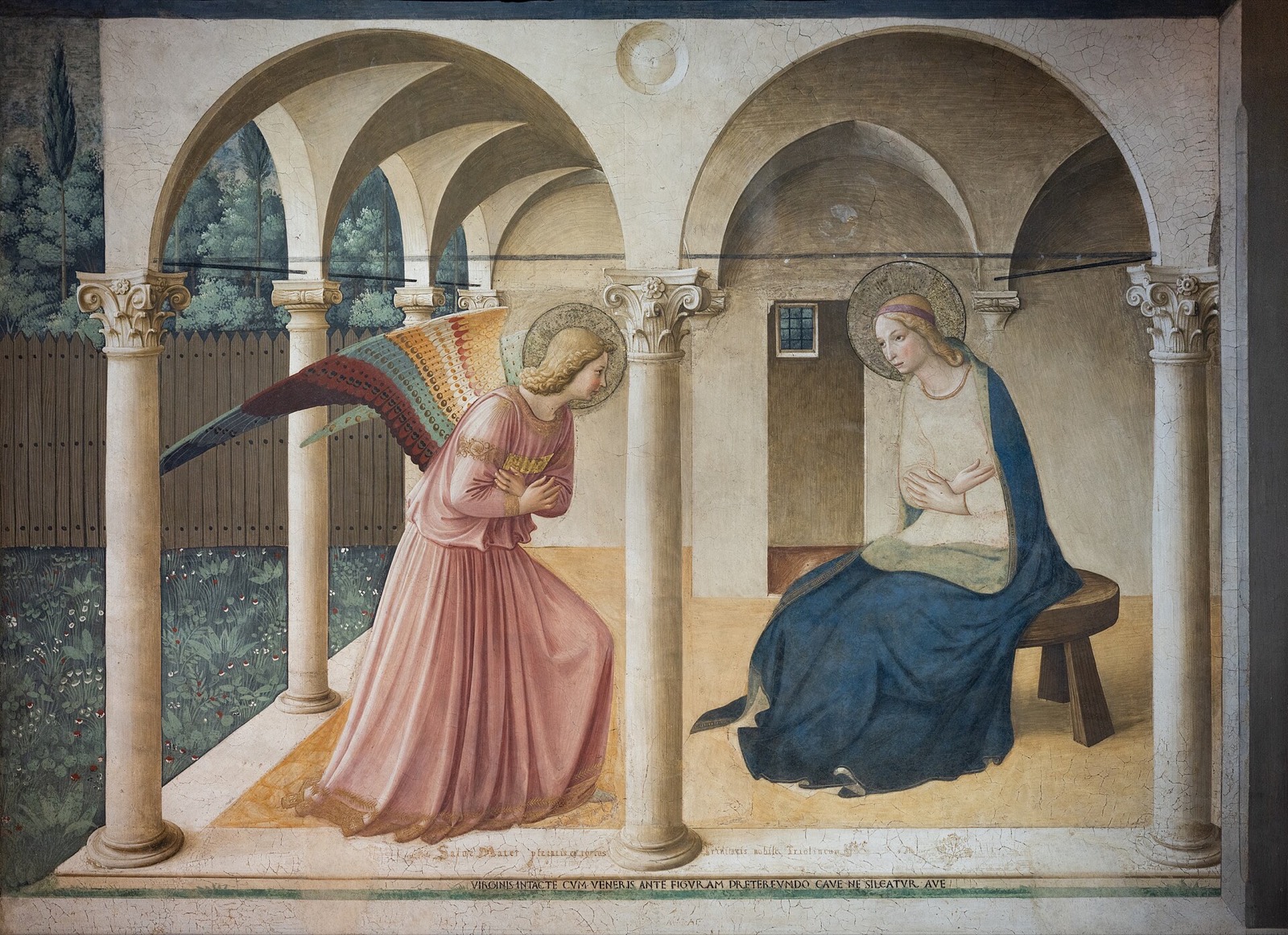
Fra Angelico was a friar at San Marco, and painted his own convent. Its museum has the Annunciation at the head of the stairs, a fresco in every cell and his altarpieces from the churches of Florence.
Early Renaissance. 4 works in 1 museum
See the artist
Painter, 1397 to 1475
Paolo Uccello
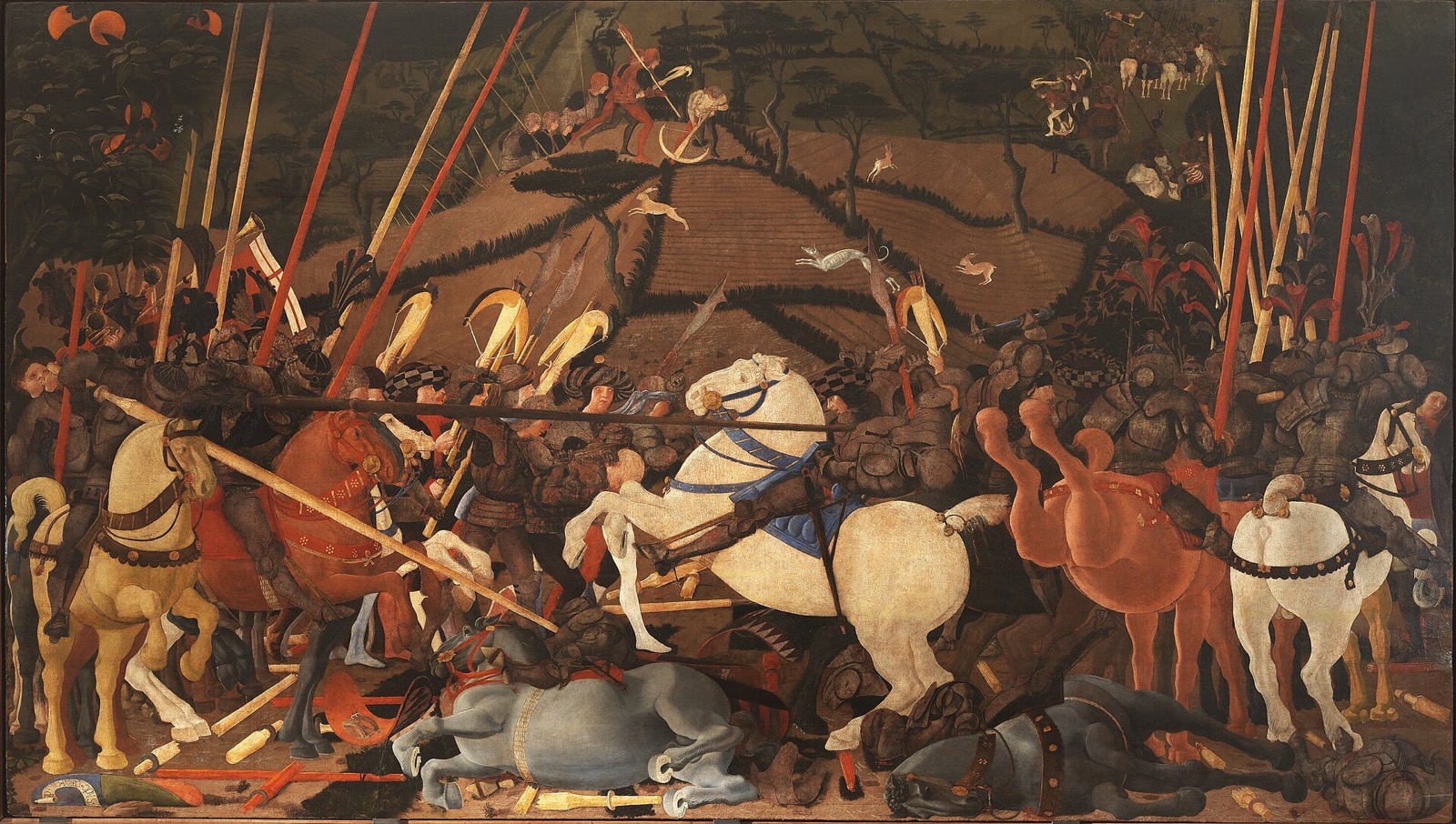
Paolo Uccello was a Florentine obsessed with perspective. The Uffizi has the central panel of his Battle of San Romano, and the cathedral has his painted monument to a soldier and the clock above its door.
Early Renaissance. 3 works in 2 museums
See the artist
Painter, 1401 to 1428
Masaccio
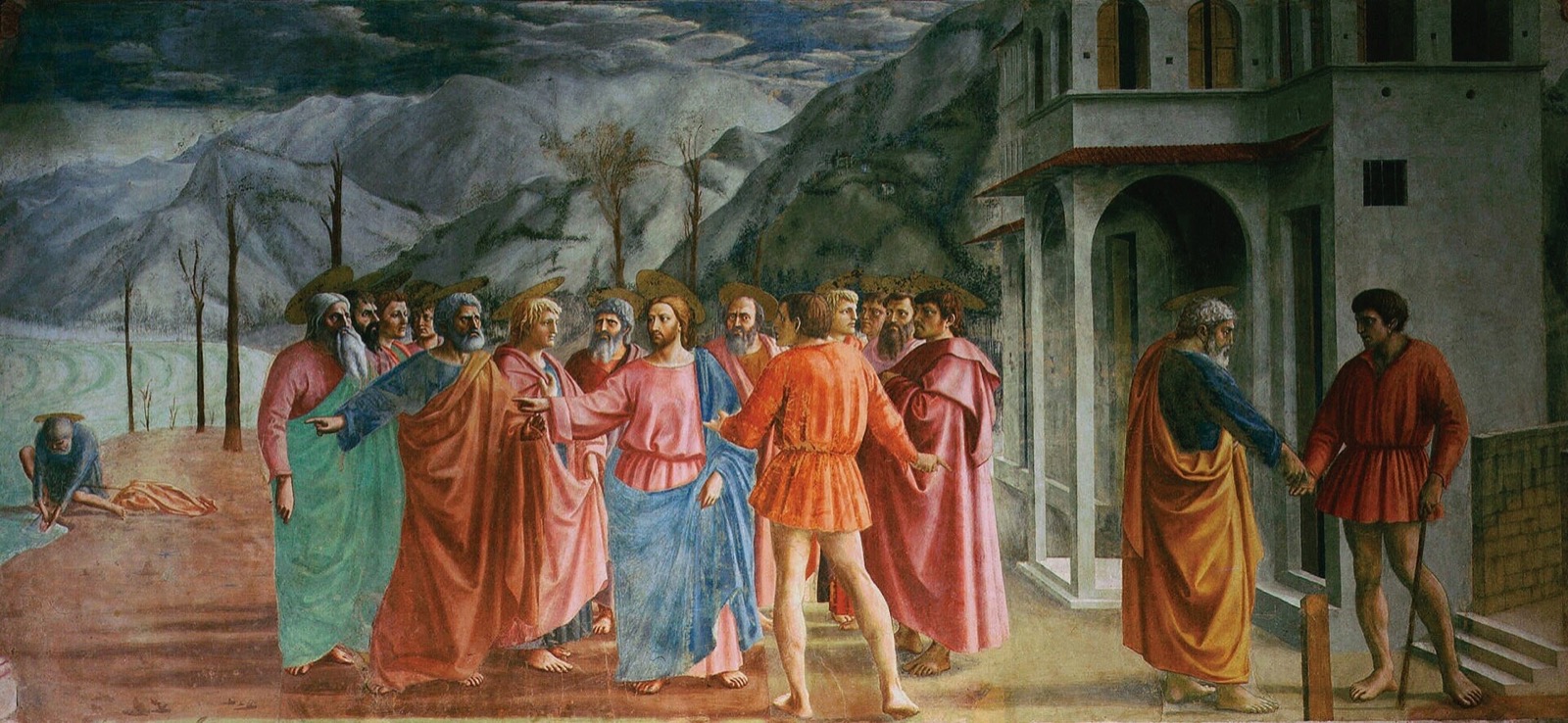
Masaccio died at twenty-six, and in six years of work changed painting for good. His frescoes are in the Brancacci Chapel and in Santa Maria Novella, and the Uffizi has an altarpiece.
Early Renaissance. 3 works in 3 museums
See the artist
Picture: Commonists, CC BY-SA 4.0
Painter, 1406 to 1469
Filippo Lippi
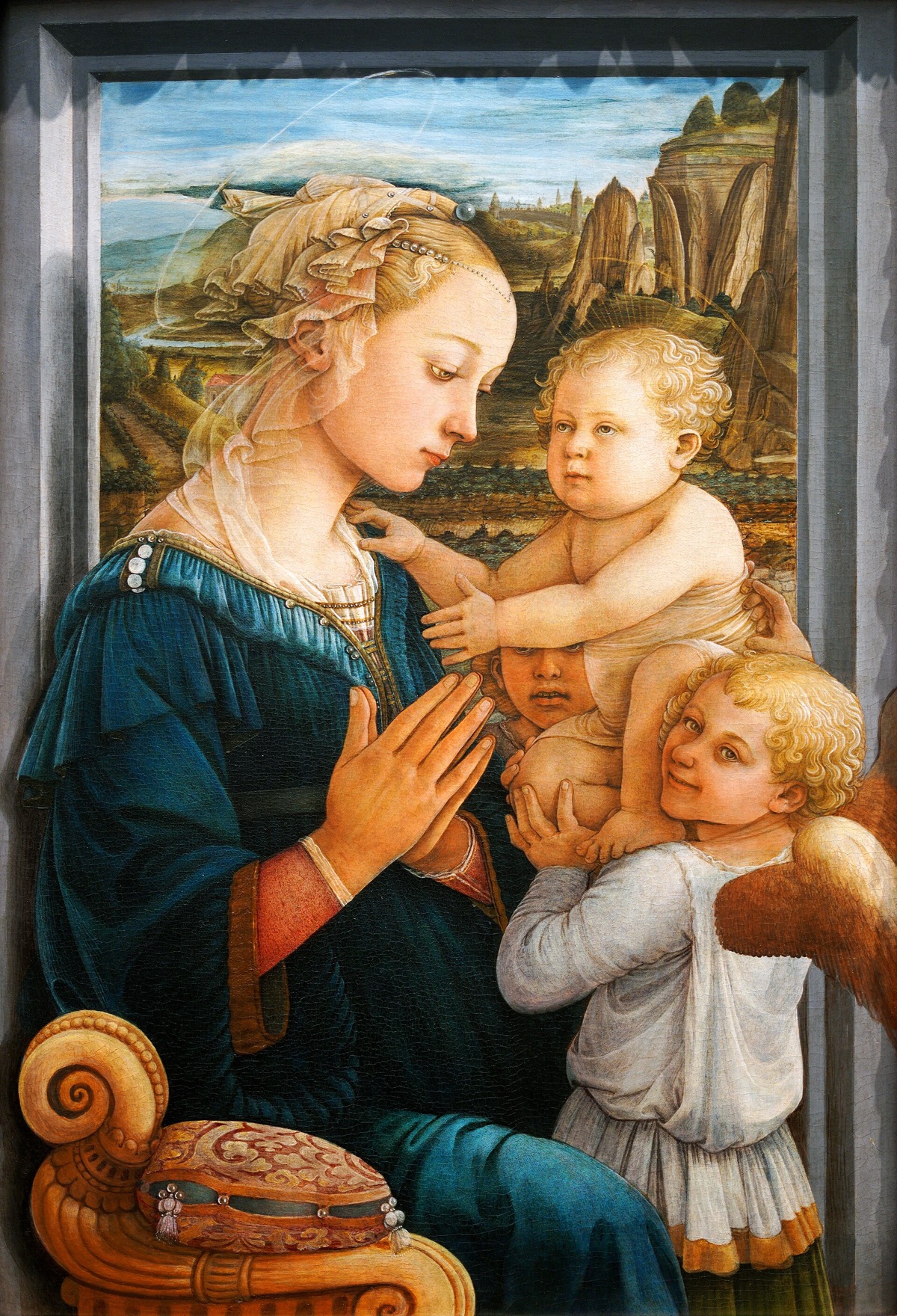
A friar who ran off with a nun, and the teacher of Botticelli. The Uffizi has his Madonna and Child with Two Angels, the tenderest picture of its century.
Early Renaissance. 3 works in 2 museums
See the artist
Picture: Francesco Bini, CC BY-SA 4.0
Painter, 1415 to 1492
Piero della Francesca
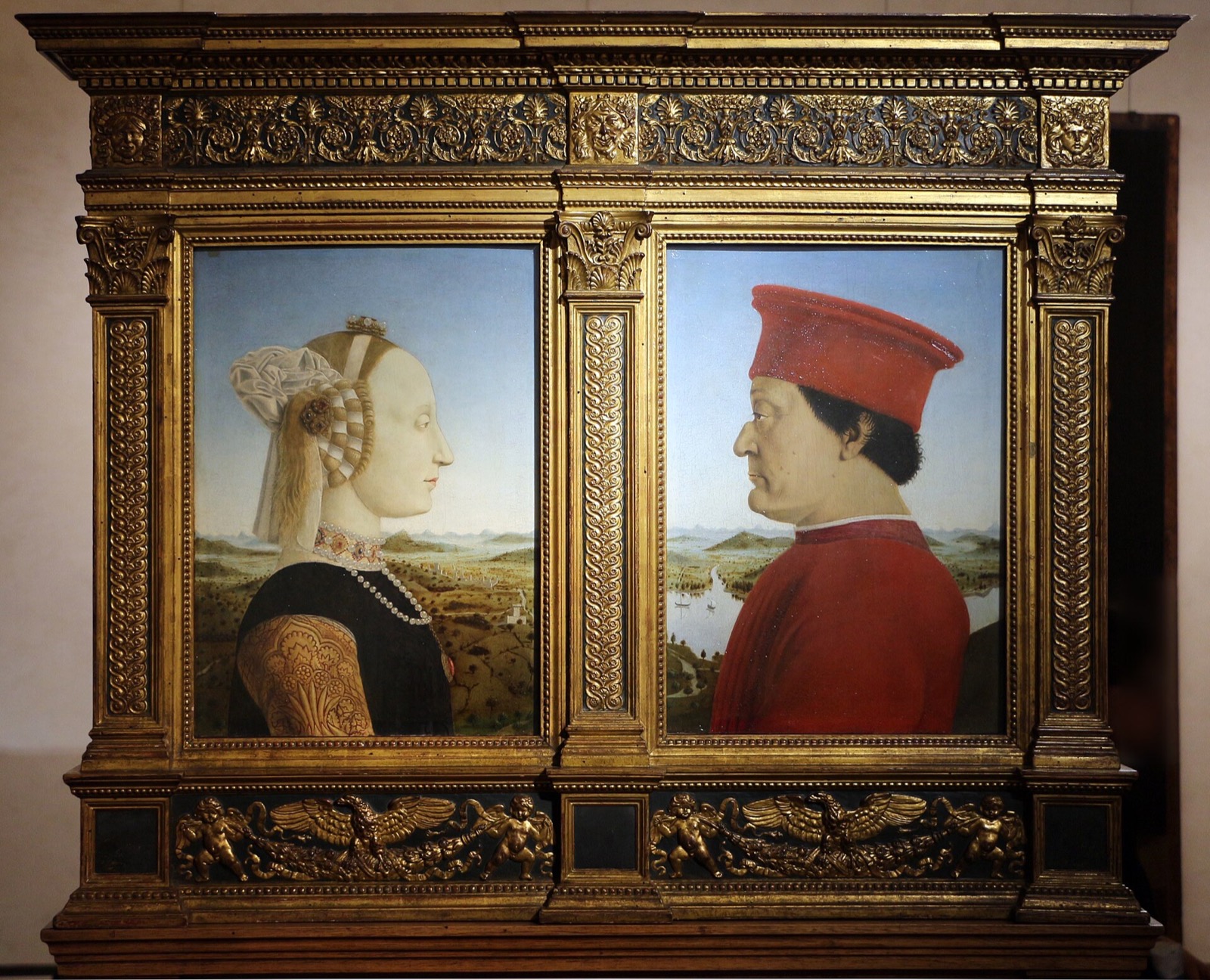
The Uffizi has one work by Piero della Francesca, and it is among the most famous portraits of the Renaissance: the Duke and Duchess of Urbino, facing each other in profile.
Early Renaissance. 1 work in 1 museum
See the artist
Painter, 1421 to 1497
Benozzo Gozzoli
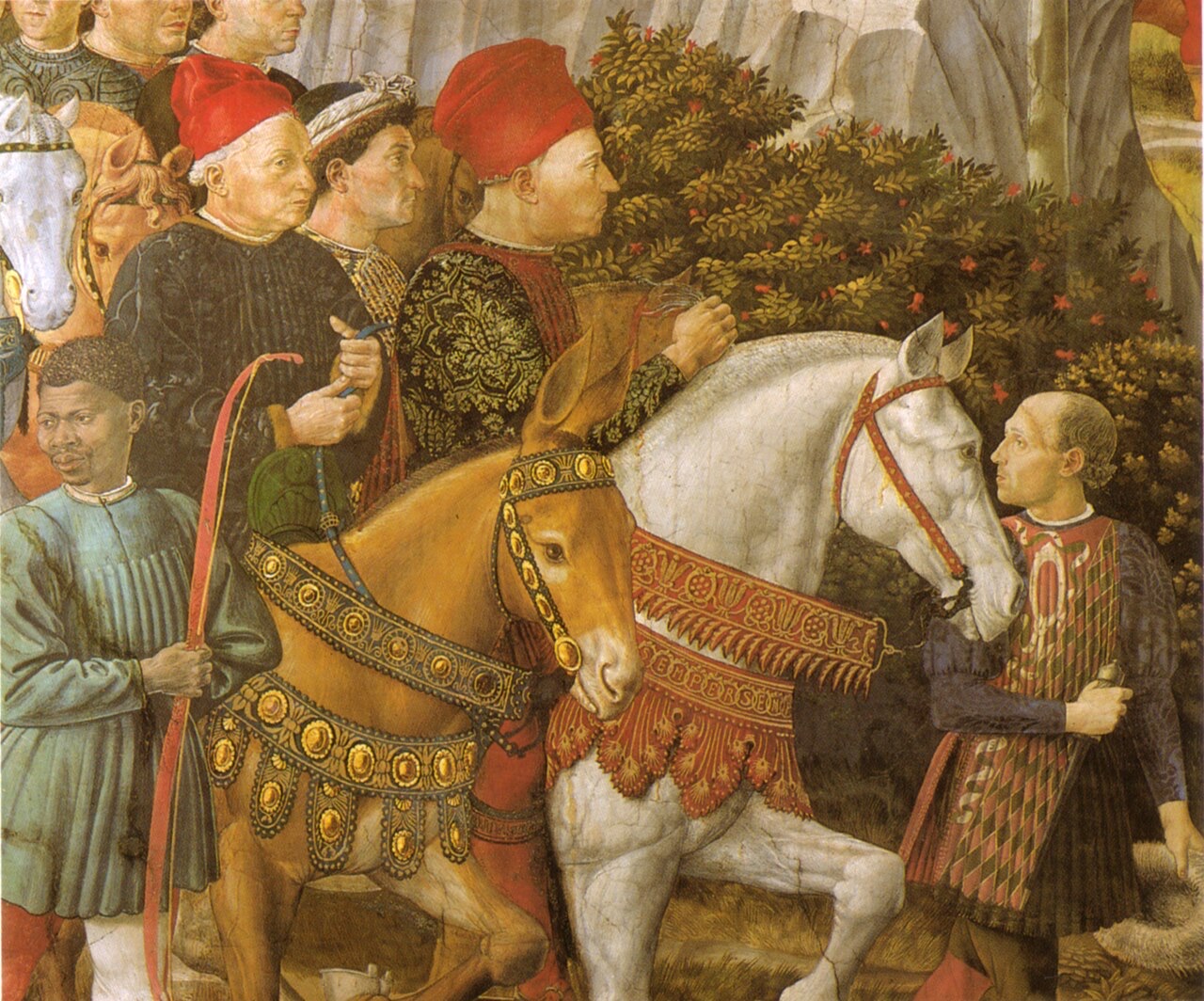
Gozzoli painted one room that everyone remembers: the chapel of the Medici palace, where the three kings ride to Bethlehem through Tuscany with the Medici in their train.
Early Renaissance. 1 work in 1 museum
See the artist
Painter, 1430 to 1516
Giovanni Bellini
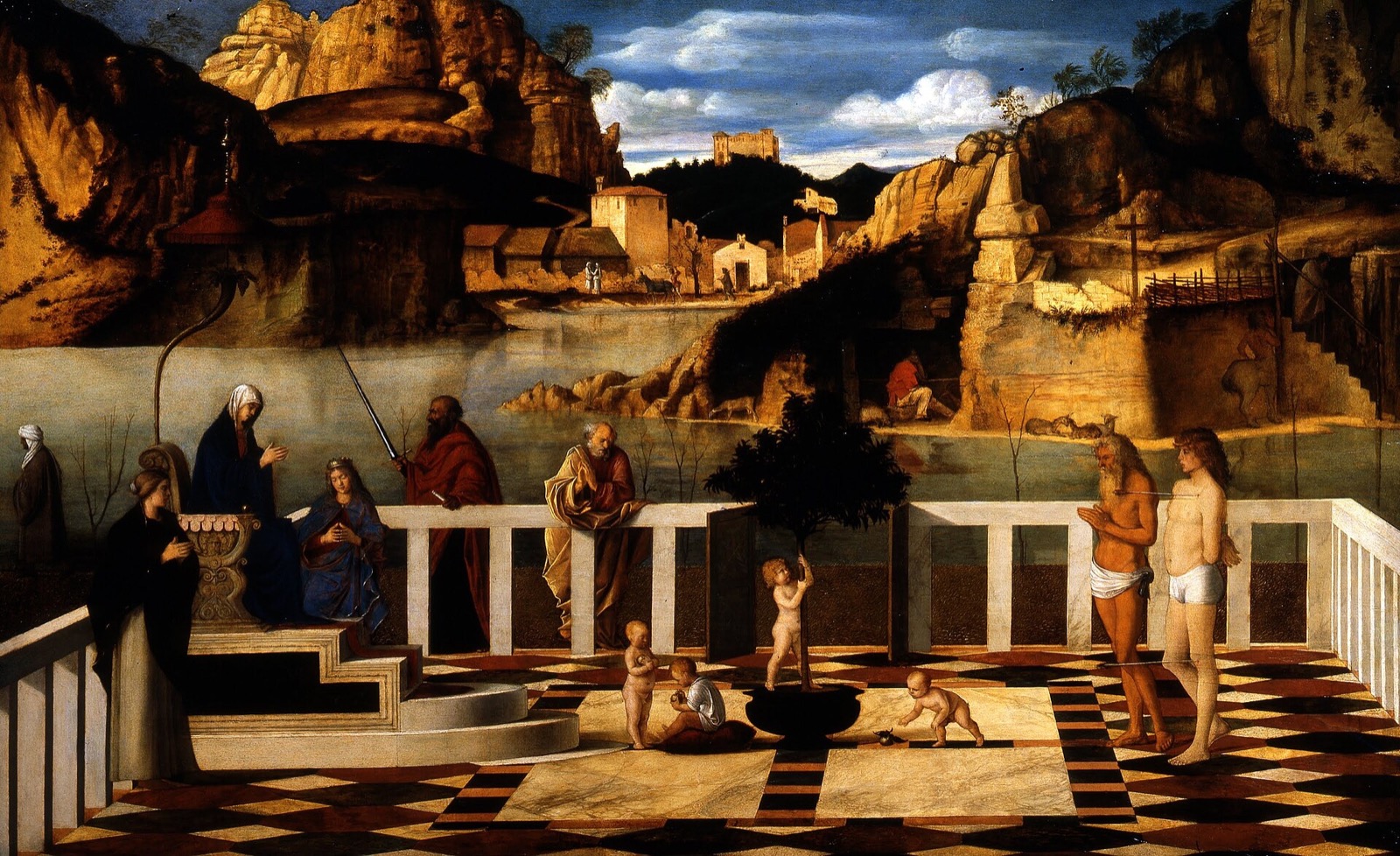
The Uffizi has one of Giovanni Bellini's strangest and most beautiful pictures, the Sacred Allegory, whose meaning nobody has settled.
Venetian Renaissance. 1 work in 1 museum
See the artist
Picture: Rufus46, CC BY-SA 3.0
Painter and sculptor, 1435 to 1488
Andrea del Verrocchio
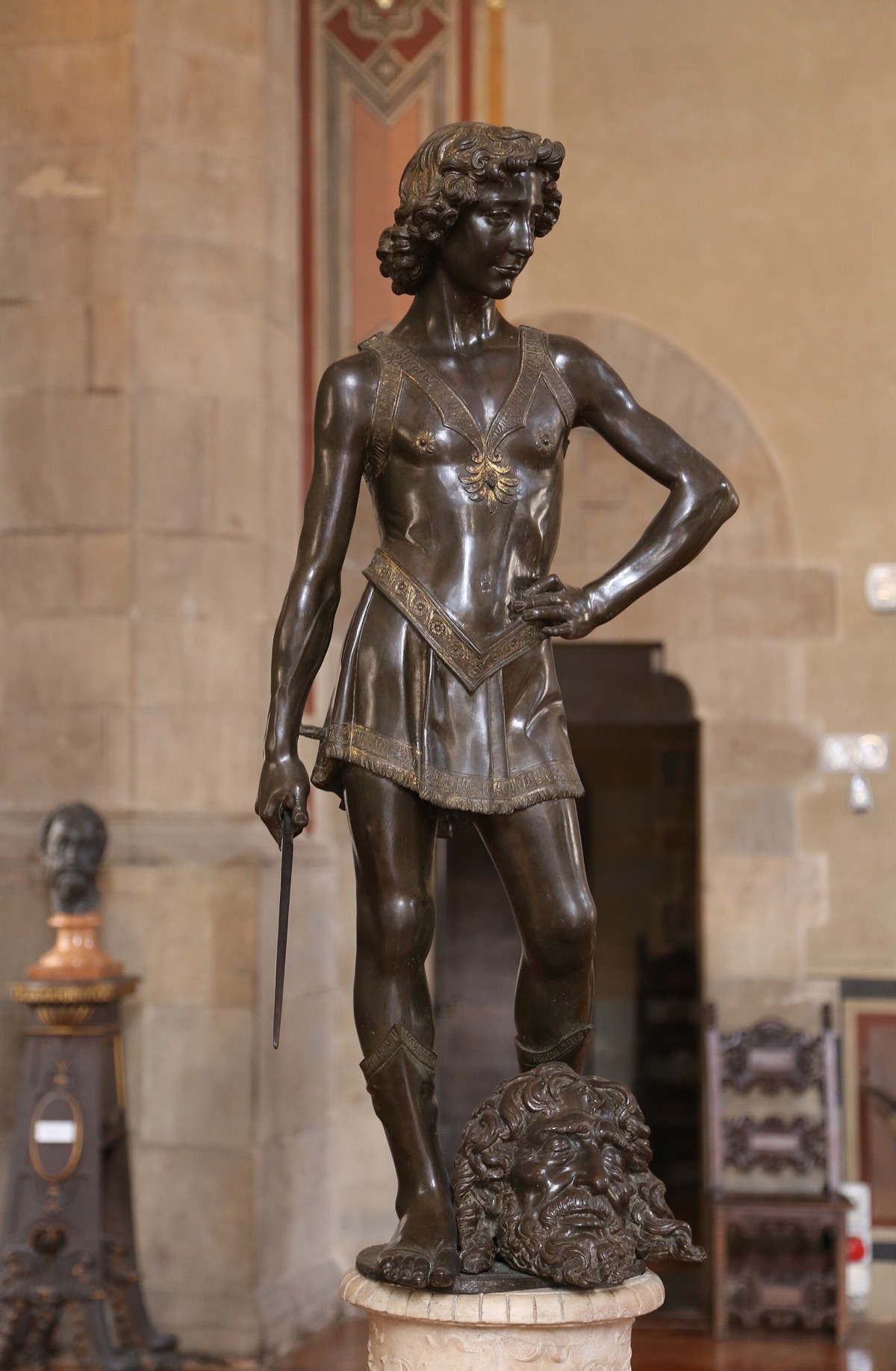
The master of the workshop where Leonardo trained. The Bargello has his bronze David, the Uffizi the Baptism he painted with his pupil, and the Palazzo Vecchio his boy with a dolphin.
Early Renaissance. 4 works in 4 museums
See the artist
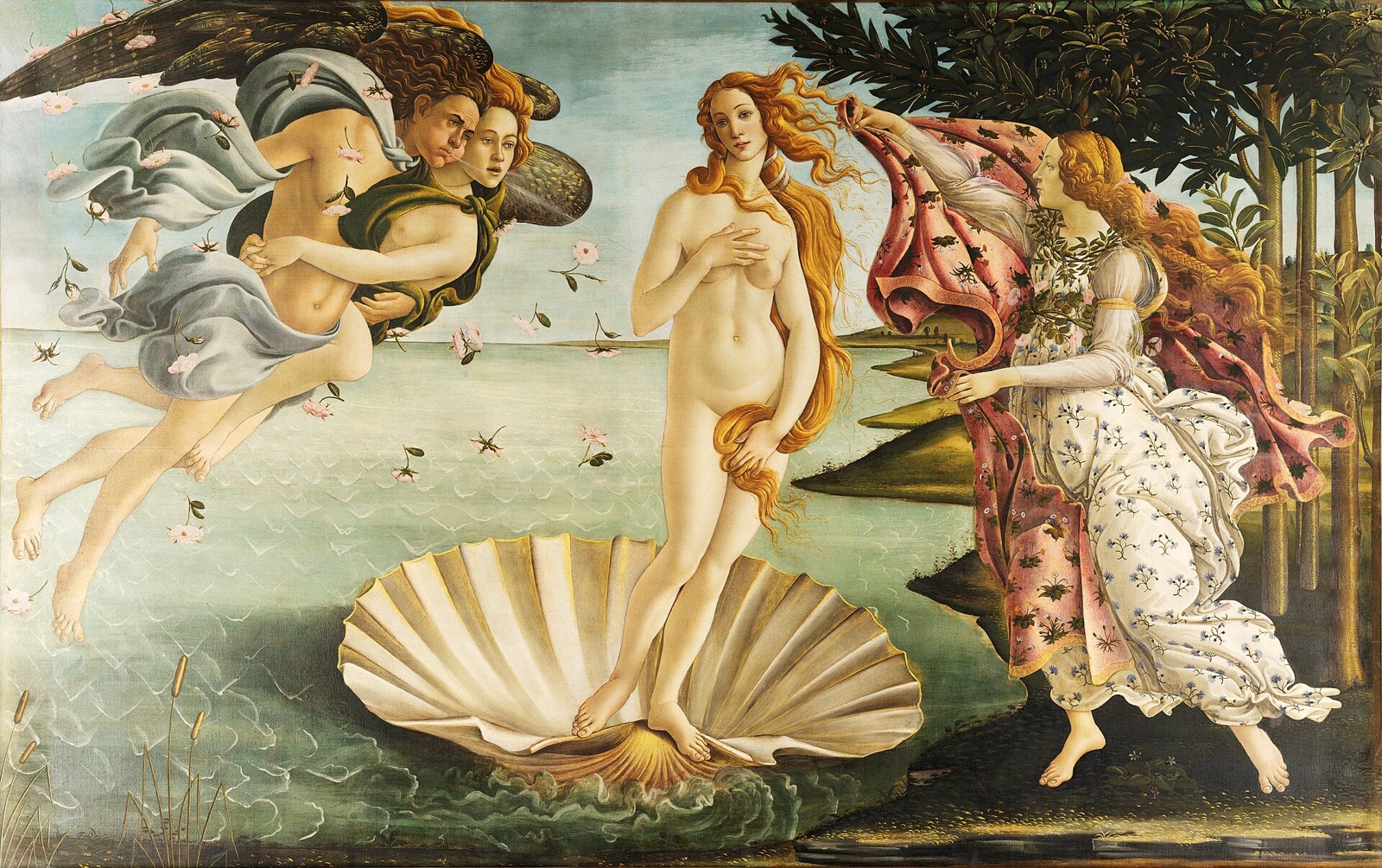
Painter, 1445 to 1510
Sandro Botticelli
Botticelli lived and died in Florence, and the Uffizi has the best of him in two rooms: the Birth of Venus, the Primavera and the Adoration of the Magi in which he painted himself among the Medici.
Early Renaissance. 5 works in 2 museums
See the artist
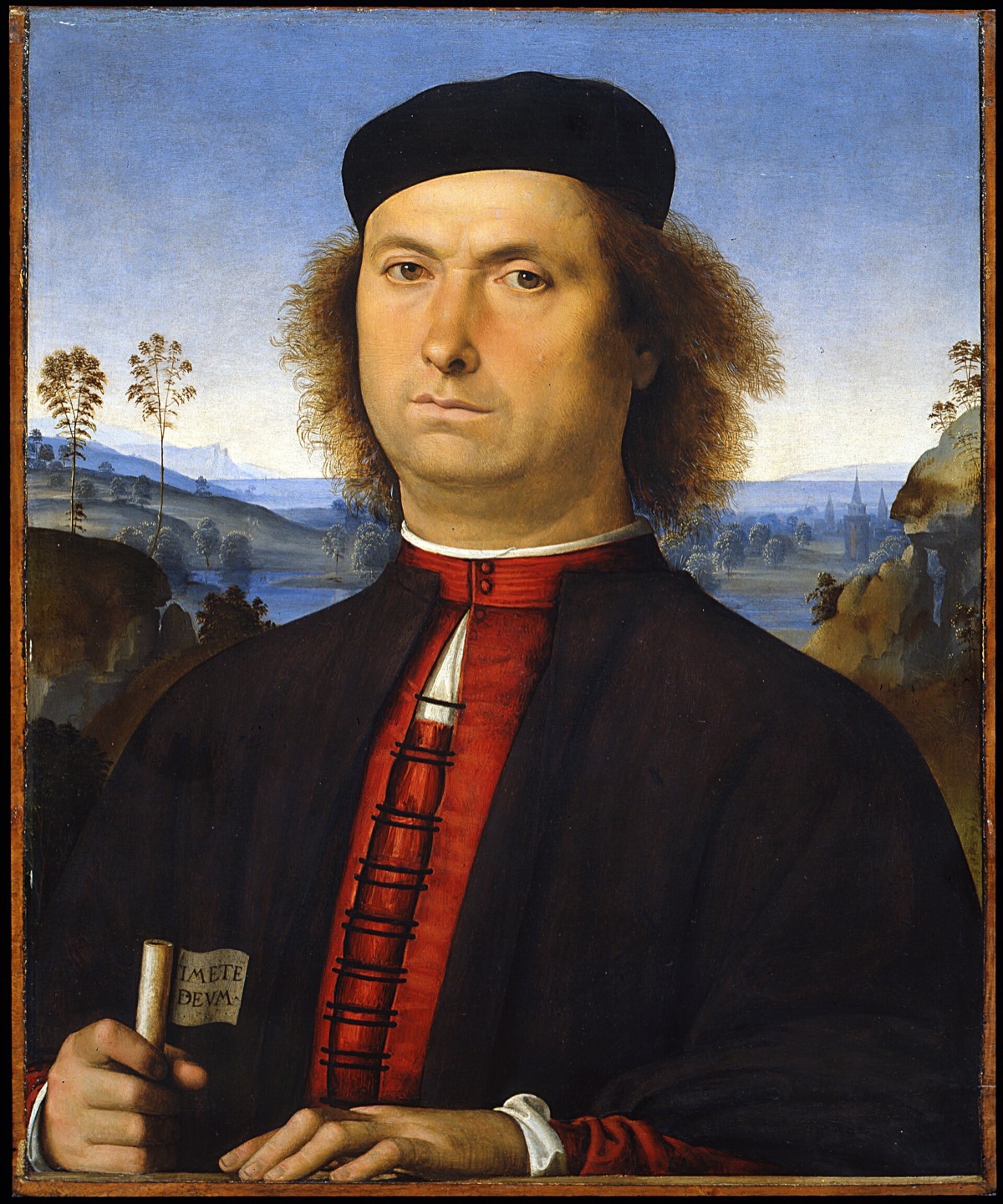
Painter, 1446 to 1523
Pietro Perugino
Perugino kept a workshop in Florence for years. The Uffizi has his portrait of a Florentine craftsman, the Pitti Palace has his Lamentation, and a quiet convent has his Crucifixion on its wall.
Early Renaissance. 3 works in 3 museums
See the artist
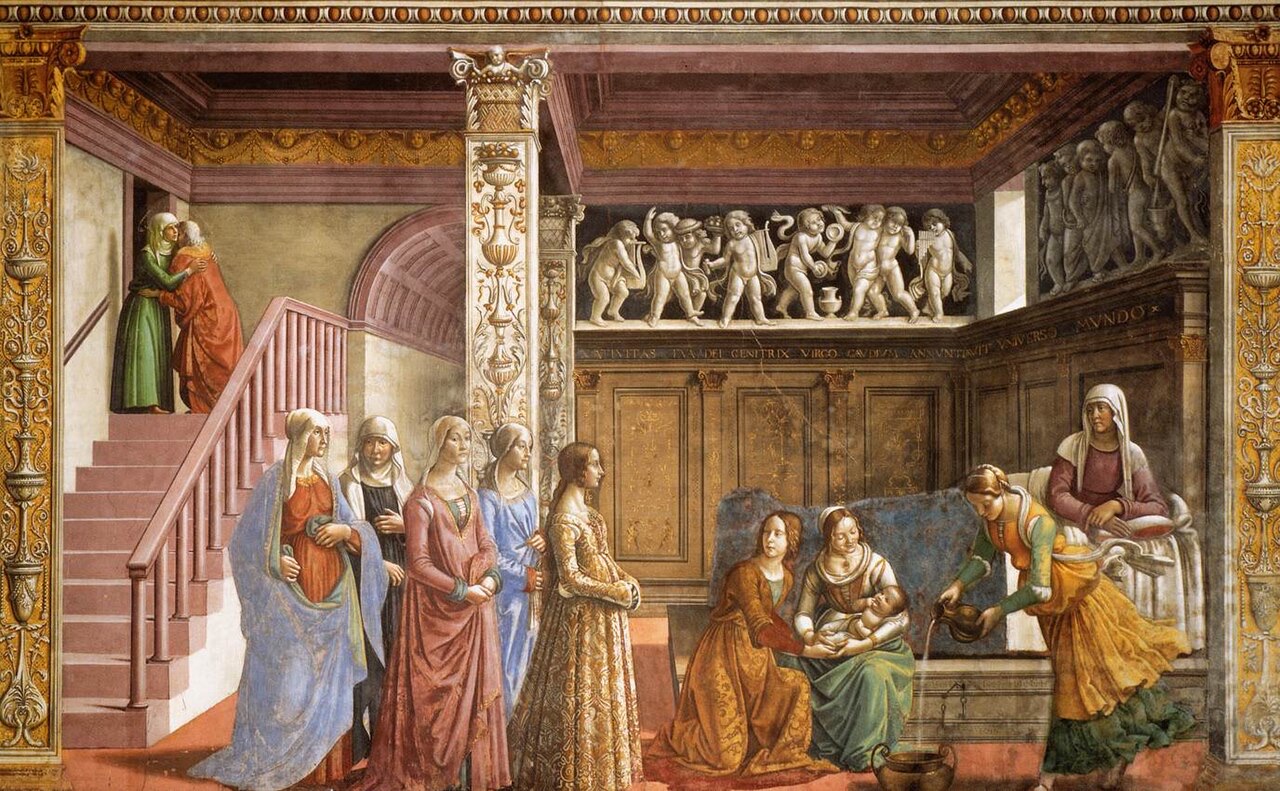
Painter, 1448 to 1494
Domenico Ghirlandaio
The chronicler of Florence in the time of Lorenzo the Magnificent. His frescoes in Santa Maria Novella and Santa Trinita are sacred stories acted out by the city's bankers, wives and children.
Early Renaissance. 3 works in 3 museums
See the artist
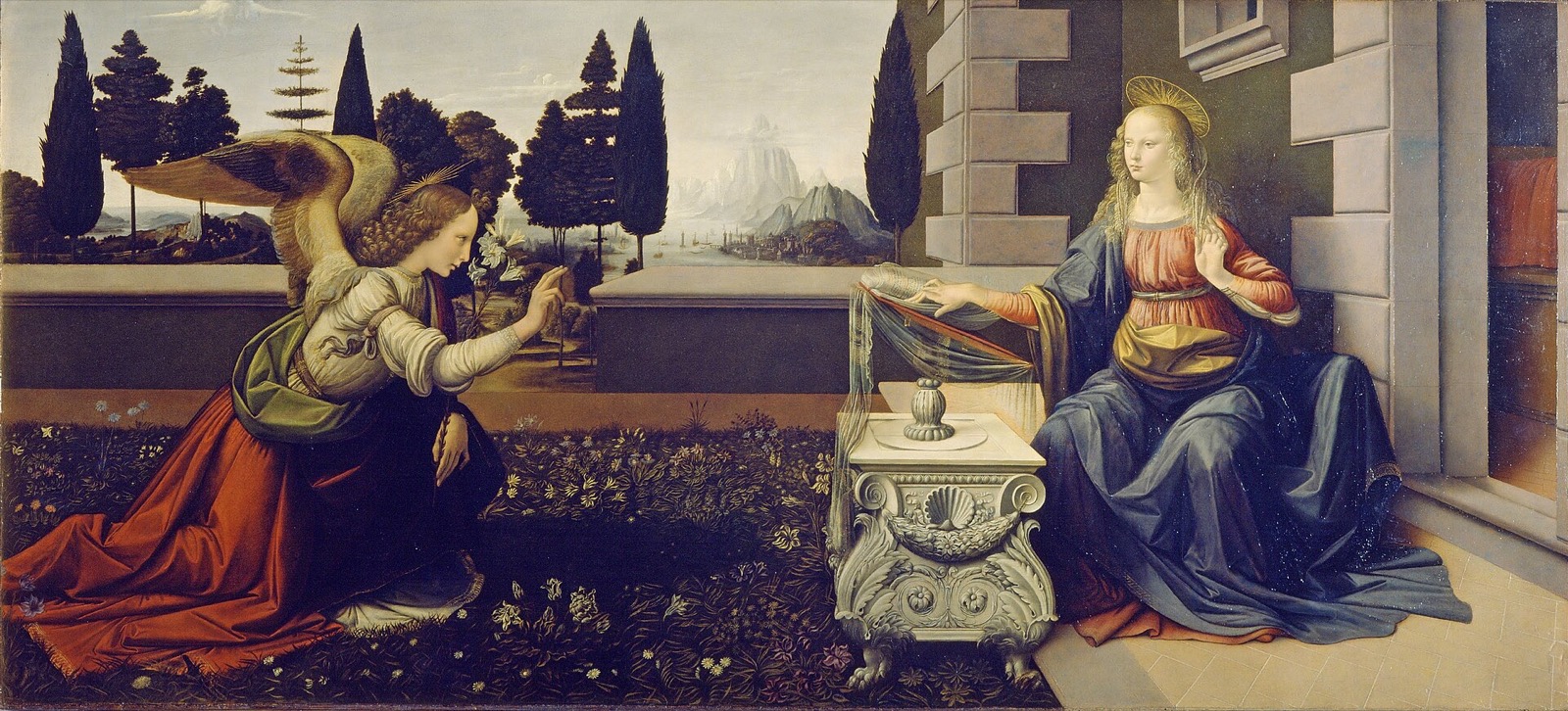
Painter, 1452 to 1519
Leonardo da Vinci
Leonardo learned to paint in Florence, and the Uffizi has what he made there as a young man: the Annunciation, the angel he added to his master's Baptism, and the Adoration of the Magi he left unfinished.
High Renaissance. 3 works in 1 museum
See the artist
Picture: Livioandronico2013, CC BY-SA 4.0
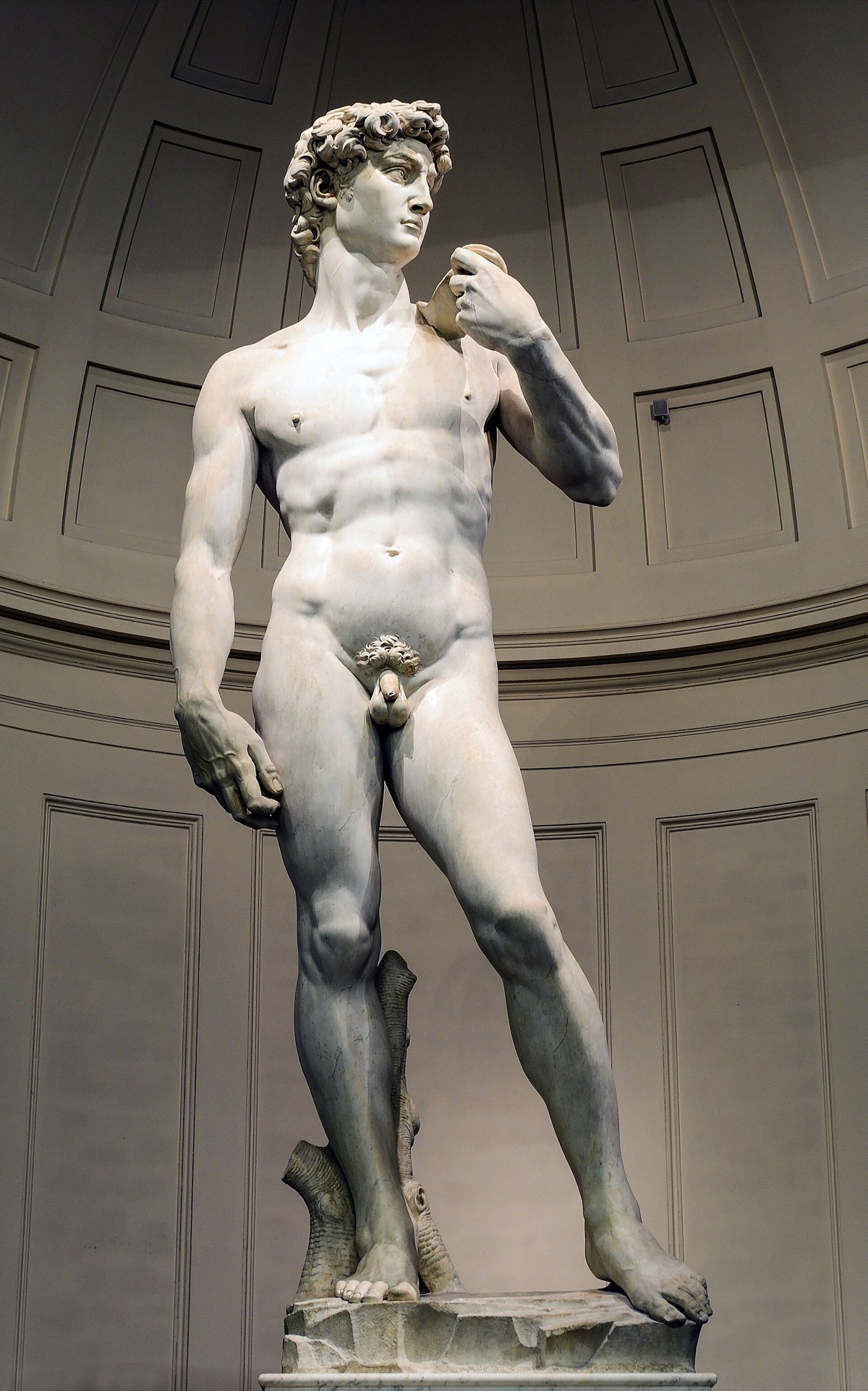
Painter and sculptor, 1475 to 1564
Michelangelo
Florence made Michelangelo and kept the David. The Accademia has it with the unfinished Prisoners, the Medici Chapels are his from floor to dome, and his first and last sculptures are a short walk apart.
High Renaissance. 6 works in 5 museums
See the artist
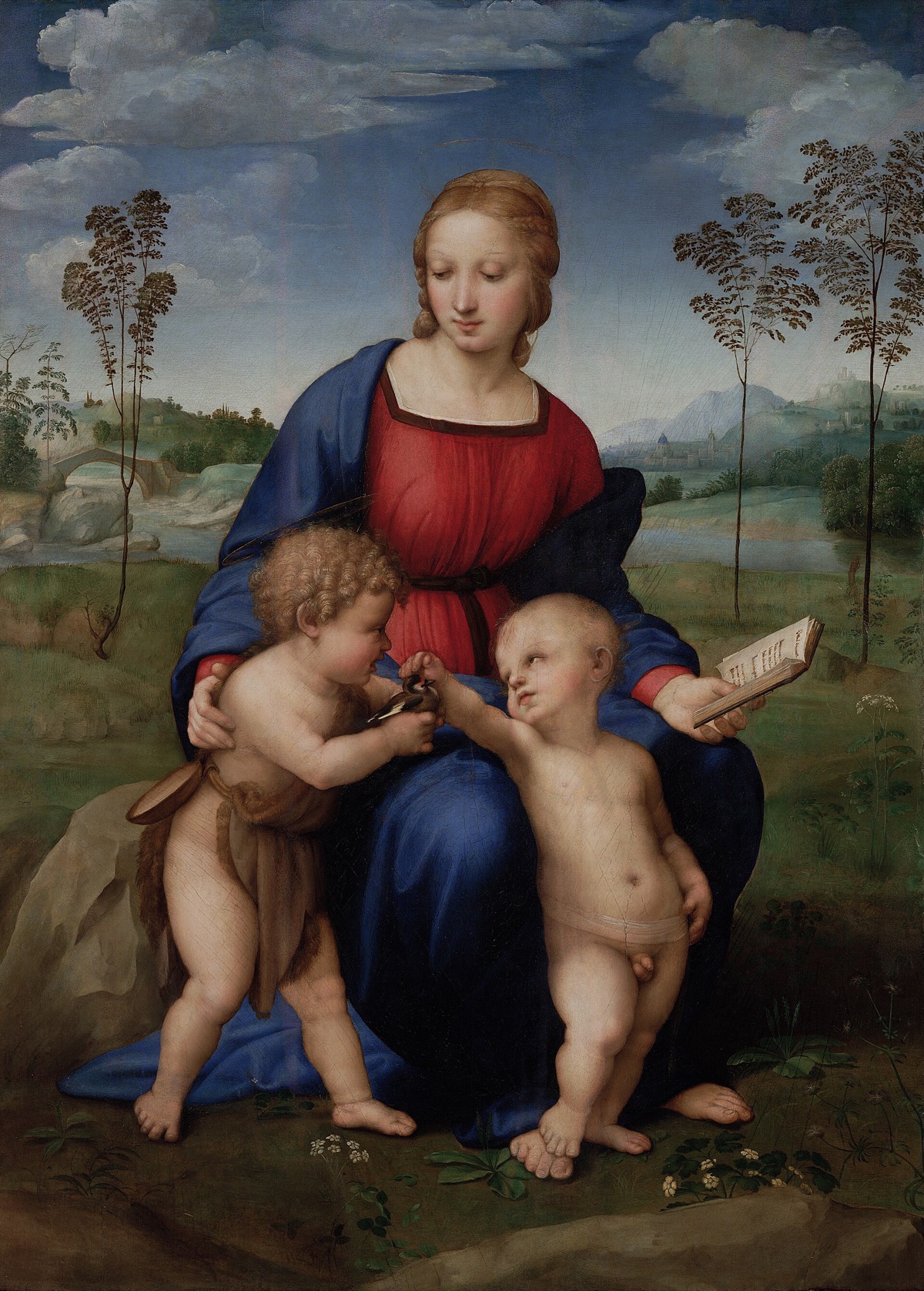
Painter, 1483 to 1520
Raphael
Raphael spent four years in Florence learning from Leonardo and Michelangelo. The Uffizi has the Madonna of the Goldfinch from those years, and the Pitti Palace has the Madonna of the Chair and La Velata.
High Renaissance. 4 works in 2 museums
See the artist
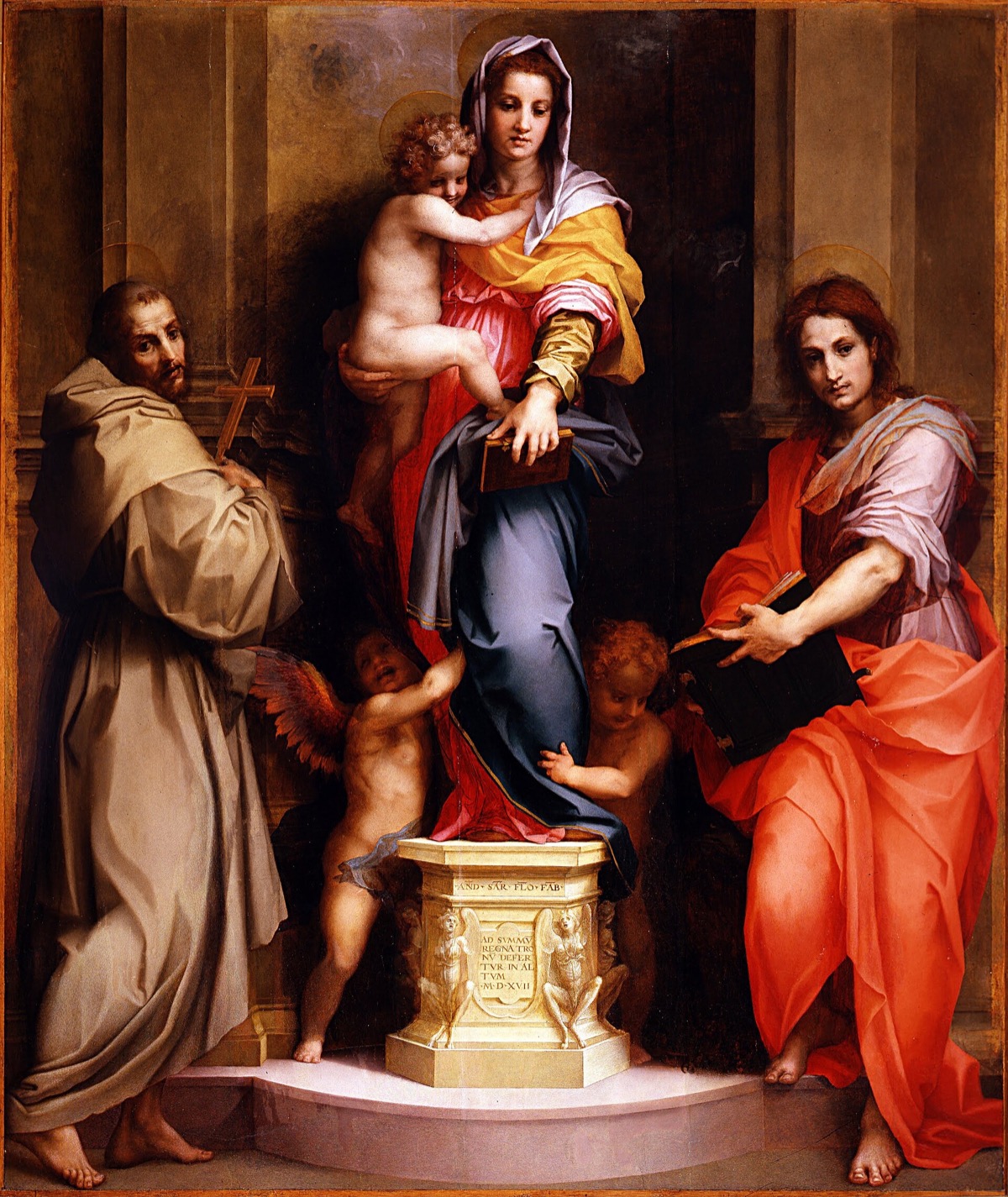
Painter, 1486 to 1530
Andrea del Sarto
The painter Florence called faultless. The Uffizi has his Madonna of the Harpies, and two cloisters in the city hold fresco cycles of his that hardly anyone visits.
High Renaissance. 3 works in 3 museums
See the artist
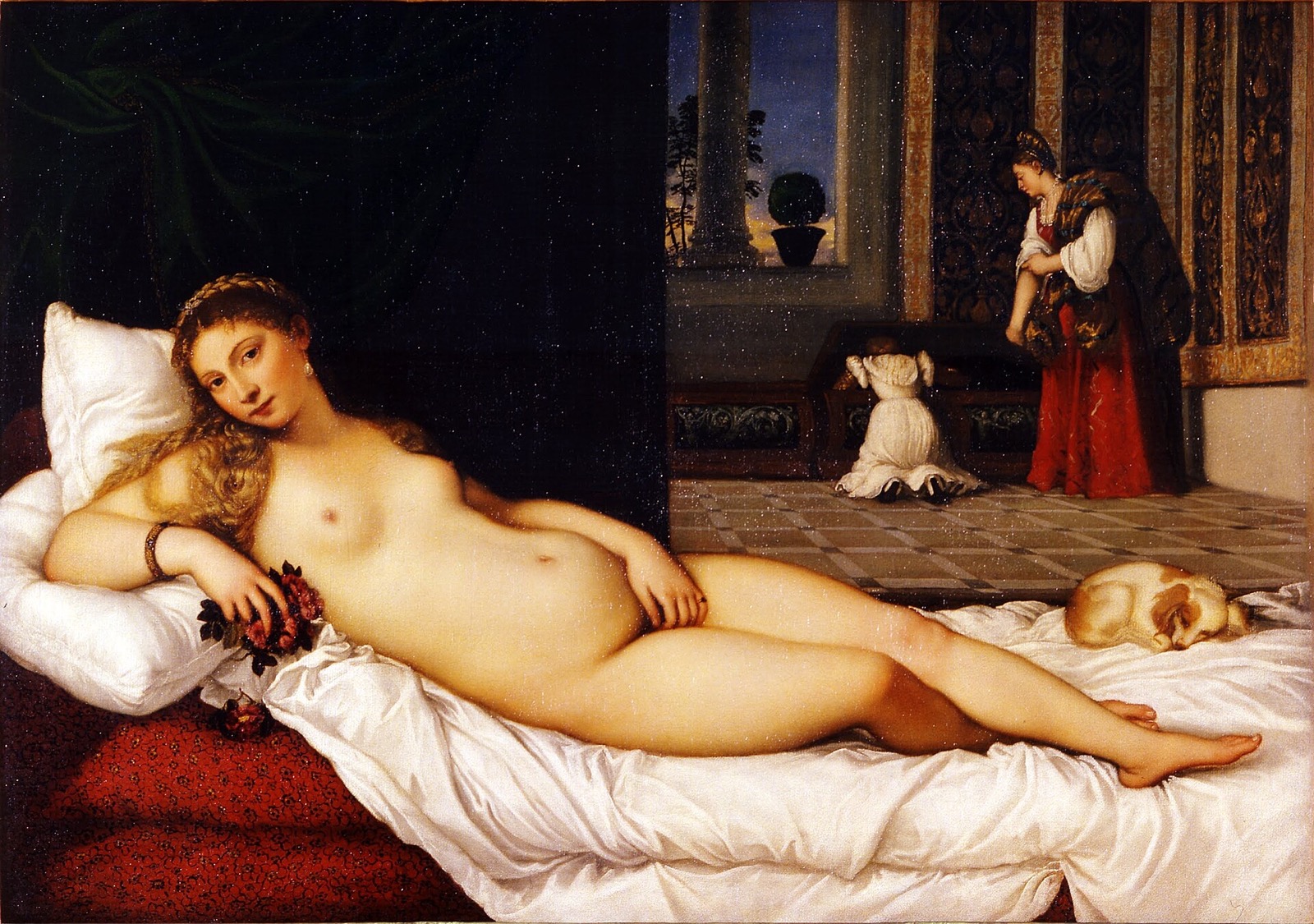
Painter, 1488 to 1576
Titian
The Medici inherited the pictures of the dukes of Urbino, and with them some of the best of Titian: the Venus of Urbino in the Uffizi, and a wall of portraits in the Pitti Palace.
Venetian Renaissance. 4 works in 2 museums
See the artist
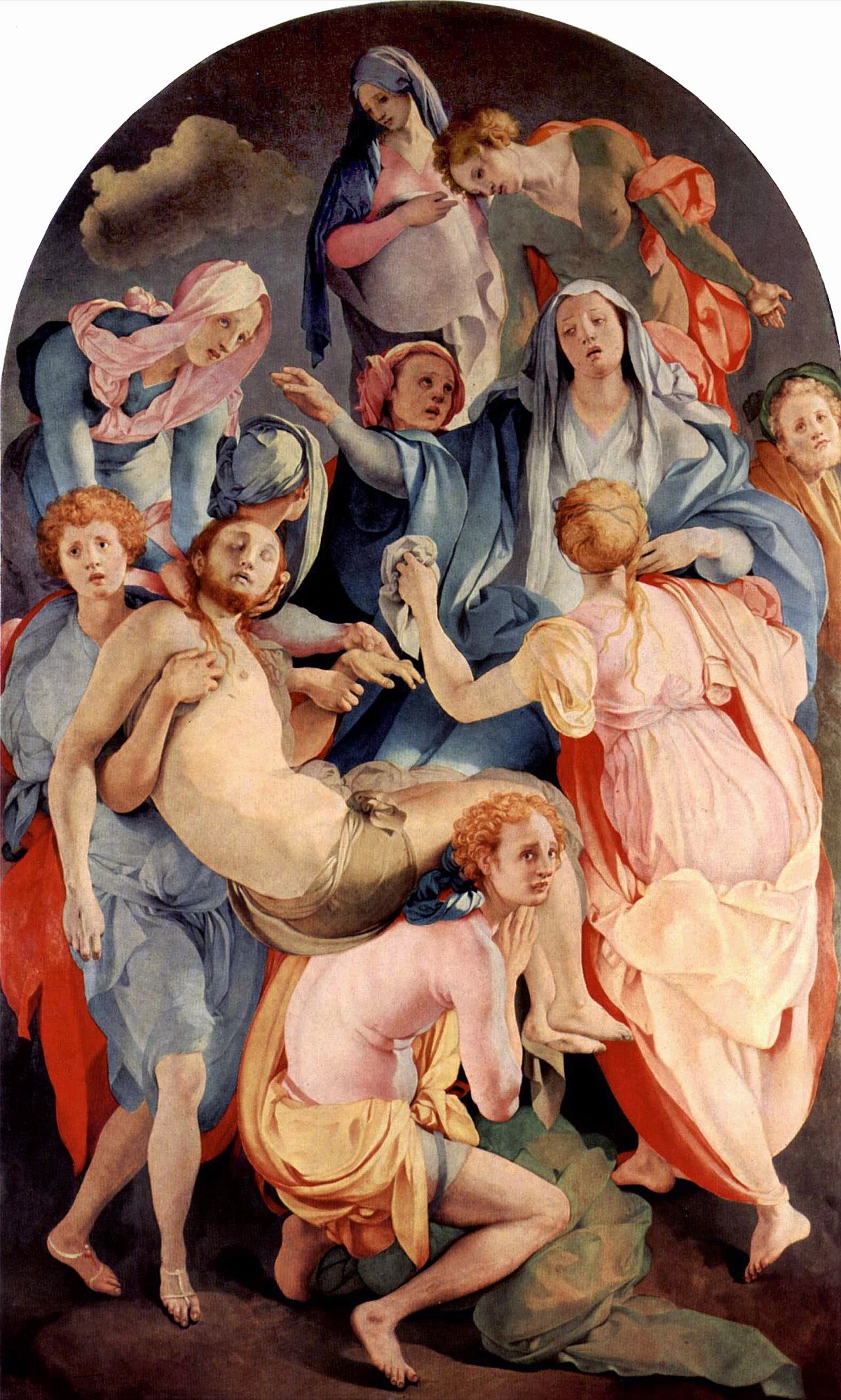
Painter, 1494 to 1557
Pontormo
The strangest painter of the Florentine Renaissance. His Deposition, in a chapel a few steps from the Ponte Vecchio, is all pink, pale blue and anguish, with no cross and no ground.
Mannerism. 3 works in 2 museums
See the artist
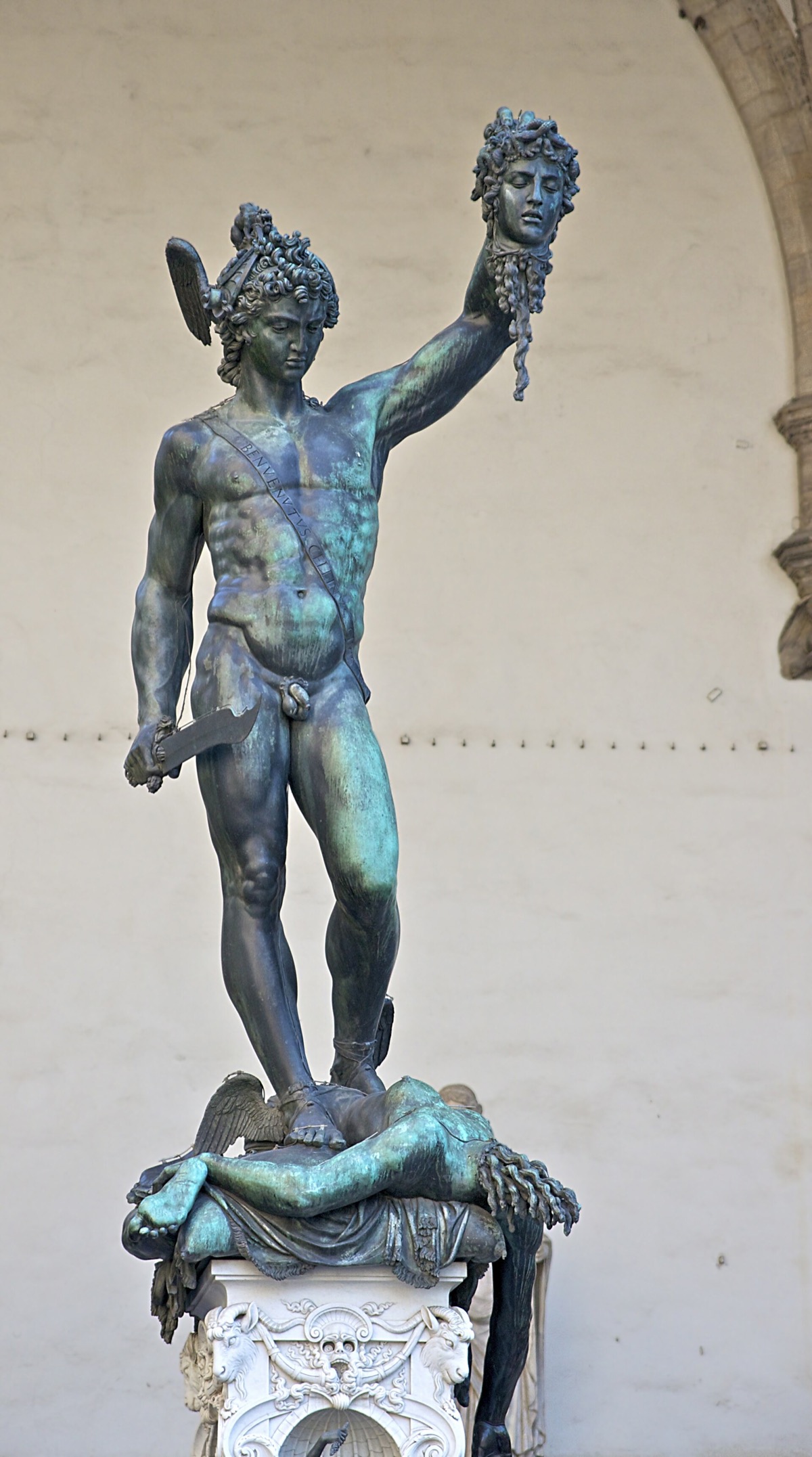
Sculptor, 1500 to 1571
Benvenuto Cellini
Goldsmith, sculptor, brawler and author of the most entertaining autobiography of the Renaissance. His bronze Perseus has stood in the Loggia dei Lanzi since 1554.
Mannerism. 2 works in 2 museums
See the artist
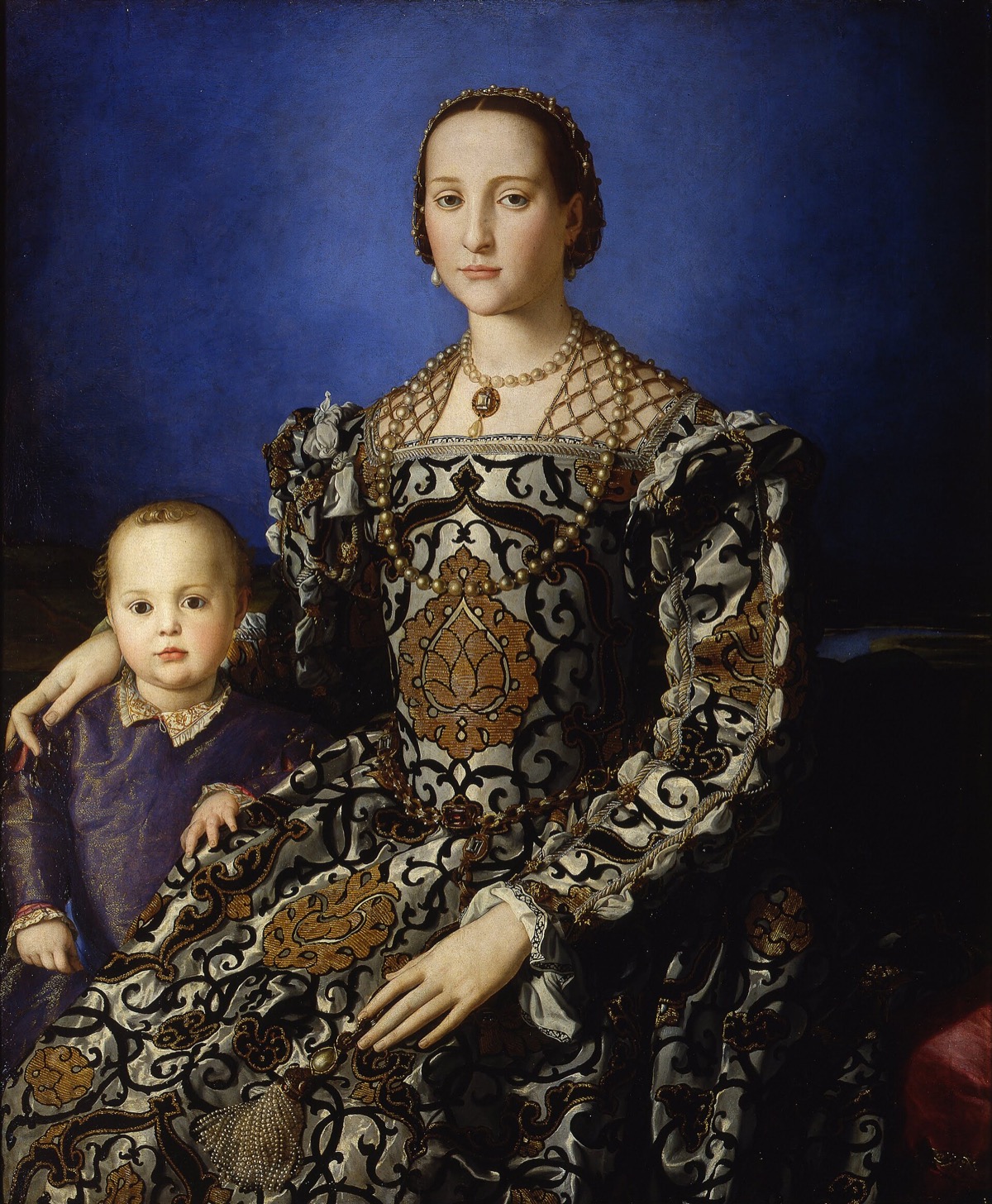
Painter, 1503 to 1572
Bronzino
The court painter of the first Medici grand duke. His portraits in the Uffizi, cool, polished and unreadable, are how we picture the Florence of Cosimo I.
Mannerism. 3 works in 2 museums
See the artist
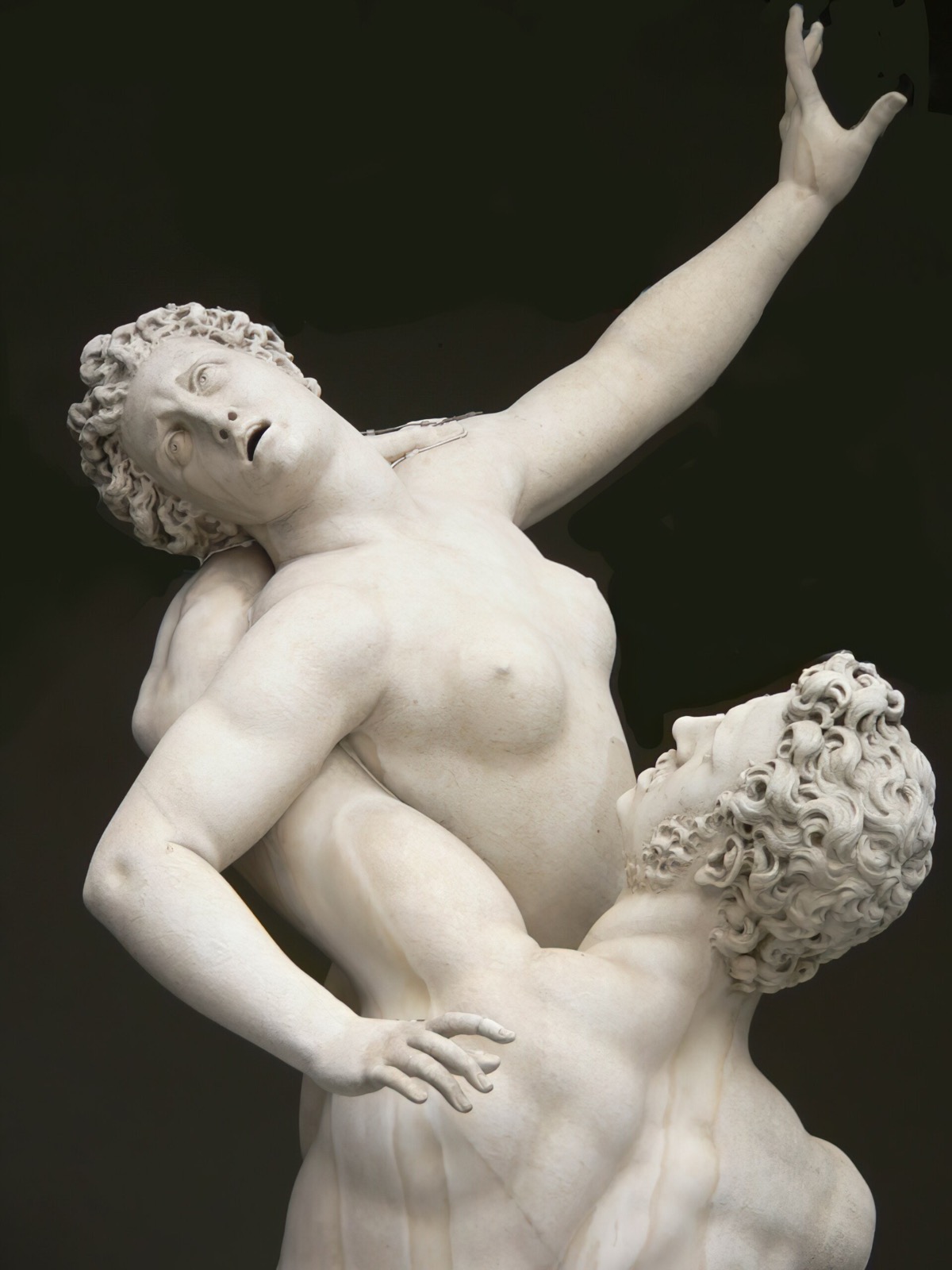
Picture: Mary Harrsch, CC BY-SA 4.0
Sculptor, 1529 to 1608
Giambologna
A Fleming who became the sculptor of the Medici grand dukes. His Rape of the Sabine Women in the Loggia dei Lanzi and his flying Mercury in the Bargello were copied all over Europe.
Mannerism. 3 works in 3 museums
See the artist
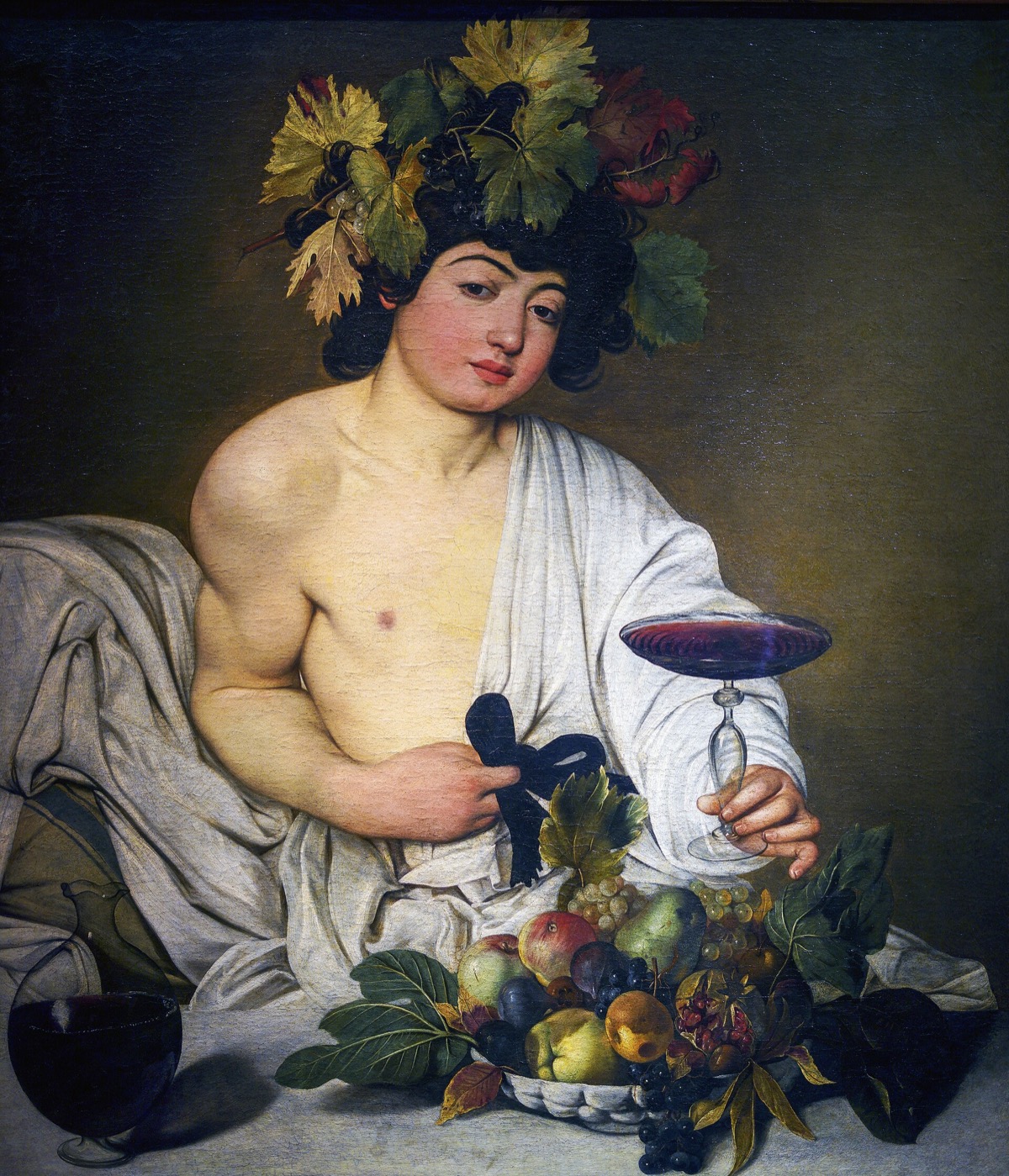
Painter, 1571 to 1610
Caravaggio
Caravaggio never worked in Florence, but the Medici collected him early. The Uffizi has his Bacchus, the Medusa painted on a shield and the Sacrifice of Isaac. The Pitti Palace has the Sleeping Cupid.
Baroque. 4 works in 2 museums
See the artist
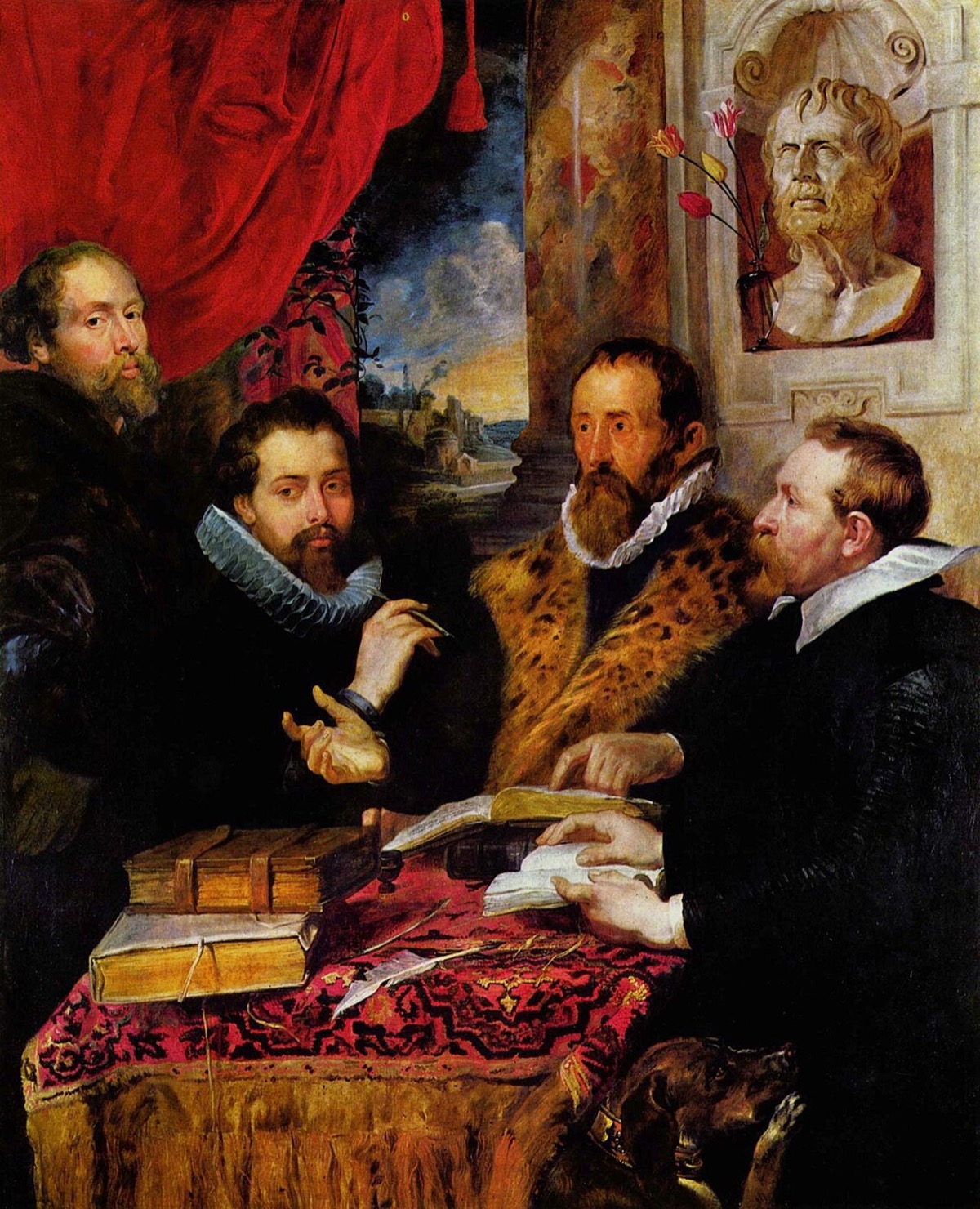
Painter, 1577 to 1640
Peter Paul Rubens
The Pitti Palace has two of Rubens's most personal pictures, the Four Philosophers and the Consequences of War. The Uffizi has two battle scenes for a king of France, each the size of a wall.
Baroque. 3 works in 2 museums
See the artist
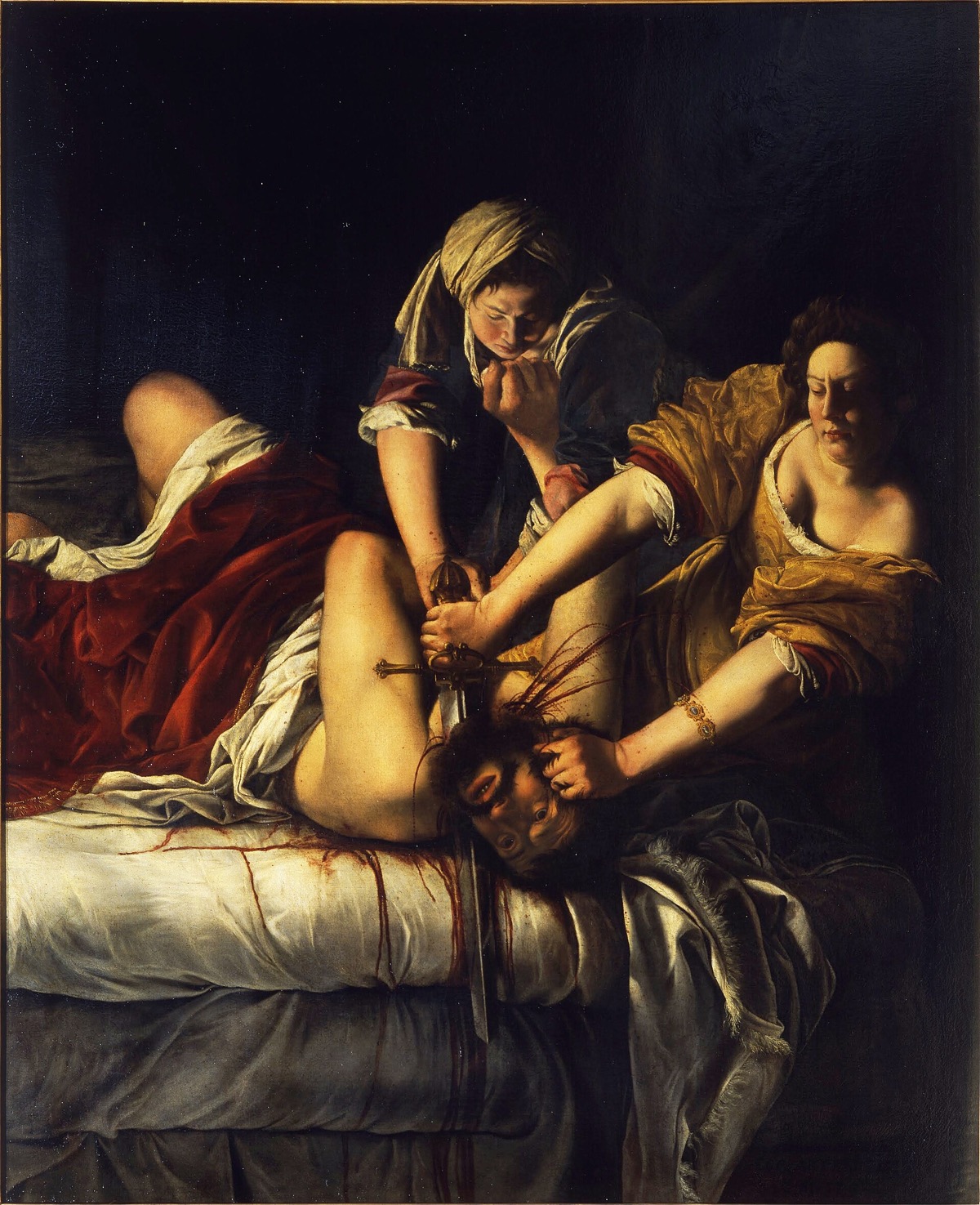
Painter, 1593 to 1654
Artemisia Gentileschi
The most celebrated woman painter of the seventeenth century made her name in Florence. The Uffizi has her Judith Slaying Holofernes, as violent a picture as any by Caravaggio.
Baroque. 2 works in 2 museums
See the artist
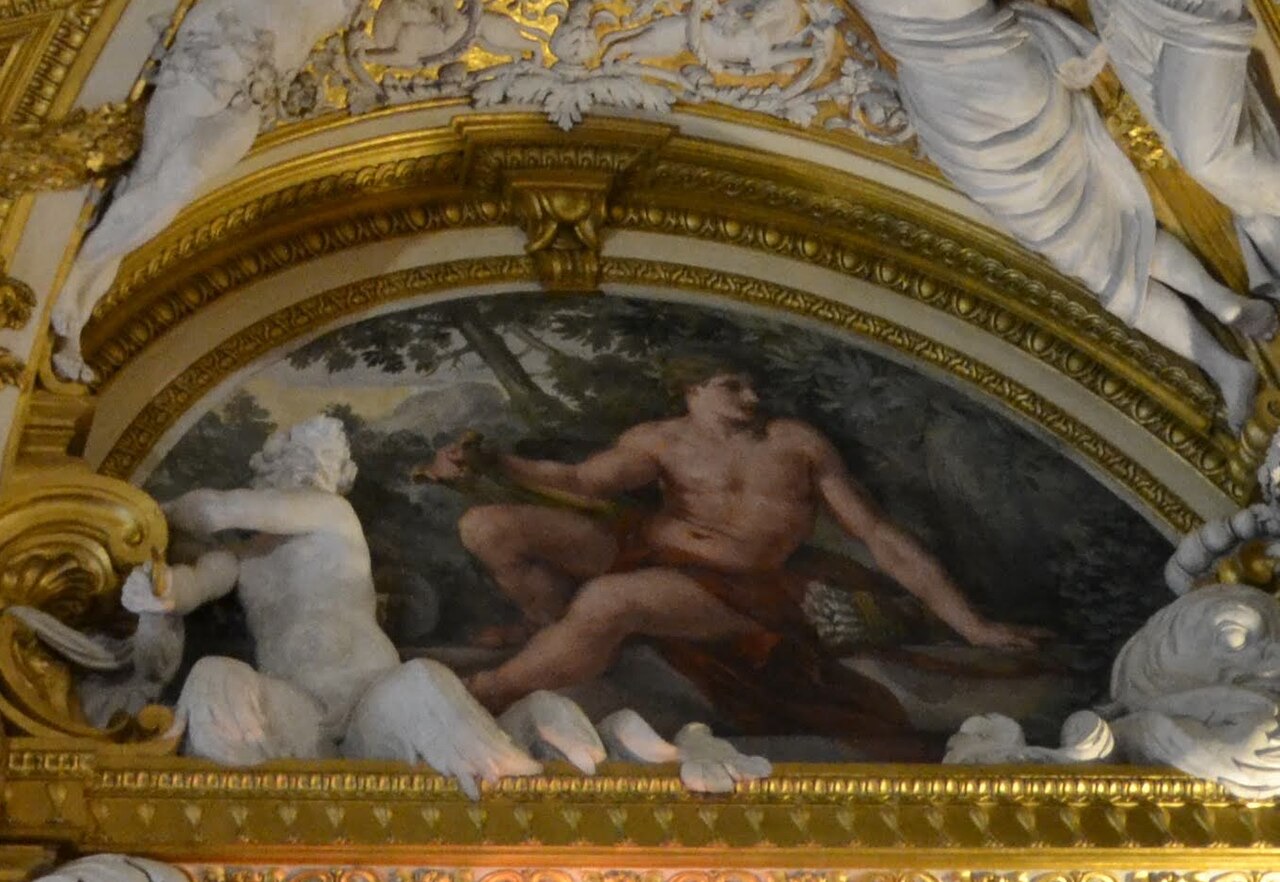
Picture: IlSistemone, CC BY-SA 4.0
Painter, 1596 to 1669
Pietro da Cortona
Pietro da Cortona brought the Roman Baroque to Florence. The painted ceilings of the grand dukes' rooms in the Pitti Palace, named for the planets, are his.
Baroque. 2 works in 1 museum
See the artist
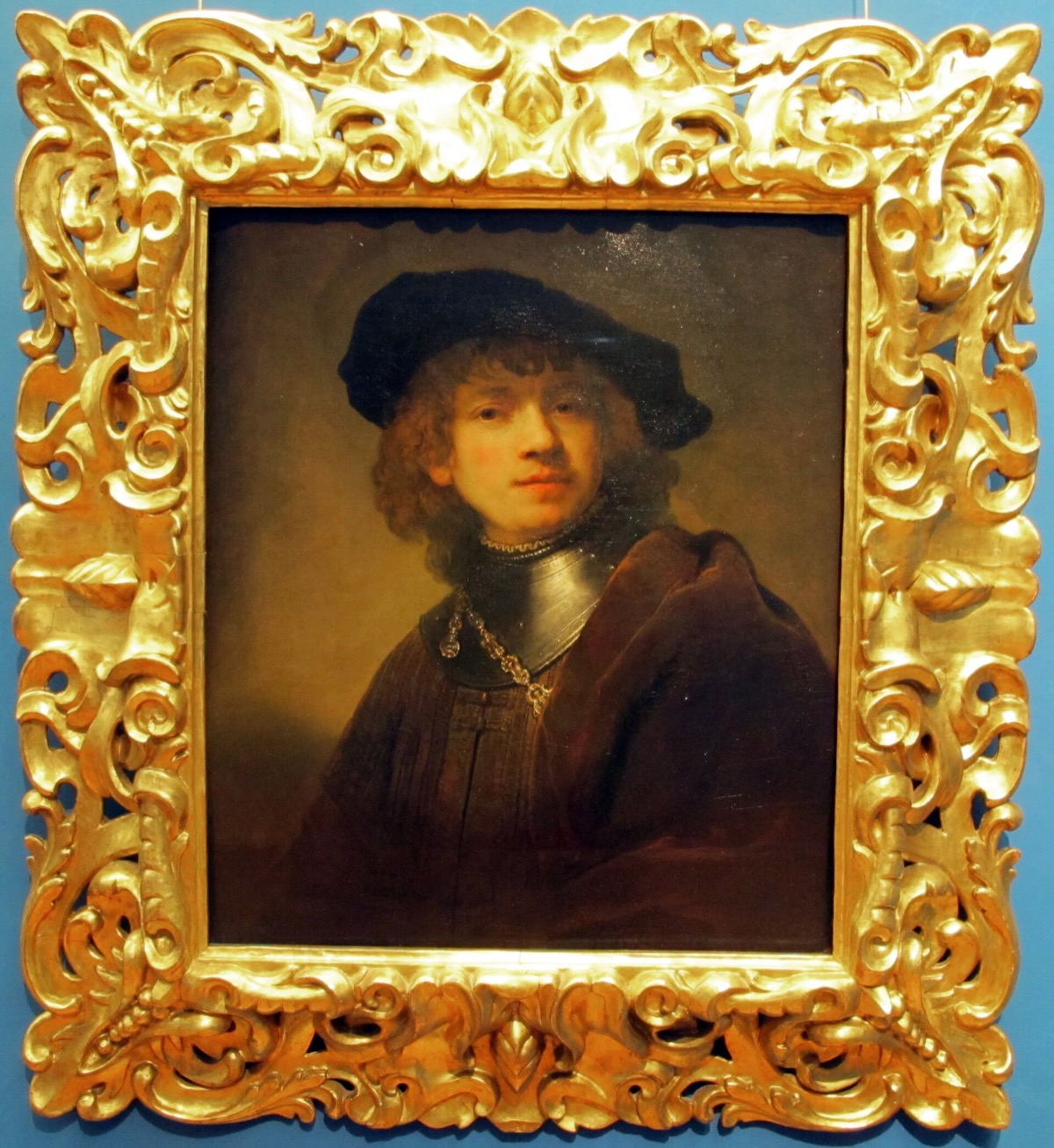
Picture: Francesco Bini, CC BY-SA 4.0
Painter, 1606 to 1669
Rembrandt
The Uffizi has a self-portrait of Rembrandt's old age, bought by the Medici for their gallery of painters' own likenesses, and a head of a young man long believed to be another.
Dutch Golden Age. 2 works in 1 museum
See the artist
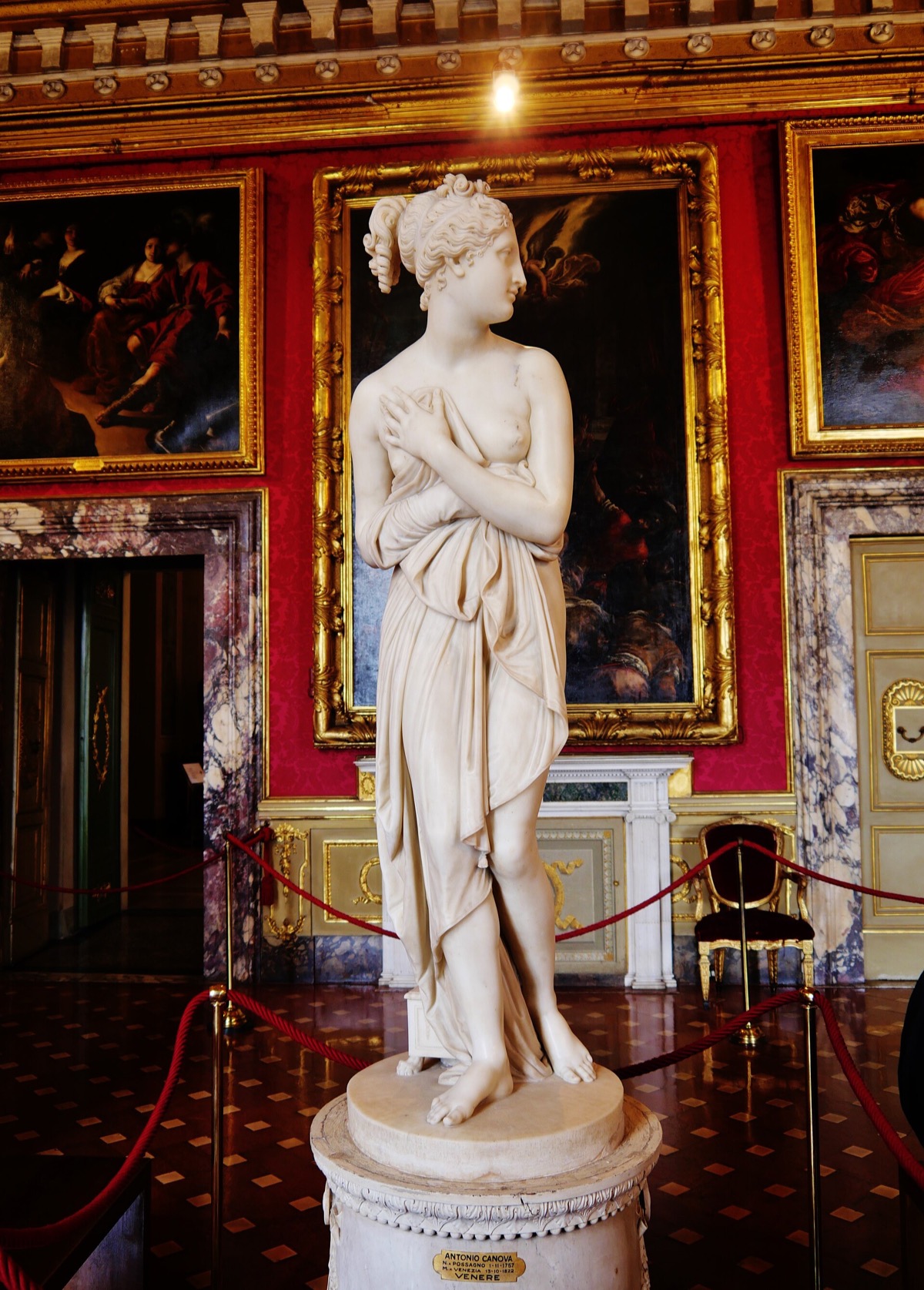
Picture: Zairon, CC BY 4.0
Sculptor, 1757 to 1822
Antonio Canova
Canova carved a Venus for Florence to replace the ancient one Napoleon had taken. It is in the Pitti Palace, and his monument to the poet Alfieri is in Santa Croce.
Neoclassicism. 2 works in 2 museums
See the artist
When they lived
Each bar is a life, from birth to death, on one line of time. 582 years separate the birth of Cimabue from the death of Antonio Canova, and 13 of the 30 were alive at the same moment, in 1452.
- Cimabue1240 to 1302
- Giotto1267 to 1337
- Lorenzo Ghiberti1378 to 1455
- Donatello1386 to 1466
- Fra Angelico1395 to 1455
- Paolo Uccello1397 to 1475
- Masaccio1401 to 1428
- Filippo Lippi1406 to 1469
- Piero della Francesca1415 to 1492
- Benozzo Gozzoli1421 to 1497
- Giovanni Bellini1430 to 1516
- Andrea del Verrocchio1435 to 1488
- Sandro Botticelli1445 to 1510
- Pietro Perugino1446 to 1523
- Domenico Ghirlandaio1448 to 1494
- Leonardo da Vinci1452 to 1519
- Michelangelo1475 to 1564
- Raphael1483 to 1520
- Andrea del Sarto1486 to 1530
- Titian1488 to 1576
- Pontormo1494 to 1557
- Benvenuto Cellini1500 to 1571
- Bronzino1503 to 1572
- Giambologna1529 to 1608
- Caravaggio1571 to 1610
- Peter Paul Rubens1577 to 1640
- Artemisia Gentileschi1593 to 1654
- Pietro da Cortona1596 to 1669
- Rembrandt1606 to 1669
- Antonio Canova1757 to 1822
Which museum holds whom
Each block is an artist with work on show in that place. The Uffizi has the painting, from Giotto to Caravaggio, and the Bargello has the sculpture. The Accademia has the David. Much of the rest is still in the churches it was made for: Santa Croce, Santa Maria Novella, San Marco and the Brancacci Chapel.
Uffizi Gallery21 artists
Pitti Palace, Palatine Gallery9 artists
Bargello National Museum6 artists
Basilica of Santa Croce3 artists
Santa Maria Novella3 artists
Opera del Duomo Museum3 artists
Palazzo Vecchio3 artists
Florence Cathedral2 artists
Museum of San Marco2 artists
Loggia dei Lanzi, Piazza della Signoria2 artists
Brancacci Chapel, Santa Maria del Carmine1 artist
Palazzo Medici Riccardi1 artist
Orsanmichele1 artist
Church of Ognissanti1 artist
Santa Maria Maddalena dei Pazzi1 artist
Church of Santa Trinita1 artist
Accademia Gallery1 artist
Medici Chapels1 artist
Chiostro dello Scalzo1 artist
Museum of the Cenacolo of San Salvi1 artist
Church of Santa Felicita1 artist
Piazza della Signoria1 artist
How to read this page
The choice of artists is this site's: the most famous of those whose work is on show in the museums of Florence that it covers. They are in order of birth, which is not a ranking.
A work is listed where it is normally on show. Museums move their works between rooms, lend them and take them down for conservation, so before a special journey check with the museum.