Sculptor, 1757 to 1822
Antonio Canova
When the French carried off the Medici Venus from the Uffizi in 1802, Florence asked Canova for a copy. He refused to copy and made a Venus of his own.
- Born
- 1757, Possagno, Italy
- Died
- 1822, Venice, Italy
- Movement
- Neoclassicism
- In Florence
- 2 works in 2 museums
Where to see Antonio Canova in Florence
Each work with the museum it hangs in. Museums move and lend their works, so check before a special journey.
Pitti Palace, Palatine Gallery1 work
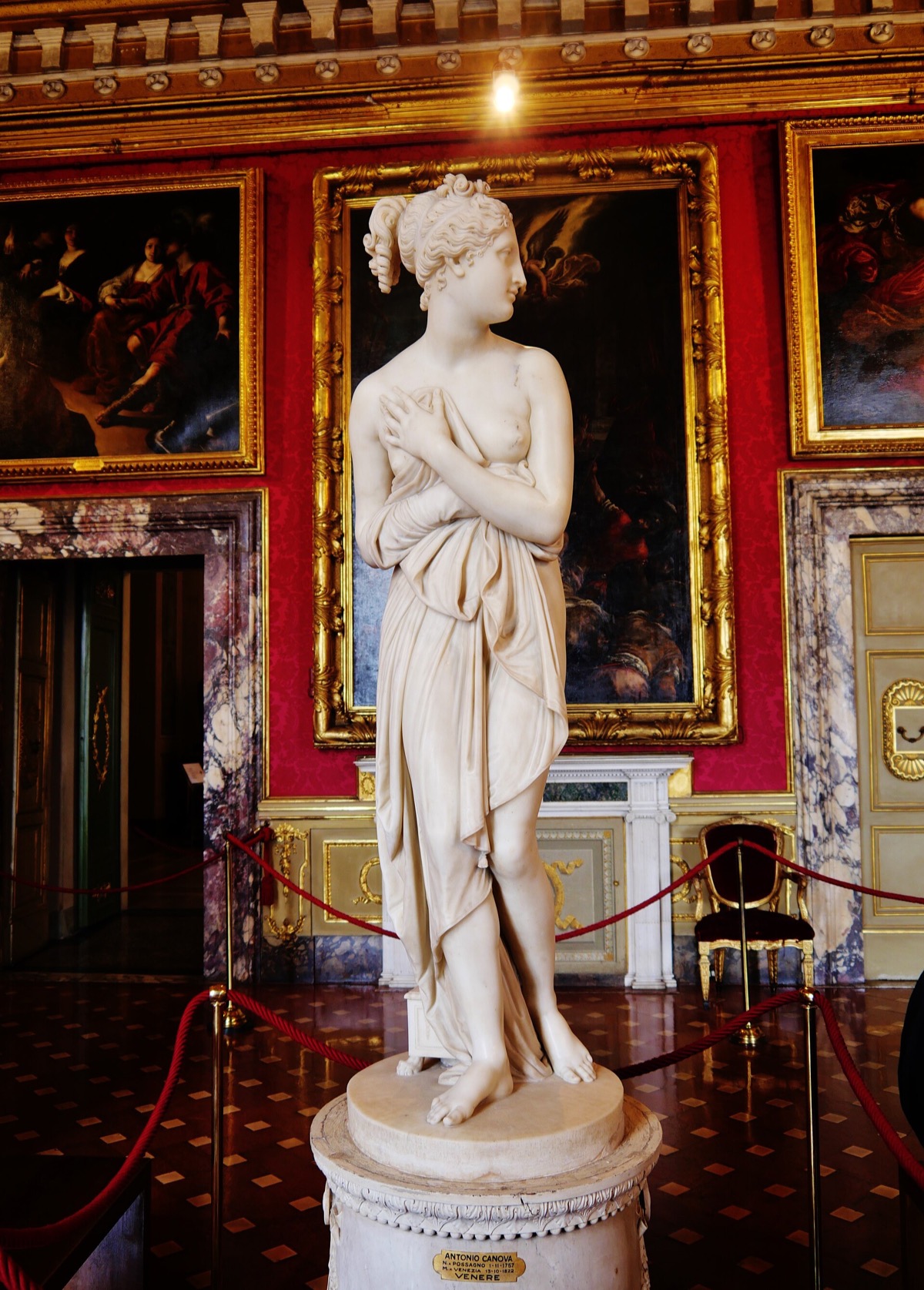
Venus Italica
1804 to 1812
The goddess surprised as she comes from her bath, clutching a cloth to her breast. The ancient Venus came back from Paris in 1815, and Florence kept both.
Basilica of Santa Croce1 work
Monument to Vittorio Alfieri
1806 to 1810
Italy herself, crowned with towers, weeps over the poet's tomb. It was paid for by the Countess of Albany, who had lived with him.
The life of Antonio Canova
Canova was born at Possagno, in the hills north of Venice, in 1757, into a family of stonecutters. He settled in Rome in 1781 and made his name with the tombs of two popes.
His marbles are smooth, cool and exact, modelled on the antique statues he saw around him. When Napoleon's armies carried those statues off to Paris, the pope bought Canova's Perseus to fill an empty pedestal in the Vatican, and in 1815 sent Canova himself to bring them back. He died in Venice in 1822.
What to know
- Carved the Venus Italica between 1804 and 1812
- His monument to Vittorio Alfieri in Santa Croce was finished in 1810
- Born
- 1 November 1757, Possagno, Italy
- Died
- 13 October 1822, Venice, Italy
Antonio Canova: common questions
- Where can you see Antonio Canova in Florence?
- At the Pitti Palace, Palatine Gallery: Venus Italica. At the Basilica of Santa Croce: Monument to Vittorio Alfieri. Museums move and lend their works, so check before a special journey.
- What is Antonio Canova's most famous work in Florence?
- Venus Italica, of 1804 to 1812, at the Pitti Palace, Palatine Gallery. The goddess surprised as she comes from her bath, clutching a cloth to her breast. The ancient Venus came back from Paris in 1815, and Florence kept both.
- When and where was Antonio Canova born?
- On 1 November 1757, at Possagno, Italy. Antonio Canova died on 13 October 1822, at Venice, Italy, aged about 65.
- What is Antonio Canova known for?
- Carved the Venus Italica between 1804 and 1812. His monument to Vittorio Alfieri in Santa Croce was finished in 1810. Antonio Canova was an Italian sculptor, of Neoclassicism.
Tickets and tours: Antonio Canova in Florence
Things to do near the Pitti Palace
The nearest of this site's best things to do in the city. Distances are in a straight line.
- 16Cross the river to the Oltrarno and the Brancacci Chapel250 m awayWalk, 2 to 3 hours, free to walk, ticket for the chapel
- 8Climb through the Boboli Gardens350 m awayGarden, 1.5 to 2.5 hours, ticket
- 5Cross the Ponte Vecchio at sunset400 m awayWalk, 20 to 45 minutes, free
- 1Stand in front of Botticelli's Venus at the Uffizi500 m awayMuseum, 2.5 to 4 hours, ticket
Where to eat near the Pitti Palace
The nearest of the famous tables this site lists in Florence. Distances are in a straight line.
- Trattoria Antico Fattore4.5Trattoria, Uffizi550 m away
- Rivoire3.8Café and chocolate maker, Piazza della Signoria650 m away
- Il Latini4.3Restaurant, Via de' Tornabuoni700 m away
- Giacosa 18154.7Café and cocktail bar, Via de' Tornabuoni700 m away
Hotels near the Pitti Palace
The five-star hotels closest to it, of those this site lists in Florence. Distances are in a straight line.
- Hotel Lungarno4.7Five-star hotel, Oltrarno350 m away
- Portrait Firenze4.8Five-star hotel, Ponte Vecchio450 m away
- Porta Rossa4.8Five-star hotel, Via Porta Rossa550 m away
- Helvetia & Bristol4.7Five-star hotel, Palazzo Strozzi750 m away
Other artists
Picture: Francesco Bini, CC BY-SA 4.0
Painter, 1606 to 1669
Rembrandt
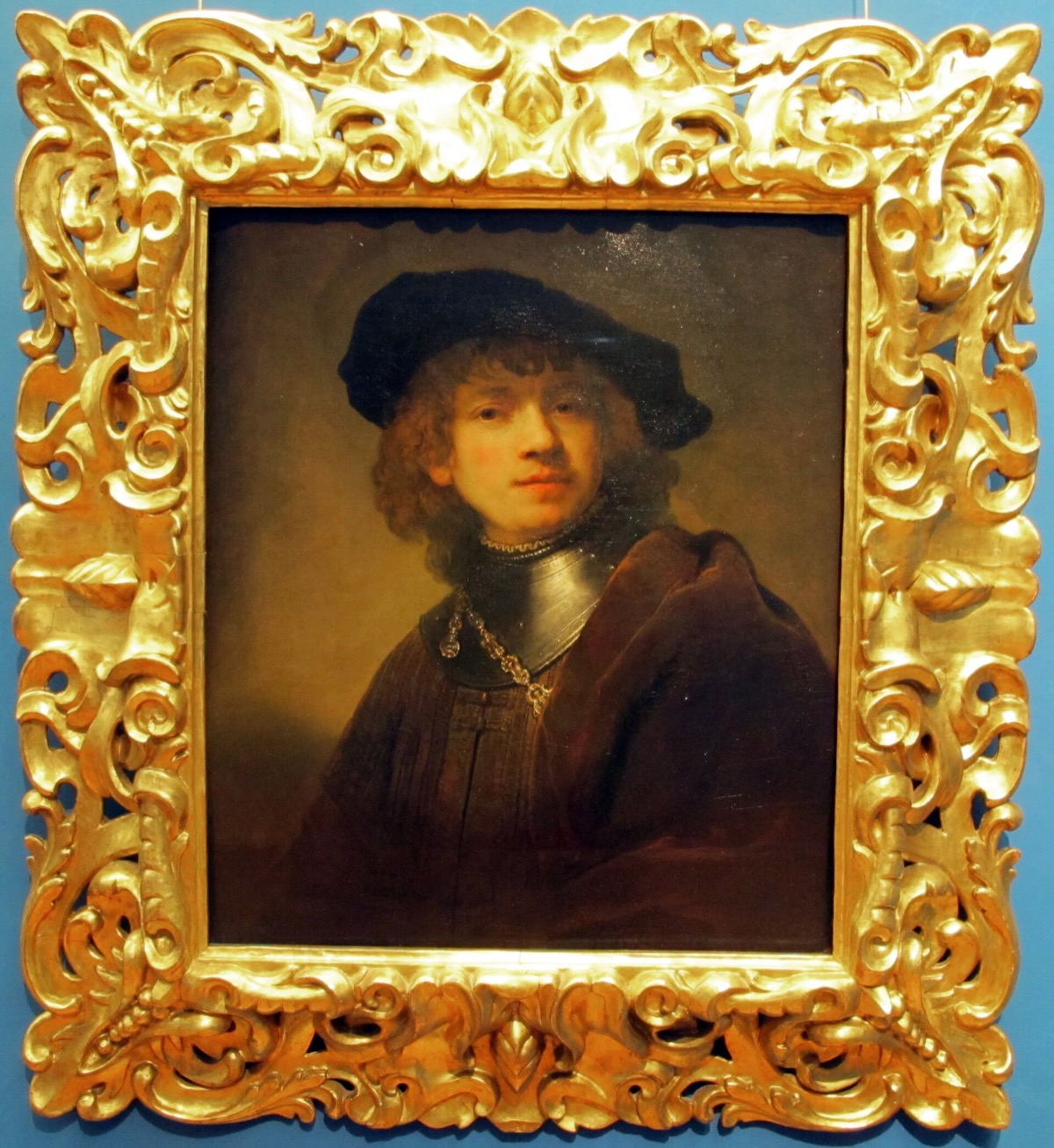
The Uffizi has a self-portrait of Rembrandt's old age, bought by the Medici for their gallery of painters' own likenesses, and a head of a young man long believed to be another.
Dutch Golden Age. 2 works in 1 museum
See the artist
Picture: IlSistemone, CC BY-SA 4.0
Painter, 1596 to 1669
Pietro da Cortona
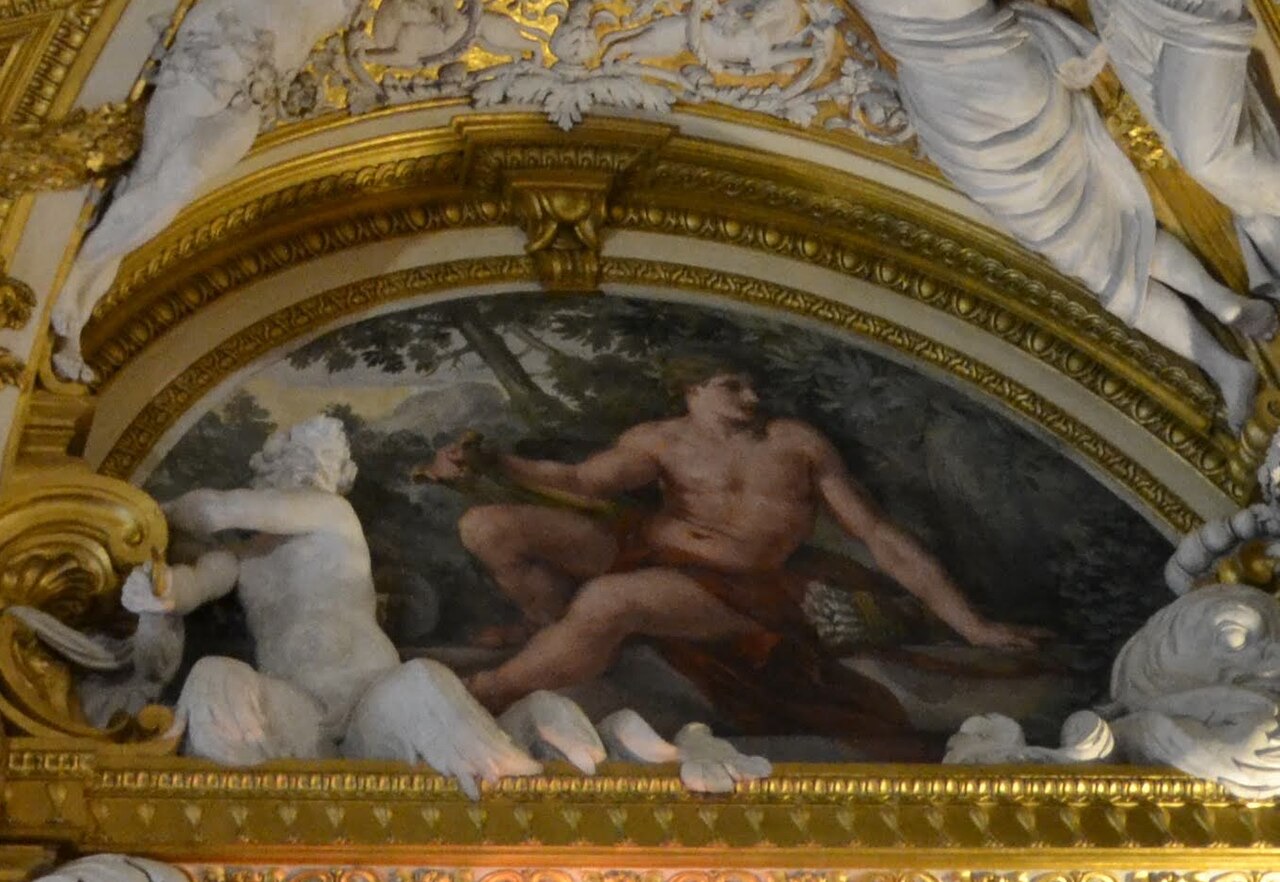
Pietro da Cortona brought the Roman Baroque to Florence. The painted ceilings of the grand dukes' rooms in the Pitti Palace, named for the planets, are his.
Baroque. 2 works in 1 museum
See the artist