Painter, 1596 to 1669
Pietro da Cortona
The Grand Duke Ferdinando II kept Pietro da Cortona in Florence for most of the 1640s to paint the state rooms of his palace. They were a model for the state rooms of Versailles.
- Born
- 1596, Cortona, Italy
- Died
- 1669, Rome, Italy
- Movement
- Baroque
- In Florence
- 2 works in 1 museum
Where to see Pietro da Cortona in Florence
Each work with the museum it hangs in. Museums move and lend their works, so check before a special journey.
Pitti Palace, Palatine Gallery2 works
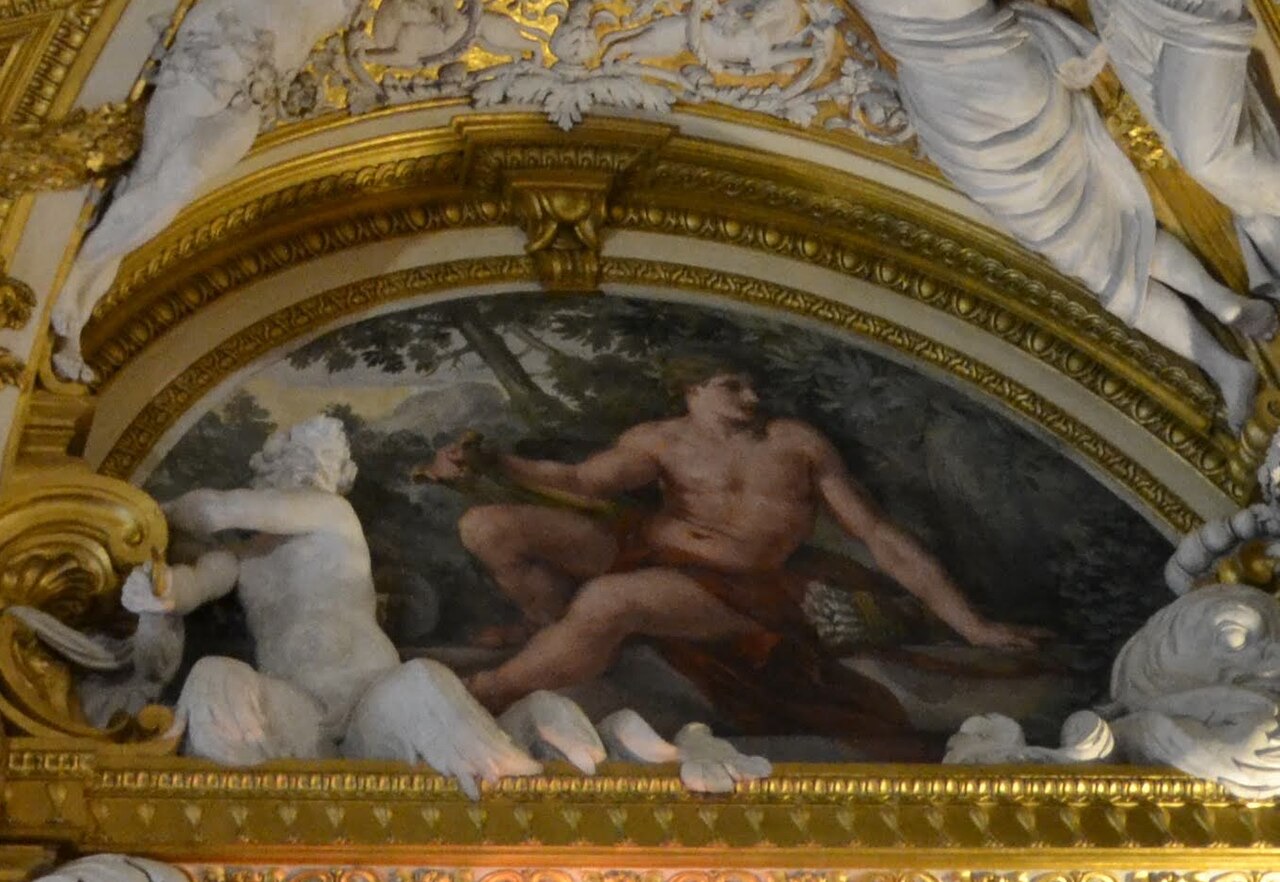
The Planetary Rooms
1641 to 1647
Five rooms, of Venus, Apollo, Mars, Jupiter and Saturn, in which the gods lead a young prince from youth to old age. Fresco, white stucco and gold run together so that you cannot tell where one ends.
The Four Ages of Man
1637 to 1641
Four scenes on the walls of the Sala della Stufa, a small room once heated by a stove: the ages of gold, silver, bronze and iron.
The life of Pietro da Cortona
Pietro Berrettini was born at Cortona in Tuscany in 1596 and came to Rome as a young man. The Barberini family, whose pope Urban VIII reigned from 1623, made him their painter.
He was an architect as well, and with Bernini and Borromini one of the three who gave Rome its Baroque face. He died there in 1669.
What to know
- Painted the ceilings of the Planetary Rooms between 1641 and 1647
- The rooms now hold the Palatine Gallery, so the Raphaels hang under his frescoes
- Born
- 1 November 1596, Cortona, Italy
- Died
- 16 May 1669, Rome, Italy
Pietro da Cortona: common questions
- Where can you see Pietro da Cortona in Florence?
- At the Pitti Palace, Palatine Gallery: The Planetary Rooms and The Four Ages of Man. Museums move and lend their works, so check before a special journey.
- What is Pietro da Cortona's most famous work in Florence?
- The Planetary Rooms, of 1641 to 1647, at the Pitti Palace, Palatine Gallery. Five rooms, of Venus, Apollo, Mars, Jupiter and Saturn, in which the gods lead a young prince from youth to old age. Fresco, white stucco and gold run together so that you cannot tell where one ends.
- When and where was Pietro da Cortona born?
- On 1 November 1596, at Cortona, Italy. Pietro da Cortona died on 16 May 1669, at Rome, Italy, aged about 73.
- What is Pietro da Cortona known for?
- Painted the ceilings of the Planetary Rooms between 1641 and 1647. The rooms now hold the Palatine Gallery, so the Raphaels hang under his frescoes. Pietro da Cortona was an Italian painter, of the Baroque.
Tickets and tours: Pietro da Cortona in Florence
Things to do near the Pitti Palace
The nearest of this site's best things to do in the city. Distances are in a straight line.
- 16Cross the river to the Oltrarno and the Brancacci Chapel250 m awayWalk, 2 to 3 hours, free to walk, ticket for the chapel
- 8Climb through the Boboli Gardens350 m awayGarden, 1.5 to 2.5 hours, ticket
- 5Cross the Ponte Vecchio at sunset400 m awayWalk, 20 to 45 minutes, free
- 1Stand in front of Botticelli's Venus at the Uffizi500 m awayMuseum, 2.5 to 4 hours, ticket
Where to eat near the Pitti Palace
The nearest of the famous tables this site lists in Florence. Distances are in a straight line.
- Trattoria Antico Fattore4.5Trattoria, Uffizi550 m away
- Rivoire3.8Café and chocolate maker, Piazza della Signoria650 m away
- Il Latini4.3Restaurant, Via de' Tornabuoni700 m away
- Giacosa 18154.7Café and cocktail bar, Via de' Tornabuoni700 m away
Hotels near the Pitti Palace
The five-star hotels closest to it, of those this site lists in Florence. Distances are in a straight line.
- Hotel Lungarno4.7Five-star hotel, Oltrarno350 m away
- Portrait Firenze4.8Five-star hotel, Ponte Vecchio450 m away
- Porta Rossa4.8Five-star hotel, Via Porta Rossa550 m away
- Helvetia & Bristol4.7Five-star hotel, Palazzo Strozzi750 m away
Other artists
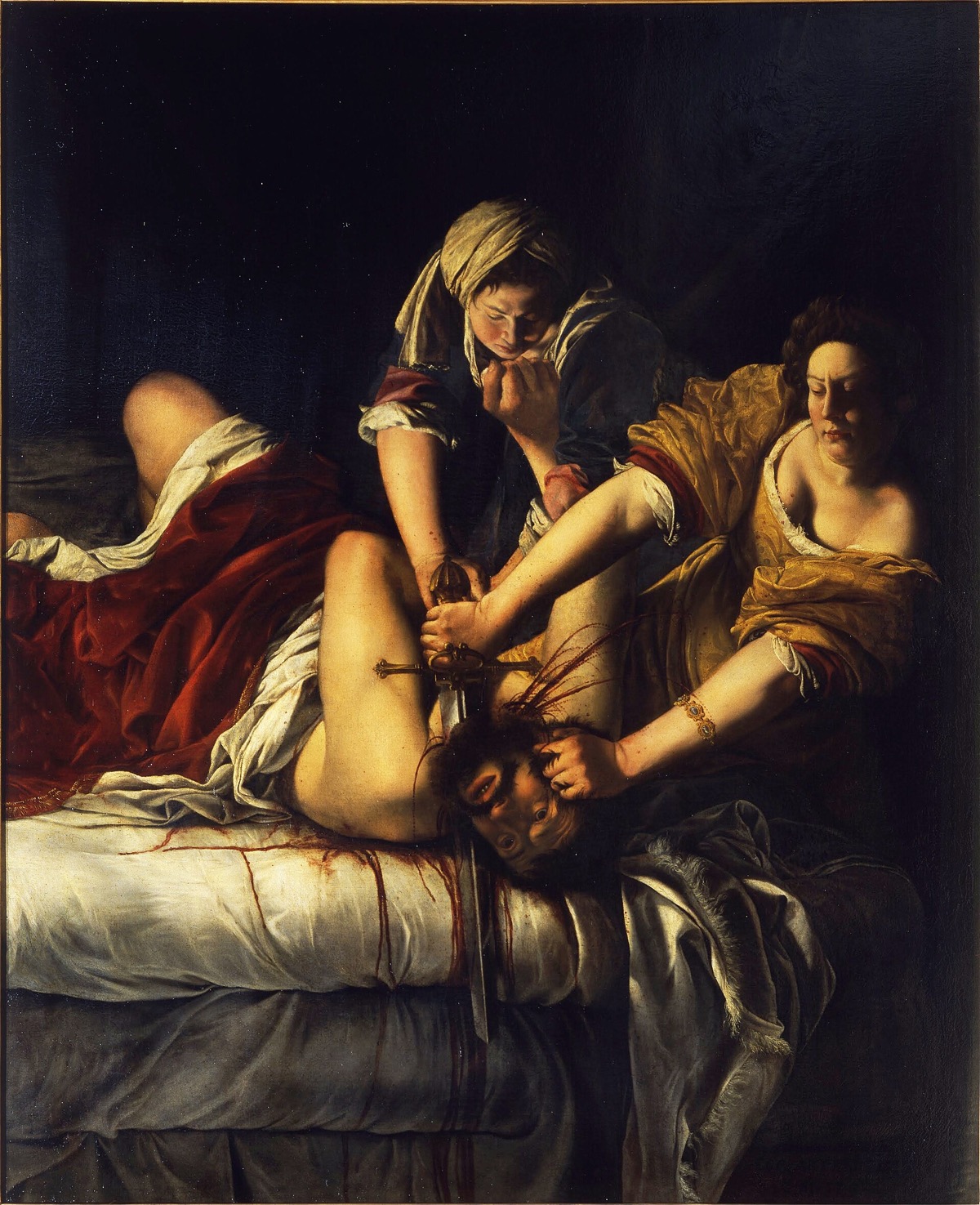
Painter, 1593 to 1654
Artemisia Gentileschi
The most celebrated woman painter of the seventeenth century made her name in Florence. The Uffizi has her Judith Slaying Holofernes, as violent a picture as any by Caravaggio.
Baroque. 2 works in 2 museums
See the artist
Picture: Francesco Bini, CC BY-SA 4.0
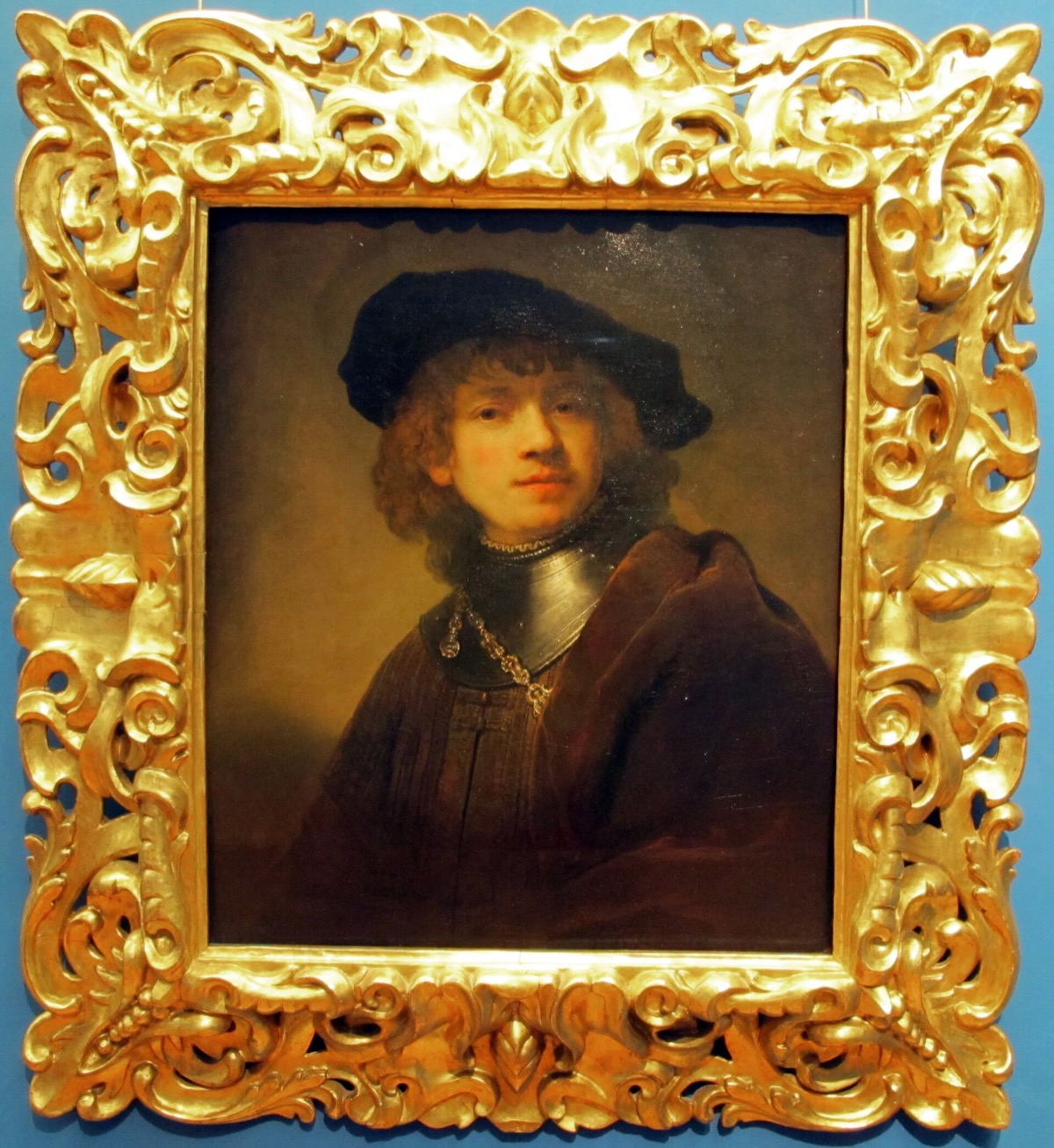
Painter, 1606 to 1669
Rembrandt
The Uffizi has a self-portrait of Rembrandt's old age, bought by the Medici for their gallery of painters' own likenesses, and a head of a young man long believed to be another.
Dutch Golden Age. 2 works in 1 museum
See the artist
Picture: Zairon, CC BY 4.0
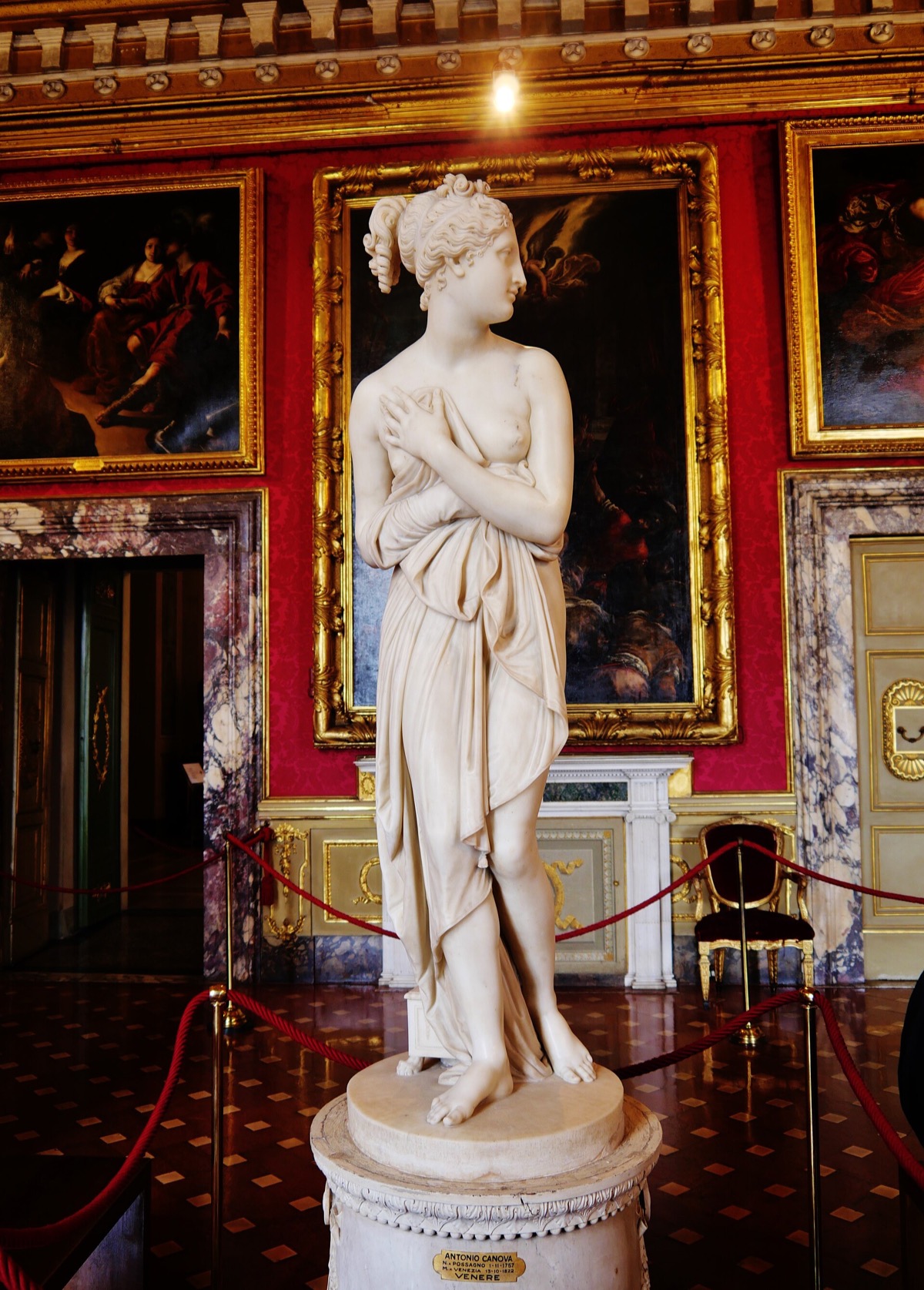
Sculptor, 1757 to 1822
Antonio Canova
Canova carved a Venus for Florence to replace the ancient one Napoleon had taken. It is in the Pitti Palace, and his monument to the poet Alfieri is in Santa Croce.
Neoclassicism. 2 works in 2 museums
See the artist