Painter, 1240 to 1302
Cimabue
Dante wrote that Cimabue thought he held the field in painting until Giotto took the cry. He is the last of the old manner and the first of the new, and you can see both in the first room of the Uffizi.
- Born
- 1240, Florence, Italy
- Died
- 1302, Pisa, Italy
- Movement
- Italo-Byzantine
- In Florence
- 2 works in 2 museums
Where to see Cimabue in Florence
Each work with the museum it hangs in. Museums move and lend their works, so check before a special journey.
Uffizi Gallery1 work
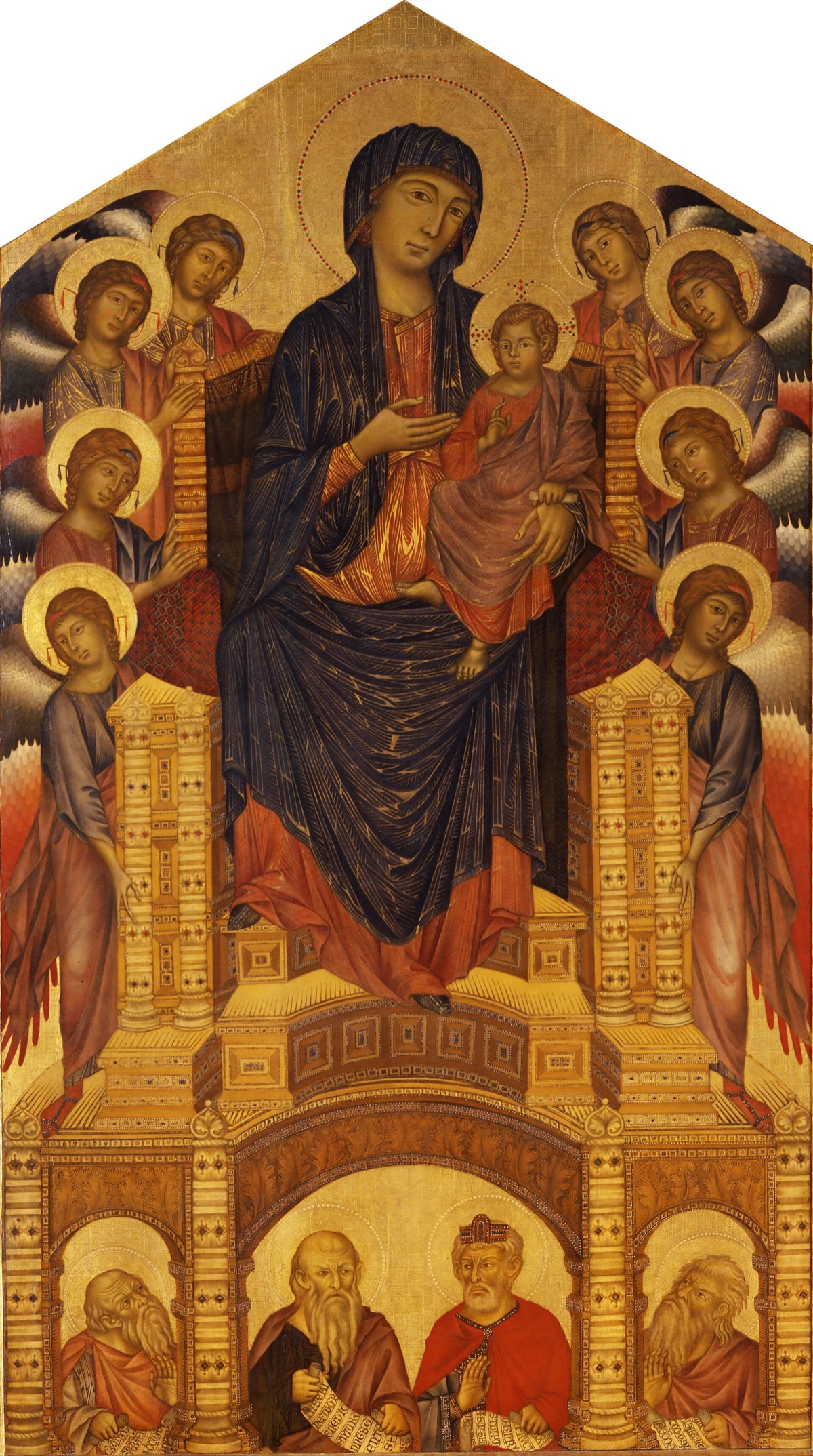
The Santa Trinita Madonna
about 1280 to 1290
The Virgin on a towering throne held up by eight angels, with four prophets looking out from arches beneath. Nearly four metres high.
Basilica of Santa Croce1 work
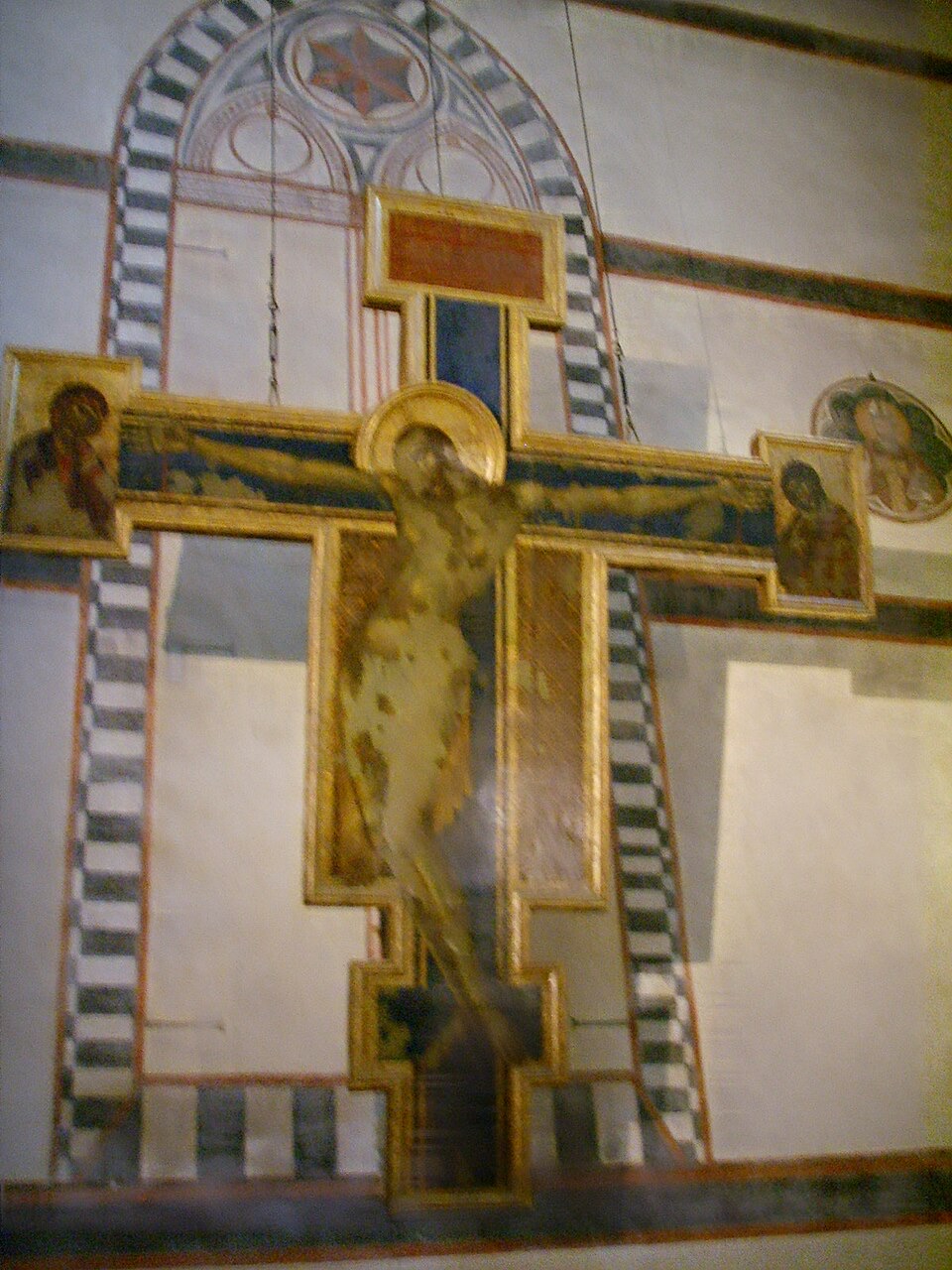
Crucifix
about 1265 to 1288
A painted cross more than four metres high. The Arno covered it in November 1966 and washed away most of the body. What could be saved hangs in the sacristy.
The life of Cimabue
Cenni di Pepo, known as Cimabue, was born in Florence about 1240. He worked in the Byzantine style he had been taught, with gold grounds and patterned drapery, but gave his figures more roundness and feeling than anyone before him.
Vasari tells that he found the boy Giotto drawing a sheep on a rock and took him as a pupil. Whether or not it is true, the story is how Florence has always explained the start of its painting. He died in Pisa in 1302.
What to know
- Vasari begins his Lives of the Artists with him
- His Crucifix in Santa Croce lost much of its paint in the flood of 1966
- His Madonna hangs in the Uffizi beside Giotto's and Duccio's
- Born
- About 1240, Florence, Italy
- Died
- 1302, Pisa, Italy
Cimabue: common questions
- Where can you see Cimabue in Florence?
- At the Uffizi Gallery: The Santa Trinita Madonna. At the Basilica of Santa Croce: Crucifix. Museums move and lend their works, so check before a special journey.
- What is Cimabue's most famous work in Florence?
- The Santa Trinita Madonna, of about 1280 to 1290, at the Uffizi Gallery. The Virgin on a towering throne held up by eight angels, with four prophets looking out from arches beneath. Nearly four metres high.
- When and where was Cimabue born?
- About 1240, at Florence, Italy. Cimabue died in 1302, at Pisa, Italy, aged about 62.
- What is Cimabue known for?
- Vasari begins his Lives of the Artists with him. His Crucifix in Santa Croce lost much of its paint in the flood of 1966. His Madonna hangs in the Uffizi beside Giotto's and Duccio's. Cimabue was an Italian painter, of Italo-Byzantine.
Tickets and tours: Cimabue in Florence
Things to do near the Uffizi
The nearest of this site's best things to do in the city. Distances are in a straight line.
- 5Cross the Ponte Vecchio at sunset200 m awayWalk, 20 to 45 minutes, free
- 4Walk the halls of the Palazzo Vecchio200 m awayMonument, 1.5 to 2.5 hours, square free, ticket for the palace
- 9See Donatello's David at the Bargello350 m awayMuseum, 1.3 to 2 hours, ticket
- 7See Raphael and Titian at the Pitti Palace500 m awayMuseum, 2 to 3 hours, ticket
Where to eat near the Uffizi
The nearest of the famous tables this site lists in Florence. Distances are in a straight line.
- Trattoria Antico Fattore4.5Trattoria, Uffizi100 m away
- Rivoire3.8Café and chocolate maker, Piazza della Signoria200 m away
- Perché no!4.6Gelateria, Orsanmichele350 m away
- Antico Ristorante Paoli4.7Restaurant, Orsanmichele350 m away
Hotels near the Uffizi
The five-star hotels closest to it, of those this site lists in Florence. Distances are in a straight line.
- Portrait Firenze4.8Five-star hotel, Ponte Vecchio250 m away
- Hotel Bernini Palace4.7Five-star hotel, Piazza della Signoria250 m away
- Hotel Lungarno4.7Five-star hotel, Oltrarno300 m away
- Porta Rossa4.8Five-star hotel, Via Porta Rossa350 m away
Other artists
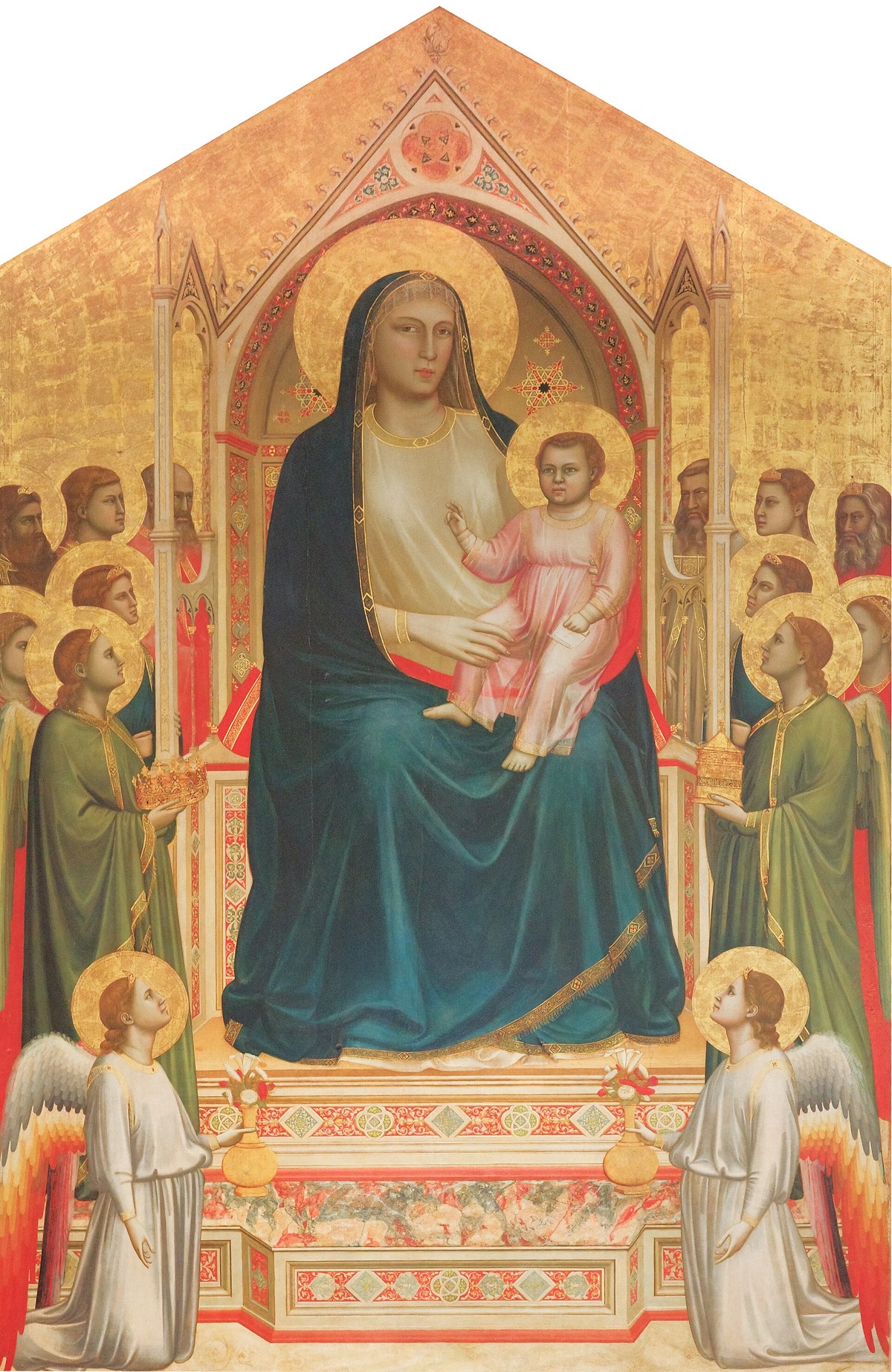
Painter, 1267 to 1337
Giotto
Giotto was a Florentine. The Uffizi has his great Madonna, Santa Croce has two chapels he frescoed, Santa Maria Novella has his Crucifix, and the bell tower beside the cathedral is his design.
Proto-Renaissance. 4 works in 4 museums
See the artist
Picture: Yair Haklai, CC BY-SA 4.0
Sculptor, 1378 to 1455
Lorenzo Ghiberti
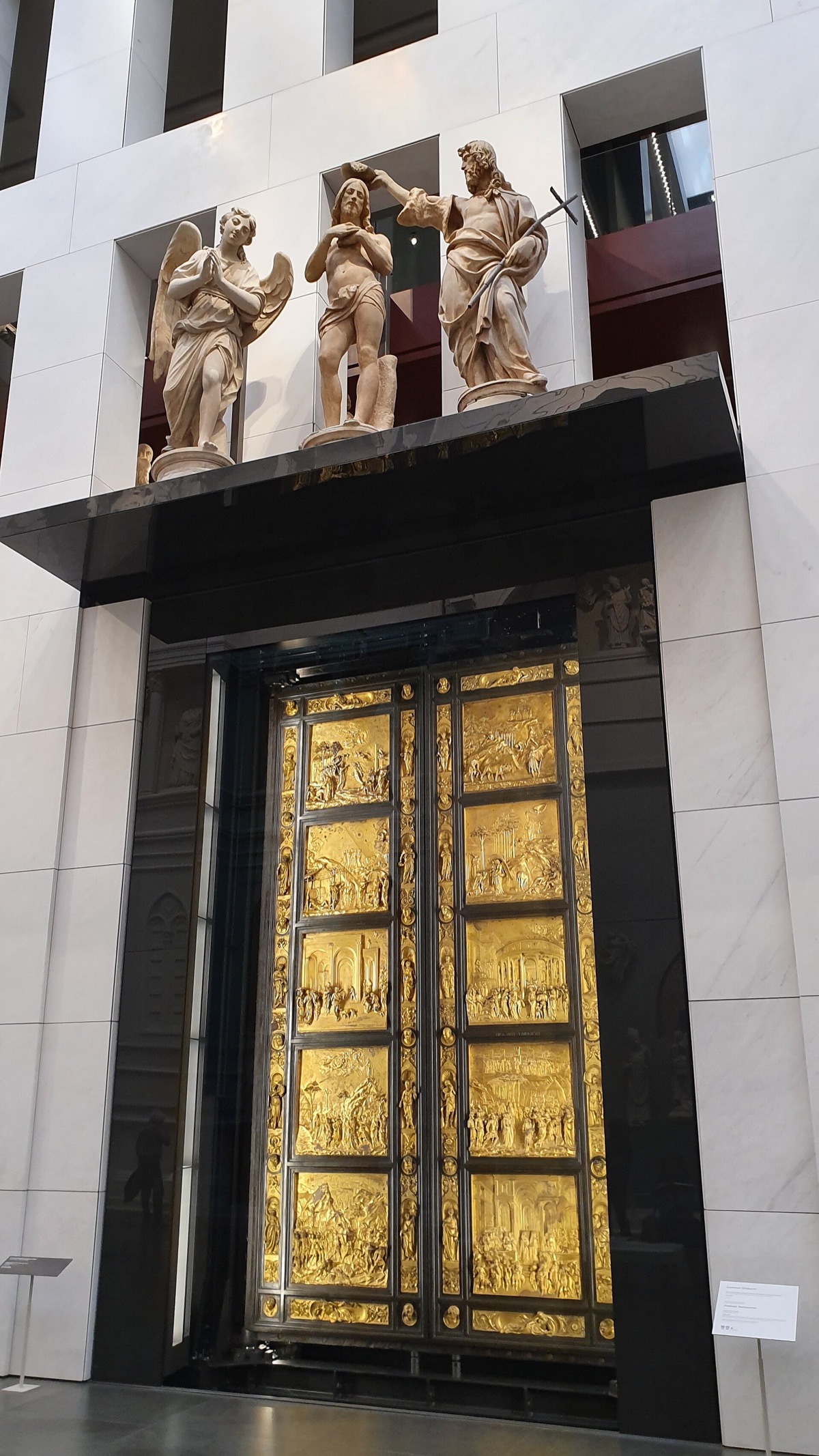
Ghiberti gave almost fifty years to two pairs of bronze doors for the baptistery of Florence. The second pair are the Gates of Paradise, and the originals are in the cathedral museum.
Early Renaissance. 3 works in 2 museums
See the artist