Painter, 1494 to 1557
Pontormo
Pontormo lived alone in a house he entered by a ladder, which he pulled up after him. His paintings have the same air of a man shut in with his own thoughts.
- Born
- 1494, Pontorme, near Empoli, Italy
- Died
- 1557, Florence, Italy
- Movement
- Mannerism
- In Florence
- 3 works in 2 museums
Where to see Pontormo in Florence
Each work with the museum it hangs in. Museums move and lend their works, so check before a special journey.
Uffizi Gallery2 works
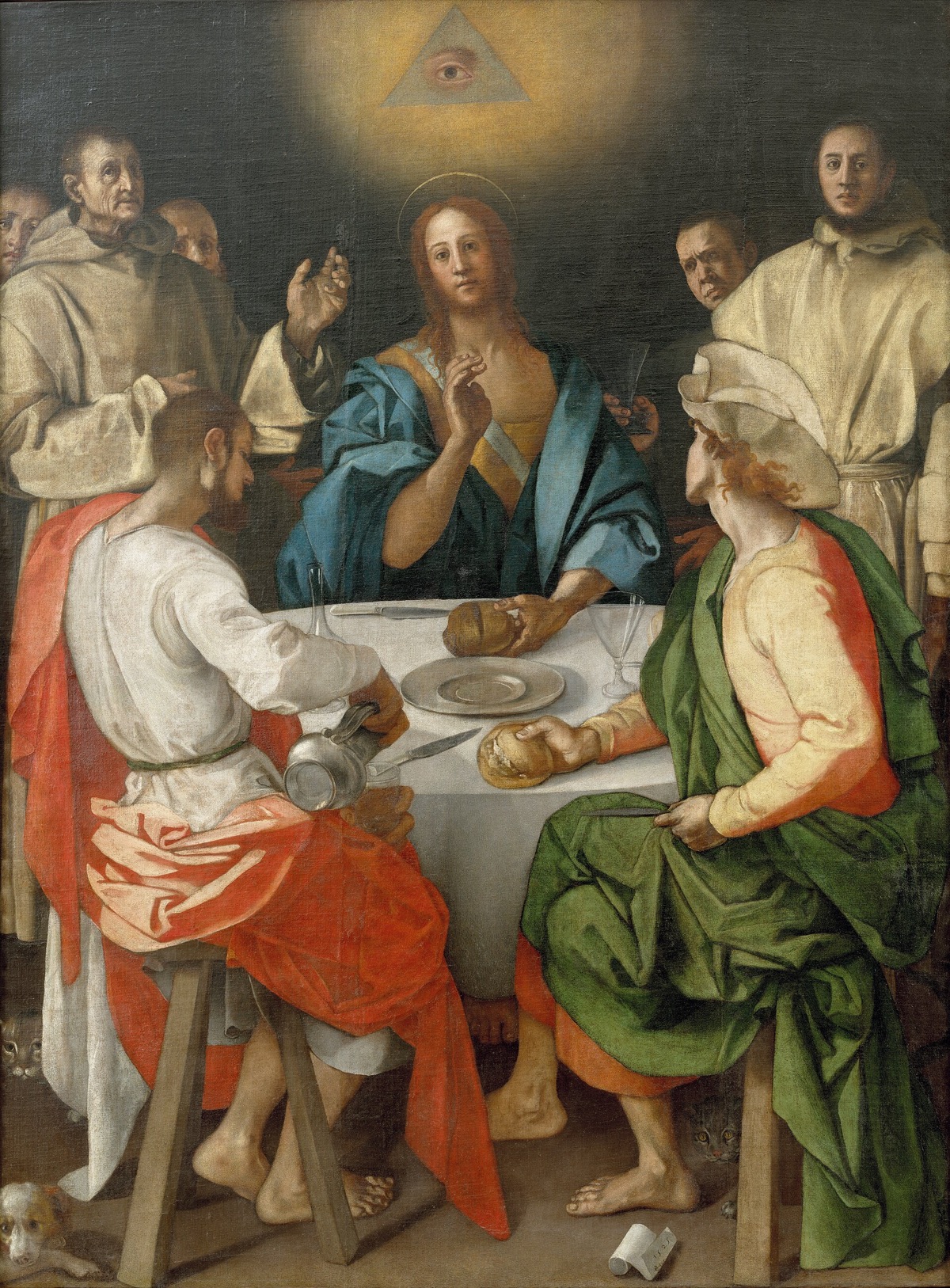
Supper at Emmaus
1525
Christ breaks bread for two disciples under a floating eye in a triangle. The monks who commissioned it stand behind, painted from life.
Portrait of Cosimo the Elder
about 1519 to 1520
The founder of the Medici fortunes, painted half a century after his death, in profile, in red, wringing his hands.
Church of Santa Felicita1 work
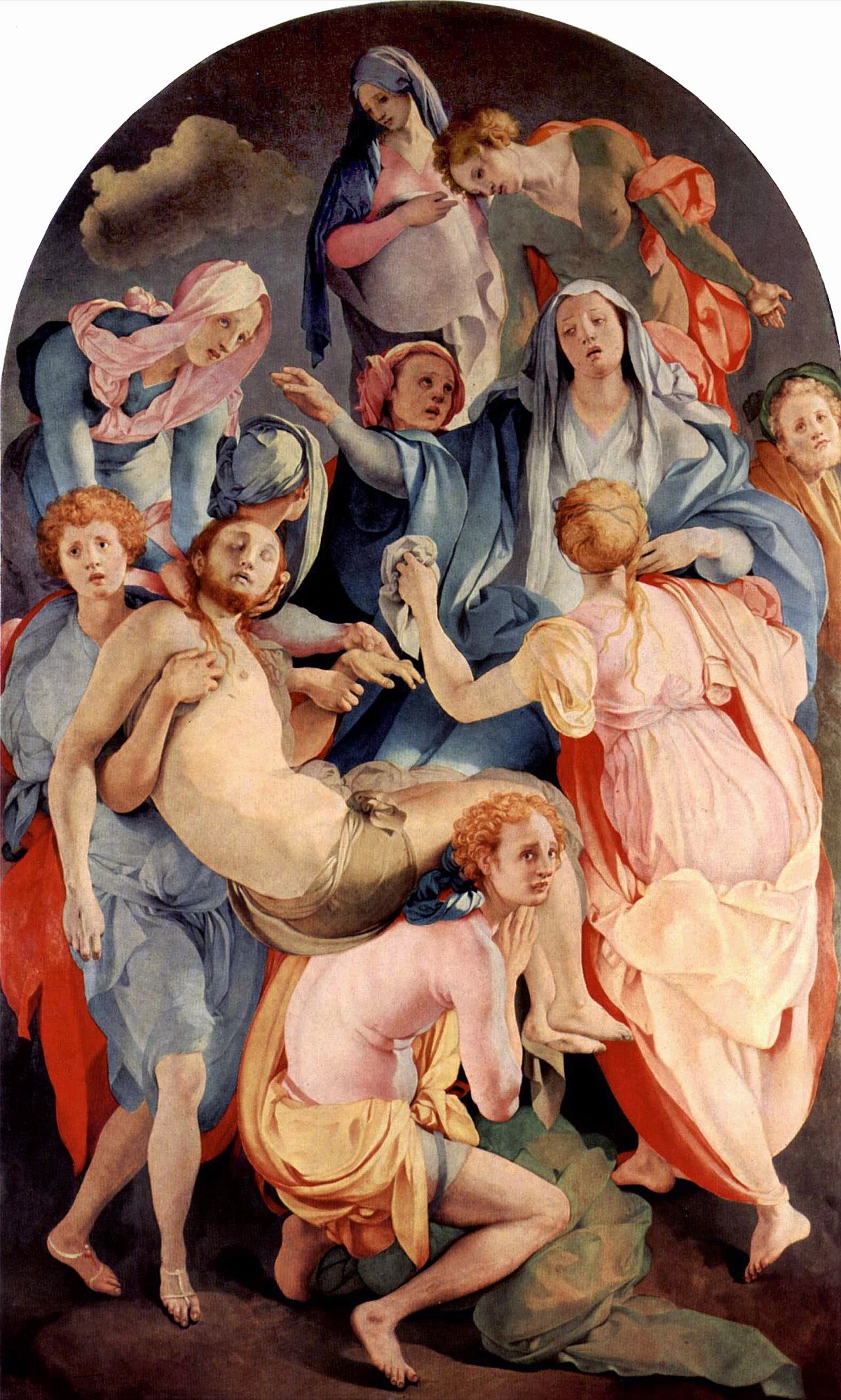
The Deposition
1525 to 1528
In the first chapel on the right, behind a grille: a knot of figures in rose, lilac and sky blue carrying the dead Christ, their faces blank with grief. The church is just over the Ponte Vecchio and free.
The life of Pontormo
Jacopo Carucci, called Pontormo after his village, was orphaned young and passed through the workshops of Leonardo, Piero di Cosimo and Andrea del Sarto. By his thirties he had left their calm behind for twisting bodies, acid colours and spaces that do not add up.
He kept a diary of what he ate and how he felt in his last years, while painting frescoes in San Lorenzo that were later destroyed. He died in Florence in 1557.
What to know
- A pupil of Andrea del Sarto and the teacher of Bronzino
- His Deposition is still in the chapel it was painted for
- Kept a diary of his meals and ailments
- Born
- 24 May 1494, Pontorme, near Empoli, Italy
- Died
- 2 January 1557, Florence, Italy
Pontormo: common questions
- Where can you see Pontormo in Florence?
- At the Uffizi Gallery: Supper at Emmaus and Portrait of Cosimo the Elder. At the Church of Santa Felicita: The Deposition. Museums move and lend their works, so check before a special journey.
- What is Pontormo's most famous work in Florence?
- The Deposition, of 1525 to 1528, at the Church of Santa Felicita. In the first chapel on the right, behind a grille: a knot of figures in rose, lilac and sky blue carrying the dead Christ, their faces blank with grief. The church is just over the Ponte Vecchio and free.
- When and where was Pontormo born?
- On 24 May 1494, at Pontorme, near Empoli, Italy. Pontormo died on 2 January 1557, at Florence, Italy, aged about 63.
- What is Pontormo known for?
- A pupil of Andrea del Sarto and the teacher of Bronzino. His Deposition is still in the chapel it was painted for. Kept a diary of his meals and ailments. Pontormo was an Italian painter, of Mannerism.
Tickets and tours: Pontormo in Florence
Things to do near the Uffizi
The nearest of this site's best things to do in the city. Distances are in a straight line.
- 5Cross the Ponte Vecchio at sunset200 m awayWalk, 20 to 45 minutes, free
- 4Walk the halls of the Palazzo Vecchio200 m awayMonument, 1.5 to 2.5 hours, square free, ticket for the palace
- 9See Donatello's David at the Bargello350 m awayMuseum, 1.3 to 2 hours, ticket
- 7See Raphael and Titian at the Pitti Palace500 m awayMuseum, 2 to 3 hours, ticket
Where to eat near the Uffizi
The nearest of the famous tables this site lists in Florence. Distances are in a straight line.
- Trattoria Antico Fattore4.5Trattoria, Uffizi100 m away
- Rivoire3.8Café and chocolate maker, Piazza della Signoria200 m away
- Perché no!4.6Gelateria, Orsanmichele350 m away
- Antico Ristorante Paoli4.7Restaurant, Orsanmichele350 m away
Hotels near the Uffizi
The five-star hotels closest to it, of those this site lists in Florence. Distances are in a straight line.
- Portrait Firenze4.8Five-star hotel, Ponte Vecchio250 m away
- Hotel Bernini Palace4.7Five-star hotel, Piazza della Signoria250 m away
- Hotel Lungarno4.7Five-star hotel, Oltrarno300 m away
- Porta Rossa4.8Five-star hotel, Via Porta Rossa350 m away
Other artists
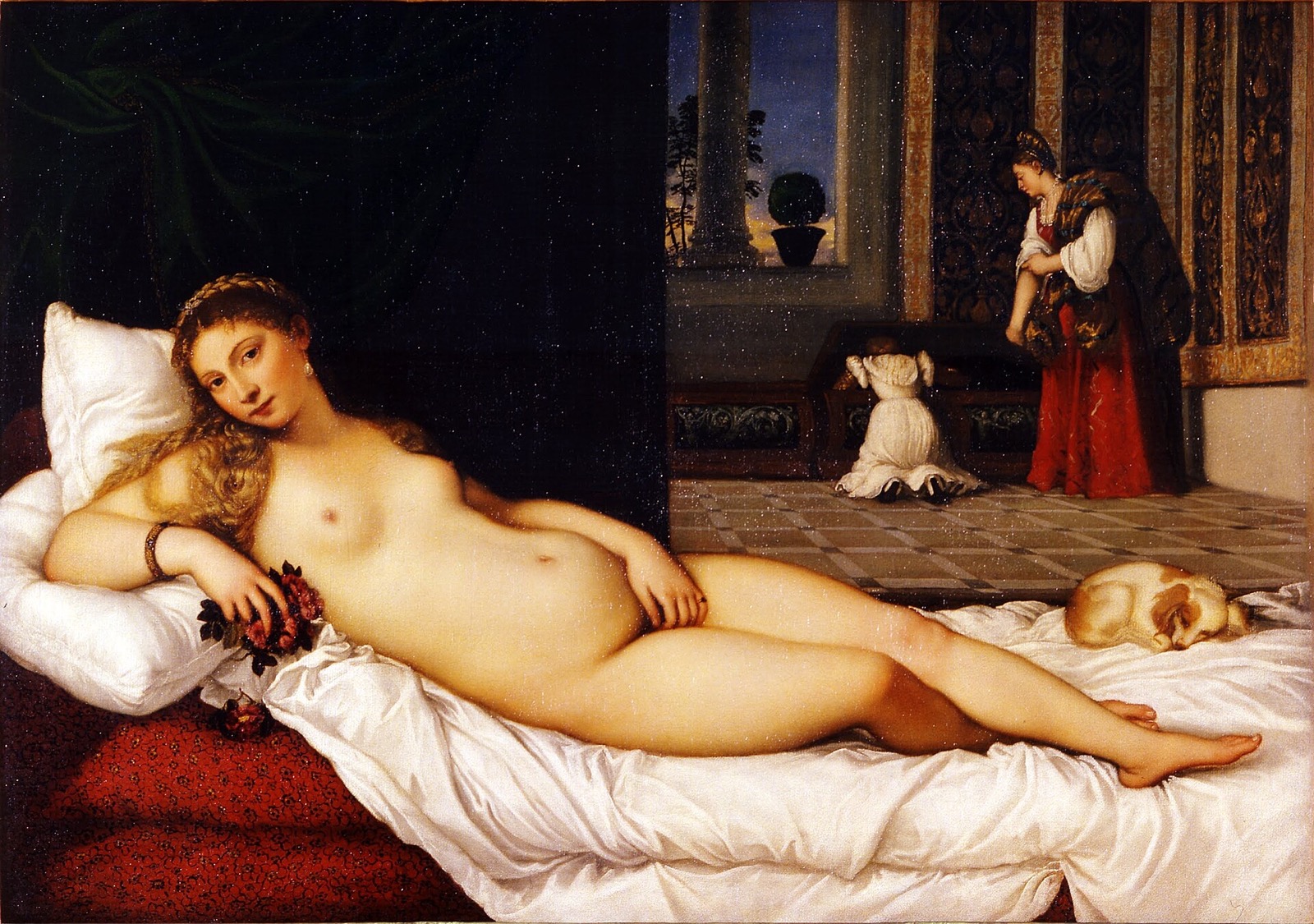
Painter, 1488 to 1576
Titian
The Medici inherited the pictures of the dukes of Urbino, and with them some of the best of Titian: the Venus of Urbino in the Uffizi, and a wall of portraits in the Pitti Palace.
Venetian Renaissance. 4 works in 2 museums
See the artist
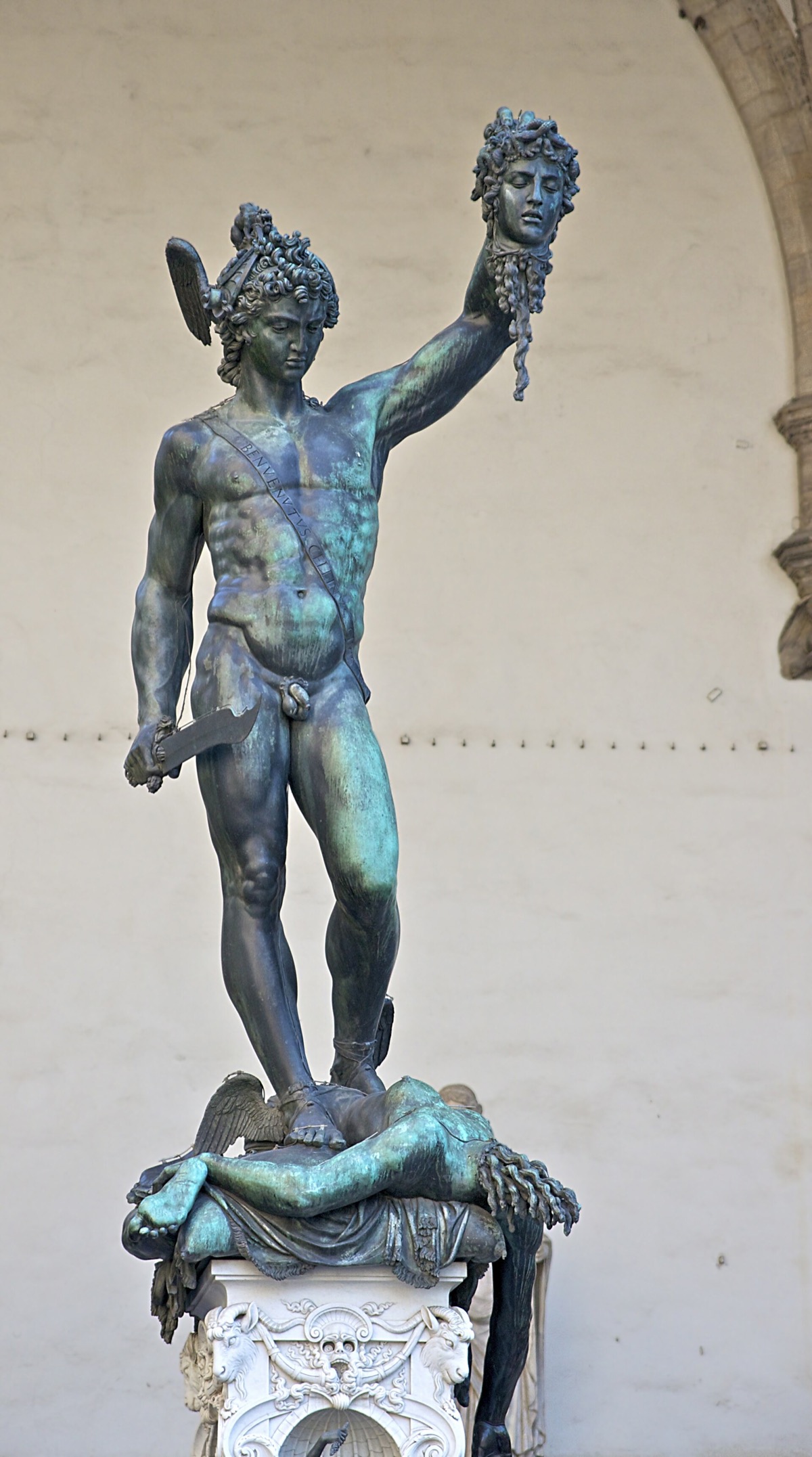
Sculptor, 1500 to 1571
Benvenuto Cellini
Goldsmith, sculptor, brawler and author of the most entertaining autobiography of the Renaissance. His bronze Perseus has stood in the Loggia dei Lanzi since 1554.
Mannerism. 2 works in 2 museums
See the artist
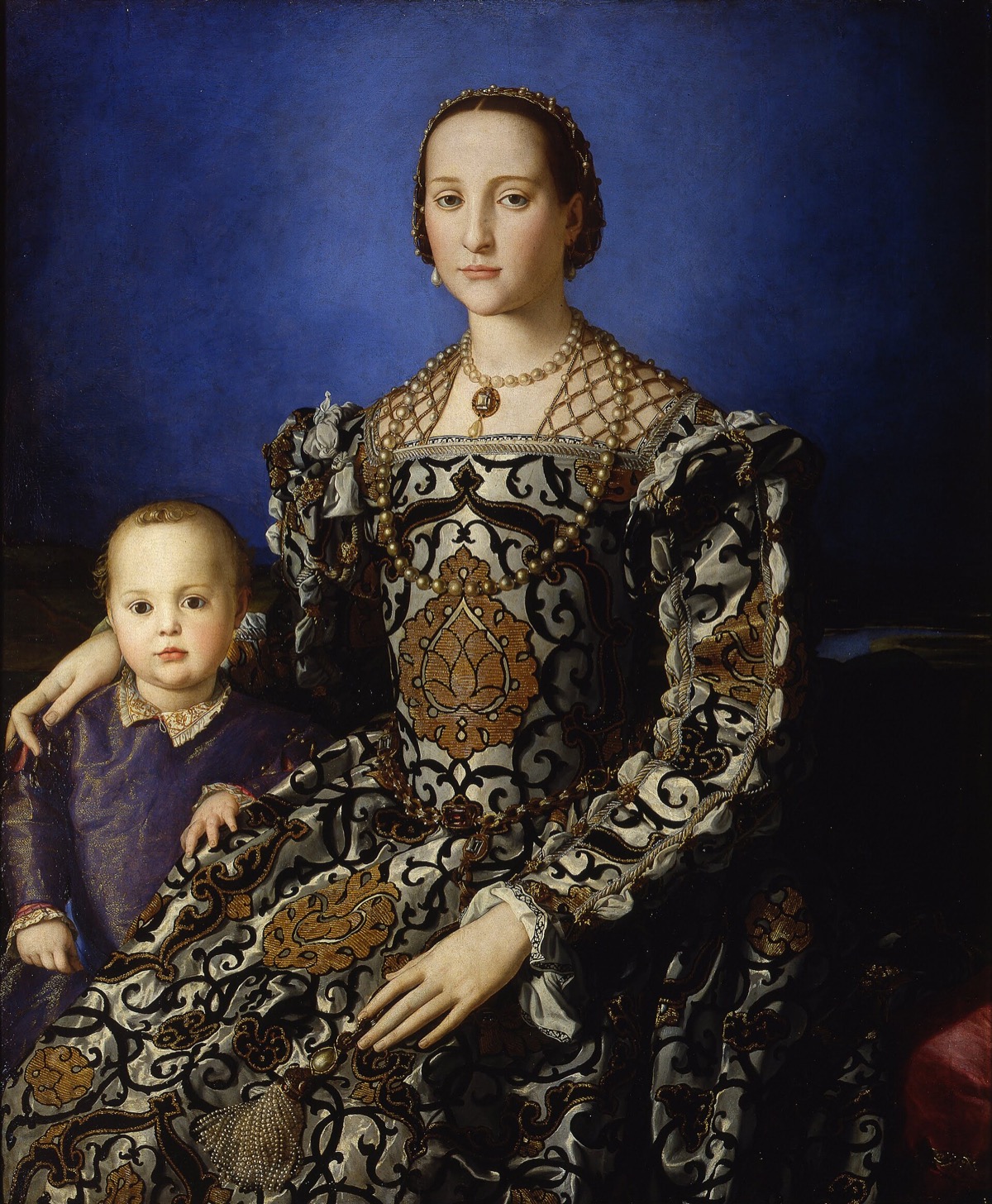
Painter, 1503 to 1572
Bronzino
The court painter of the first Medici grand duke. His portraits in the Uffizi, cool, polished and unreadable, are how we picture the Florence of Cosimo I.
Mannerism. 3 works in 2 museums
See the artist