Painter, 1724 to 1806
George Stubbs
Stubbs spent eighteen months in a farmhouse in Lincolnshire dissecting horses, layer by layer, and drawing what he found. Nobody before him had known the animal so well, and nobody has painted it better.
- Born
- 1724, Liverpool
- Died
- 1806, London
- Movement
- British painting
- In London
- 1 work in 1 museum
Where to see George Stubbs in London
Each work with the museum it hangs in. Museums move and lend their works, so check before a special journey.
The National Gallery1 work
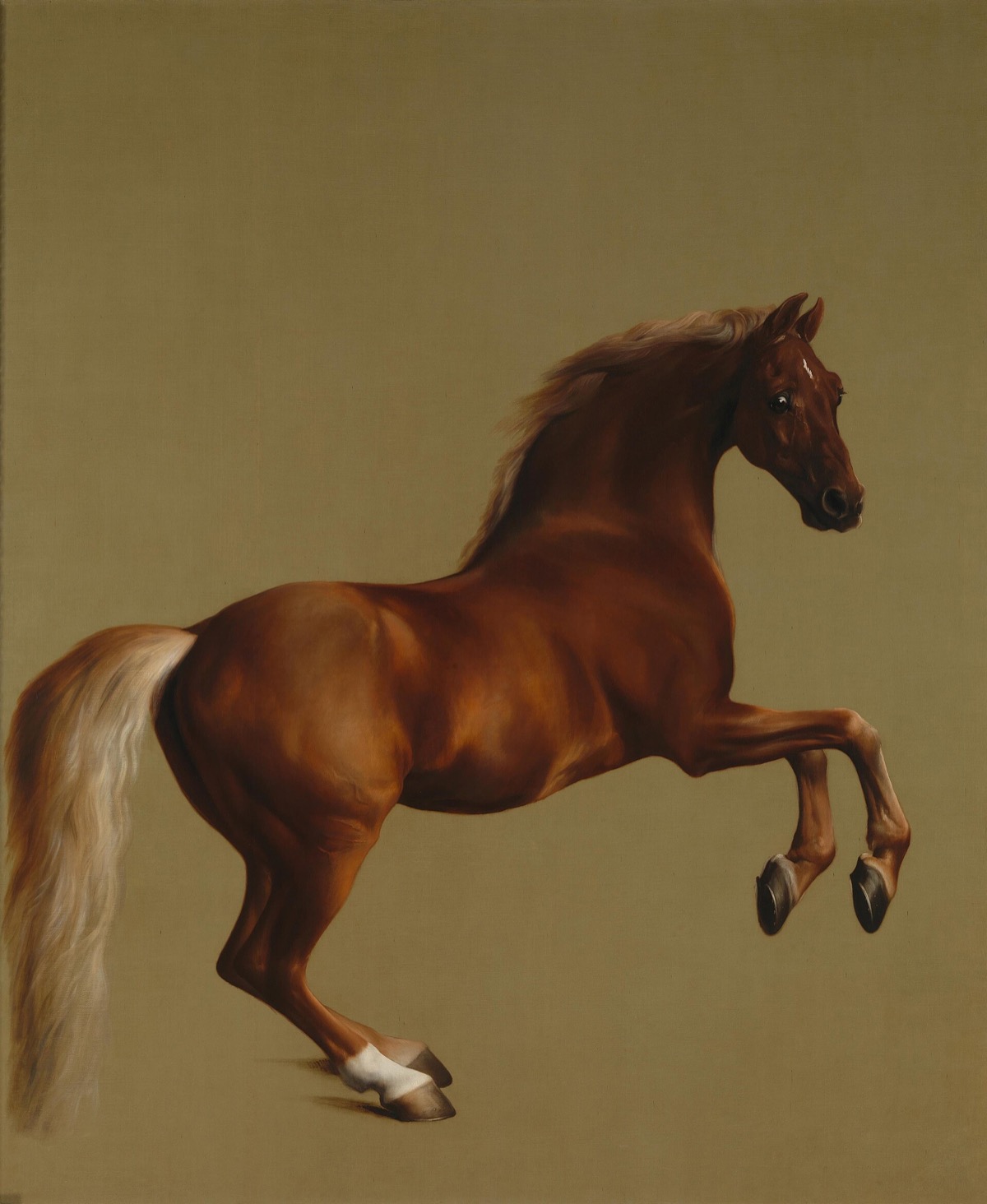
Whistlejacket
about 1762
A chestnut stallion rears against plain olive paint, with no rider, no groom and no landscape. The gallery bought it in 1997, and it hangs where you can see it from several rooms away.
The life of George Stubbs
He was the son of a leather worker in Liverpool and taught himself. The book that came out of his dissections, The Anatomy of the Horse, of 1766, made him the painter every racehorse owner wanted.
He was treated in his lifetime as a painter of animals, a low rank. It took two hundred years for him to be counted with Gainsborough and Reynolds.
What to know
- Published The Anatomy of the Horse in 1766
- Whistlejacket is nearly three metres high
- Born
- 25 August 1724, Liverpool
- Died
- 10 July 1806, London
George Stubbs: common questions
- Where can you see George Stubbs in London?
- At the National Gallery: Whistlejacket. Museums move and lend their works, so check before a special journey.
- What is George Stubbs's most famous work in London?
- Whistlejacket, of about 1762, at the National Gallery. A chestnut stallion rears against plain olive paint, with no rider, no groom and no landscape. The gallery bought it in 1997, and it hangs where you can see it from several rooms away.
- When and where was George Stubbs born?
- On 25 August 1724, at Liverpool. George Stubbs died on 10 July 1806, at London, aged about 82.
- What is George Stubbs known for?
- Published The Anatomy of the Horse in 1766. Whistlejacket is nearly three metres high. George Stubbs was an English painter, of British painting.
Tickets and tours: George Stubbs in London
Things to do near the National Gallery
The nearest of this site's best things to do in the city. Distances are in a straight line.
- 16Spend an evening in Covent Garden and the West End450 m awayShow, 2 to 5 hours, free to walk, theatre ticket
- 14Go underground at the Churchill War Rooms750 m awayUnderground, 1.5 to 2 hours, ticket
- 6Ride the London Eye900 m awayMonument, 1 to 1.5 hours, ticket
- 11Hear Big Ben strike at the Houses of Parliament950 m awayMonument, 45 to 150 minutes, free outside, ticket to go in
Where to eat near the National Gallery
The nearest of the famous tables this site lists in London. Distances are in a straight line.
- Ochre4.4Museum restaurant, Trafalgar Square50 m away
- J Sheekey4.5Fish restaurant, Covent Garden250 m away
- Gordon's Wine Bar4.6Wine bar, Embankment350 m away
- Rules4.6Grand restaurant, Covent Garden400 m away
Hotels near the National Gallery
The five-star hotels closest to it, of those this site lists in London. Distances are in a straight line.
- Corinthia London4.7Five-star hotel, Whitehall Place, by the Embankment400 m away
- Raffles London at The OWO4.7Five-star hotel, Whitehall, opposite Horse Guards450 m away
- The Savoy4.7Five-star hotel, The Strand, on the Thames550 m away
- The Ritz London4.6Five-star hotel, Piccadilly, beside Green Park950 m away
Other artists
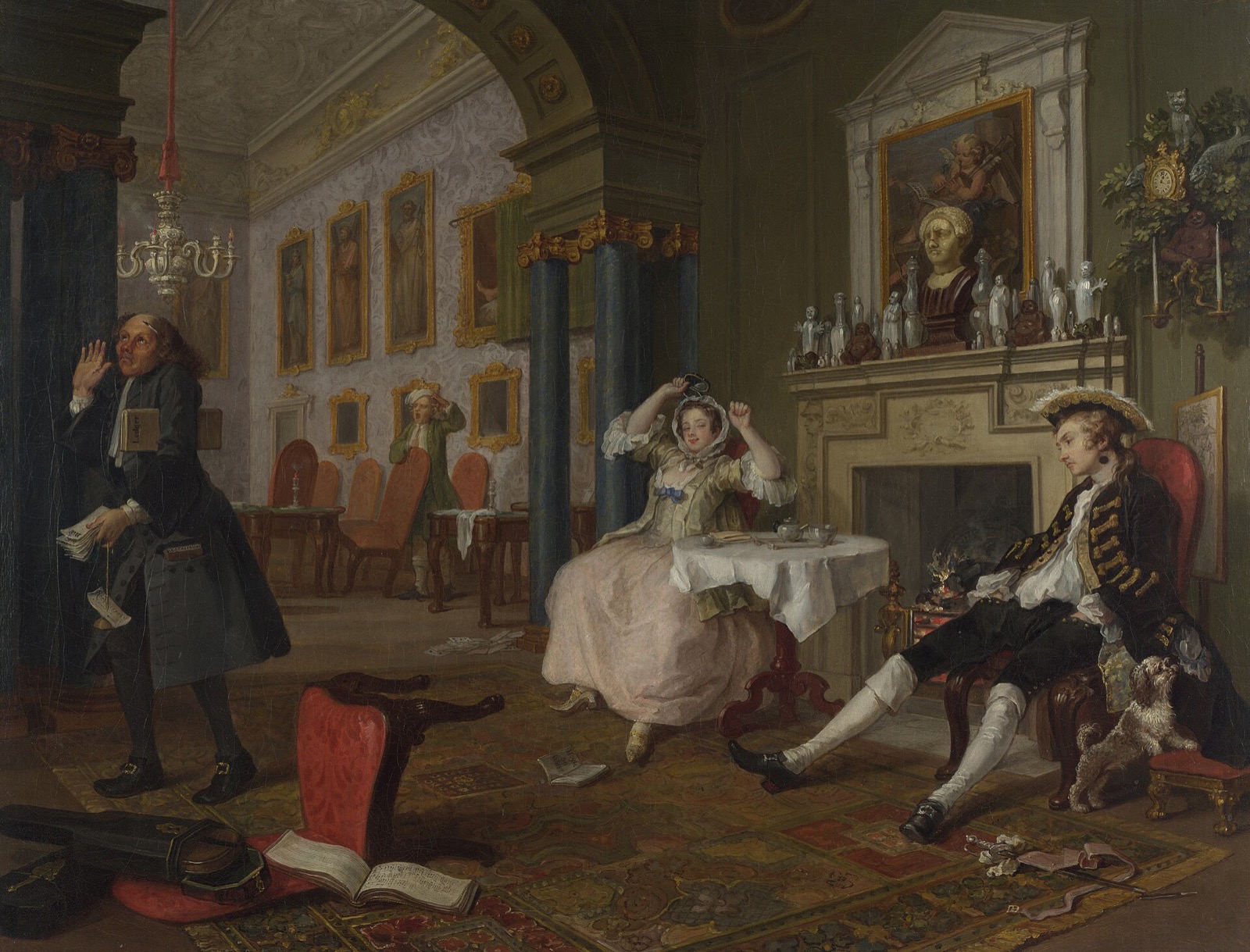
Painter, 1697 to 1764
William Hogarth
Hogarth told stories in sets of pictures, like plays, and London has both of the great ones: Marriage A-la-Mode at the National Gallery and A Rake's Progress at Sir John Soane's Museum.
Rococo, satire. 3 works in 2 museums
See the artist
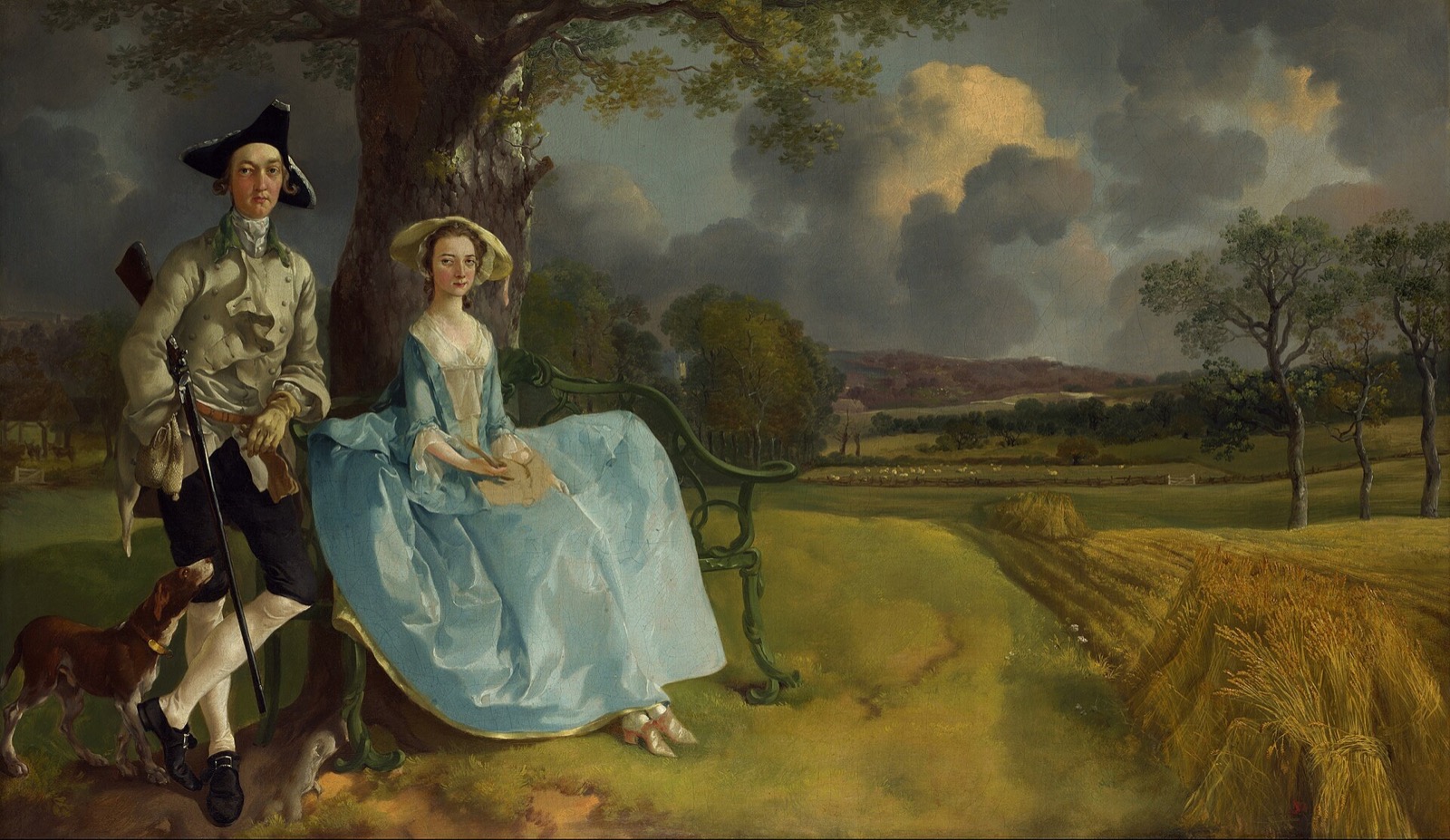
Painter, 1727 to 1788
Thomas Gainsborough
The National Gallery has the pictures by which Gainsborough is known: Mr and Mrs Andrews in their Suffolk fields, his two small daughters chasing a butterfly, and The Morning Walk.
Rococo, British portraiture. 3 works in 1 museum
See the artist
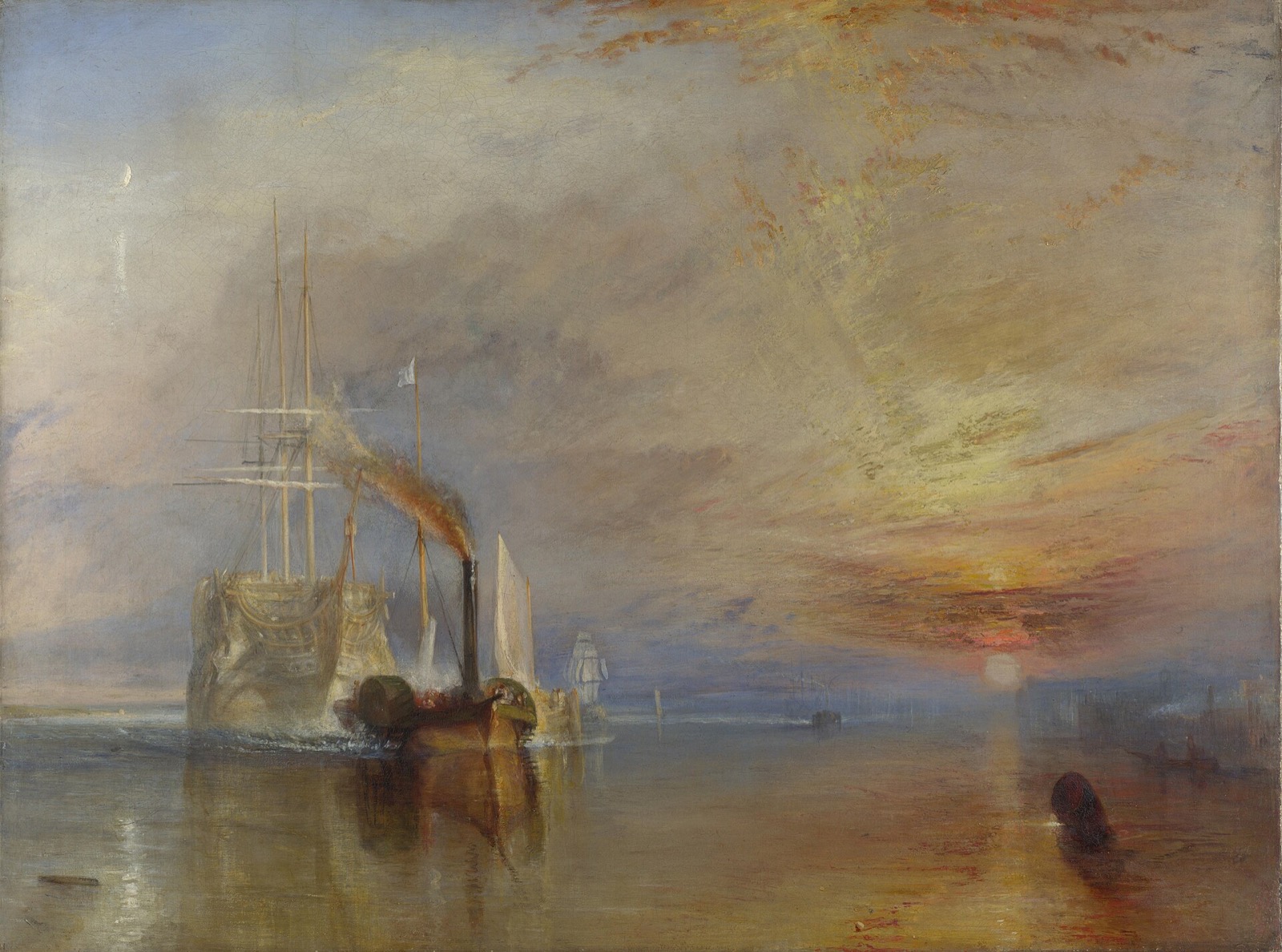
Painter, 1775 to 1851
J. M. W. Turner
Turner left his pictures to the nation. The National Gallery has The Fighting Temeraire and Rain, Steam and Speed, and Tate Britain has the rest: some three hundred paintings and thousands of drawings.
Romanticism. 3 works in 2 museums
See the artist