Painter, 1697 to 1764
William Hogarth
Hogarth was a Londoner born and bred, and the city is his subject: its marriages for money, its gambling dens, its madhouse. He painted each story once and made his living from the engravings.
- Born
- 1697, London
- Died
- 1764, London
- Movement
- Rococo, satire
- In London
- 3 works in 2 museums
Where to see William Hogarth in London
Each work with the museum it hangs in. Museums move and lend their works, so check before a special journey.
The National Gallery2 works
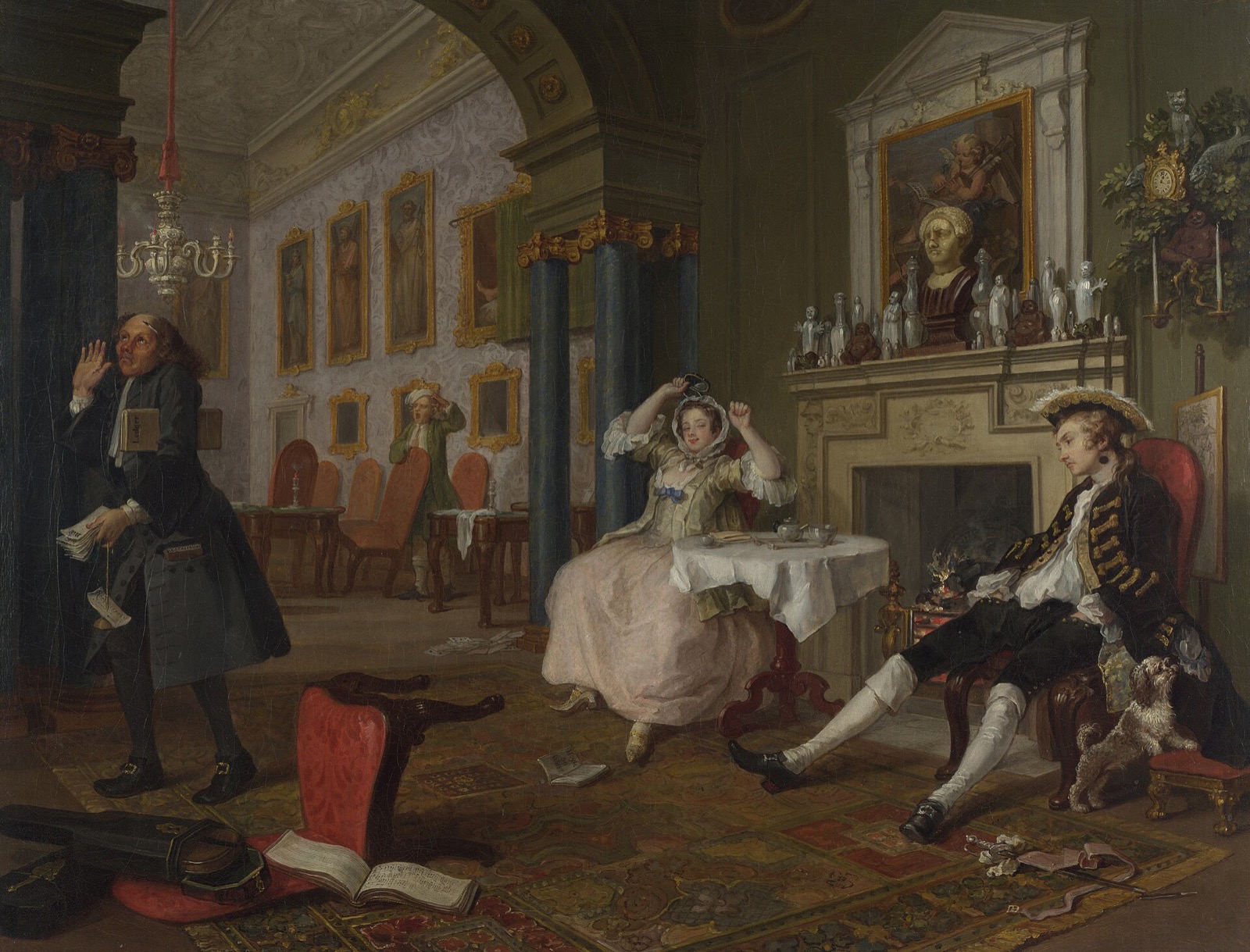
Marriage A-la-Mode
about 1743
Six scenes. A bankrupt earl sells his son to a rich merchant's daughter, and the marriage runs through boredom, adultery and a duel to a death by poison. In the second, the couple slump at breakfast after separate nights out.
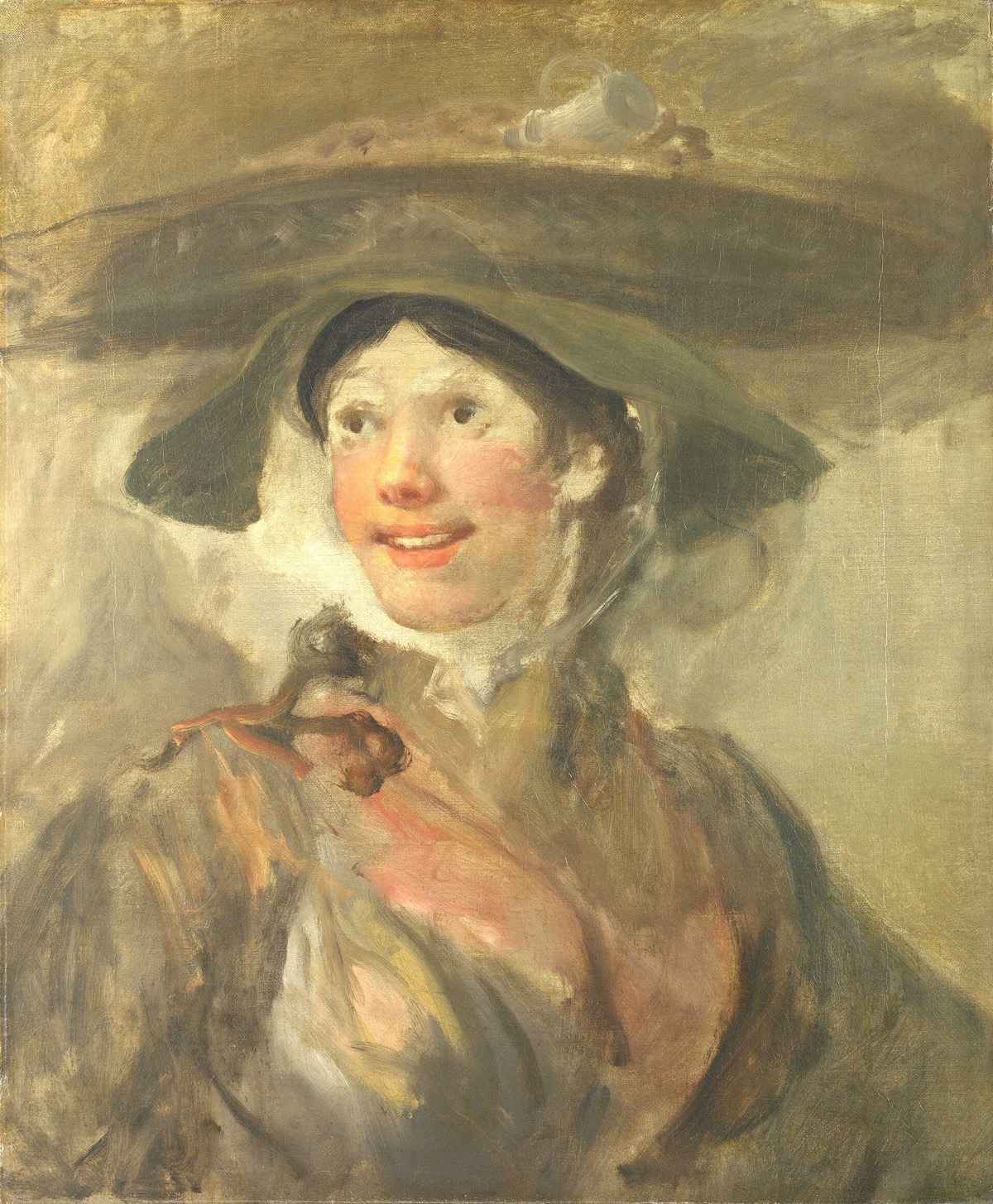
The Shrimp Girl
about 1740 to 1745
A street seller with a basket of shellfish on her head, laughing, dashed in with a few strokes and left unfinished. His widow kept it and would show it to visitors.
Sir John Soane's Museum1 work
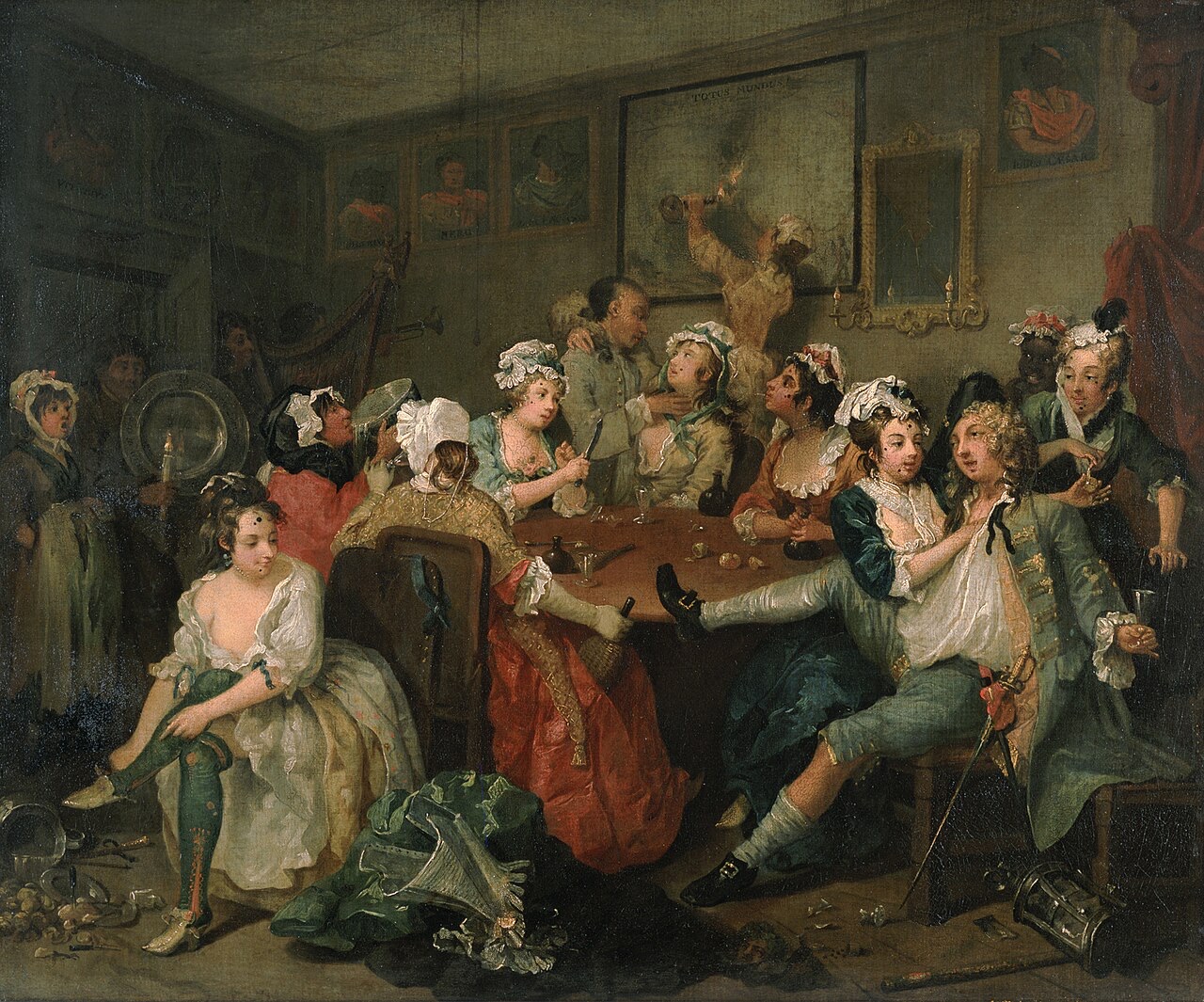
A Rake's Progress
1732 to 1734
Eight scenes of a young heir who spends a fortune on clothes, women and cards and ends in the madhouse of Bedlam. They hang behind folding panels in the picture room of an architect's house in Lincoln's Inn Fields, which is free to visit.
The life of William Hogarth
He was apprenticed to a silver engraver, taught himself to paint, and eloped with the daughter of the king's painter. To protect his prints from pirates he campaigned for a law of copyright for engravers, which Parliament passed in 1735 and which is still called Hogarth's Act.
He was a governor of the Foundling Hospital and persuaded his fellow painters to give it pictures, which made it the first public gallery of British art.
What to know
- Born and died in London
- The engravers' copyright act of 1735 is named after him
- His house at Chiswick is a museum
- Born
- 10 November 1697, London
- Died
- 26 October 1764, London
William Hogarth: common questions
- Where can you see William Hogarth in London?
- At the National Gallery: Marriage A-la-Mode and The Shrimp Girl. At the Sir John Soane's Museum: A Rake's Progress. Museums move and lend their works, so check before a special journey.
- What is William Hogarth's most famous work in London?
- Marriage A-la-Mode, of about 1743, at the National Gallery. Six scenes. A bankrupt earl sells his son to a rich merchant's daughter, and the marriage runs through boredom, adultery and a duel to a death by poison. In the second, the couple slump at breakfast after separate nights out.
- When and where was William Hogarth born?
- On 10 November 1697, at London. William Hogarth died on 26 October 1764, at London, aged about 67.
- What is William Hogarth known for?
- Born and died in London. The engravers' copyright act of 1735 is named after him. His house at Chiswick is a museum. William Hogarth was an English painter, of Rococo, satire.
Tickets and tours: William Hogarth in London
Things to do near the National Gallery
The nearest of this site's best things to do in the city. Distances are in a straight line.
- 16Spend an evening in Covent Garden and the West End450 m awayShow, 2 to 5 hours, free to walk, theatre ticket
- 14Go underground at the Churchill War Rooms750 m awayUnderground, 1.5 to 2 hours, ticket
- 6Ride the London Eye900 m awayMonument, 1 to 1.5 hours, ticket
- 11Hear Big Ben strike at the Houses of Parliament950 m awayMonument, 45 to 150 minutes, free outside, ticket to go in
Where to eat near the National Gallery
The nearest of the famous tables this site lists in London. Distances are in a straight line.
- Ochre4.4Museum restaurant, Trafalgar Square50 m away
- J Sheekey4.5Fish restaurant, Covent Garden250 m away
- Gordon's Wine Bar4.6Wine bar, Embankment350 m away
- Rules4.6Grand restaurant, Covent Garden400 m away
Hotels near the National Gallery
The five-star hotels closest to it, of those this site lists in London. Distances are in a straight line.
- Corinthia London4.7Five-star hotel, Whitehall Place, by the Embankment400 m away
- Raffles London at The OWO4.7Five-star hotel, Whitehall, opposite Horse Guards450 m away
- The Savoy4.7Five-star hotel, The Strand, on the Thames550 m away
- The Ritz London4.6Five-star hotel, Piccadilly, beside Green Park950 m away
Other artists
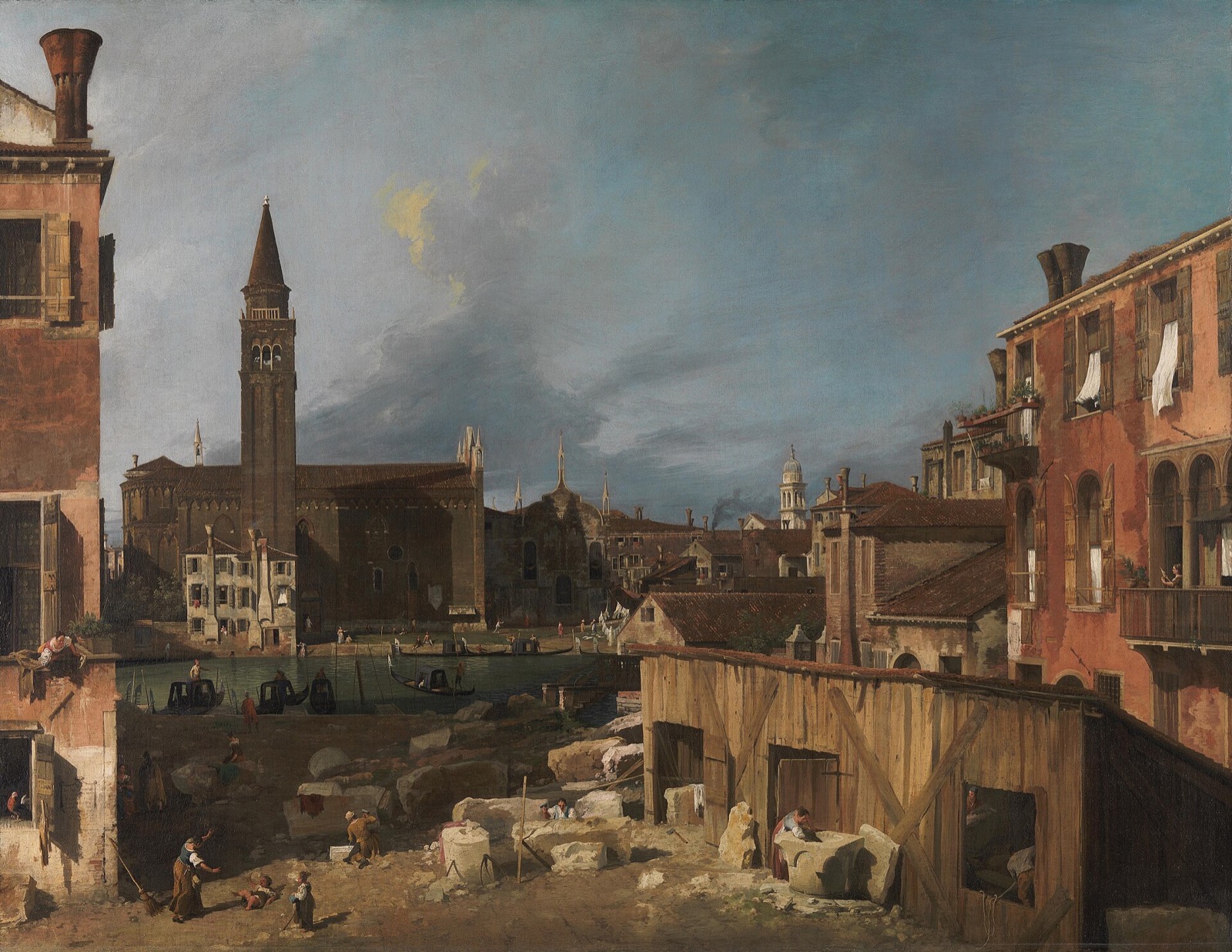
Painter, 1697 to 1768
Canaletto
Canaletto painted Venice for English visitors and then spent nine years in London painting the Thames. The National Gallery has The Stonemason's Yard, his masterpiece, and a room of his views.
Venetian view painting. 2 works in 1 museum
See the artist
Painter, 1724 to 1806
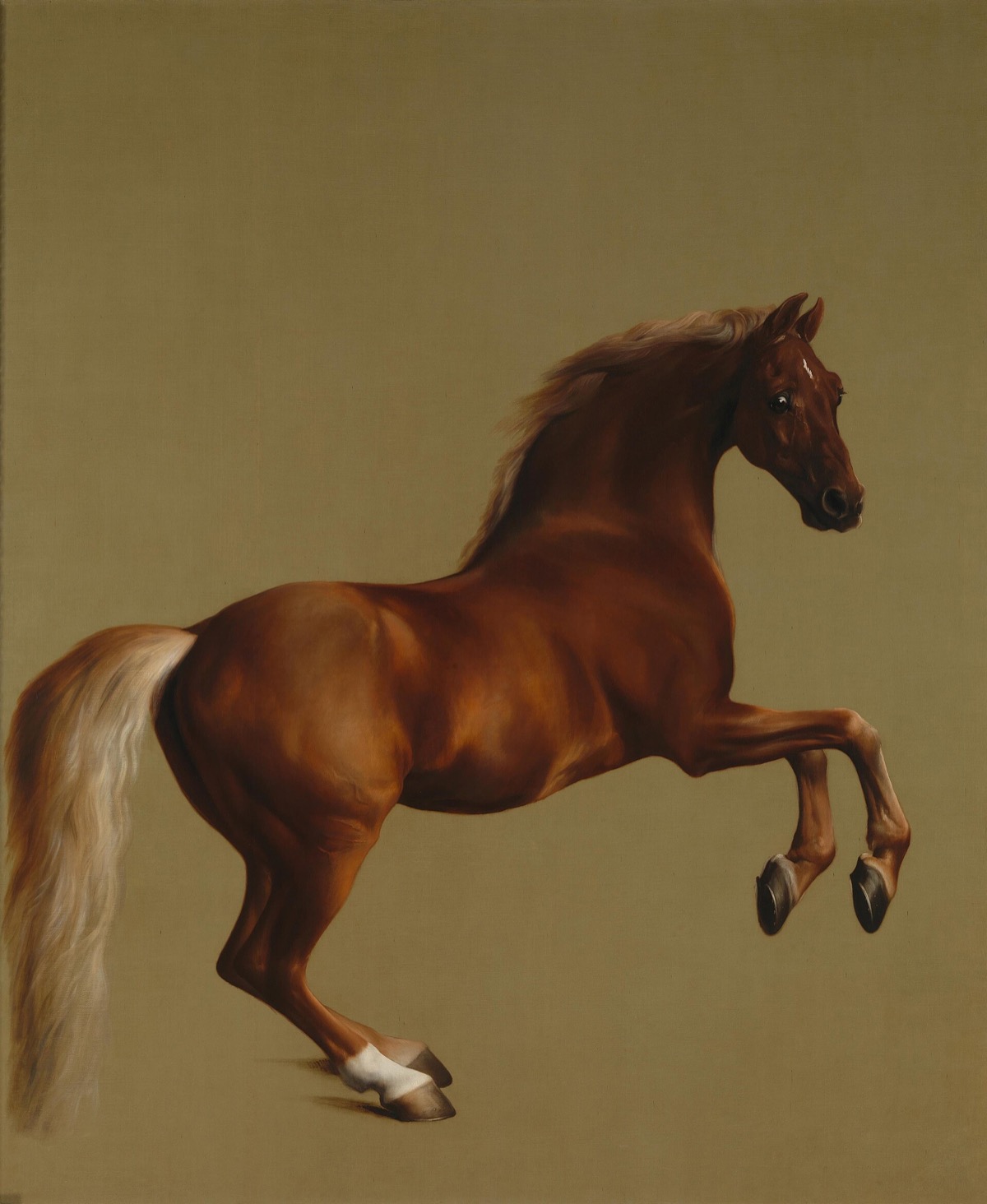
George Stubbs
The National Gallery has Whistlejacket, Stubbs's life-size portrait of a rearing Arabian stallion on a bare ground, one of the best-loved pictures in the building.
British painting. 1 work in 1 museum
See the artist
Painter, 1727 to 1788
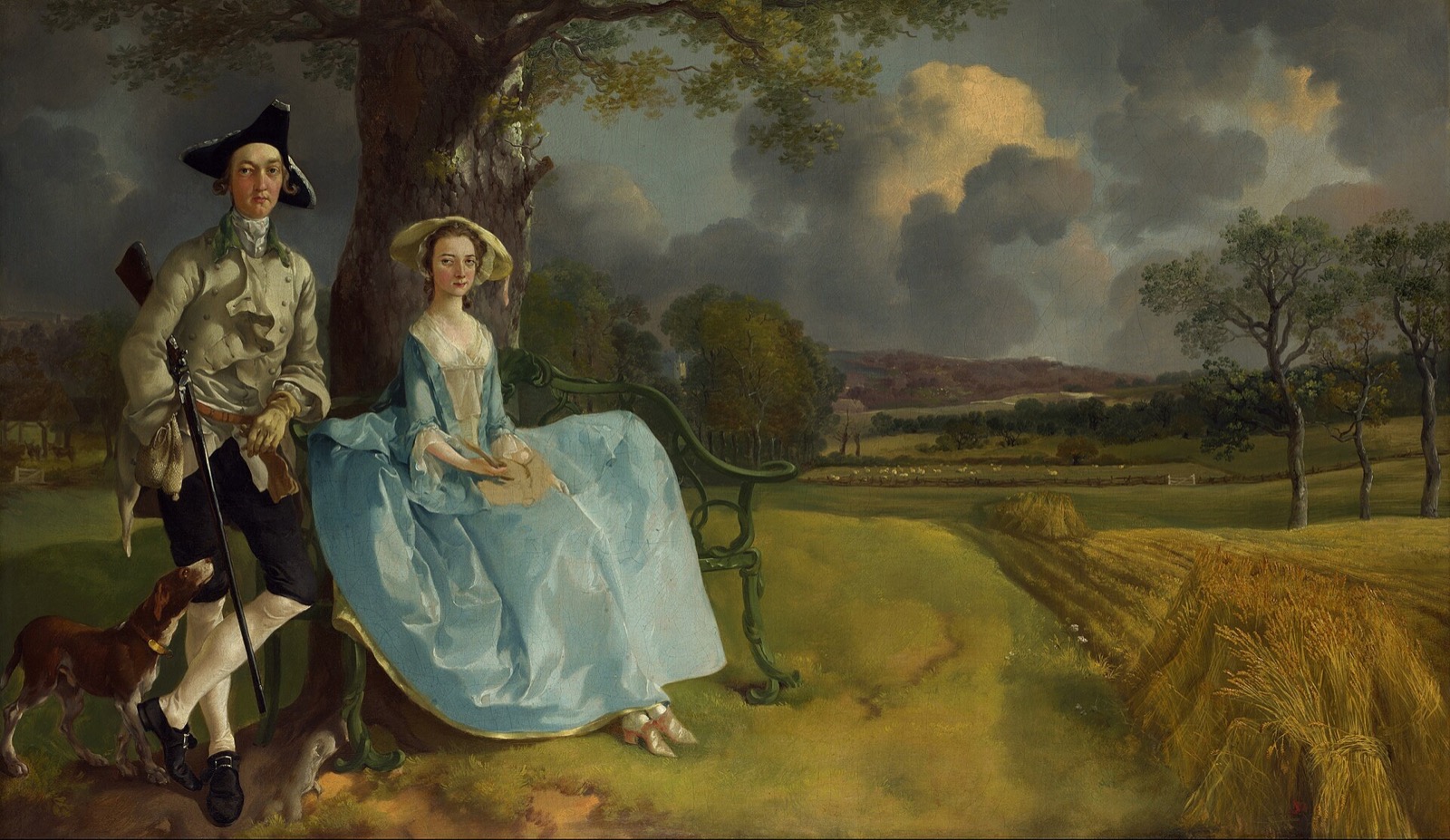
Thomas Gainsborough
The National Gallery has the pictures by which Gainsborough is known: Mr and Mrs Andrews in their Suffolk fields, his two small daughters chasing a butterfly, and The Morning Walk.
Rococo, British portraiture. 3 works in 1 museum
See the artist