Painter, 1848 to 1903
Paul Gauguin
Gauguin went to the South Seas to find a world untouched by Europe and painted, in part, the one he had brought with him. New York has three of the best pictures of his Tahitian years.
- Born
- 1848, Paris, France
- Died
- 1903, Atuona, Marquesas Islands
- Movement
- Post-Impressionism
- In New York
- 3 works in 2 museums
Where to see Paul Gauguin in New York
Each work with the museum it hangs in. Museums move and lend their works, so check before a special journey.
The Metropolitan Museum of Art2 works
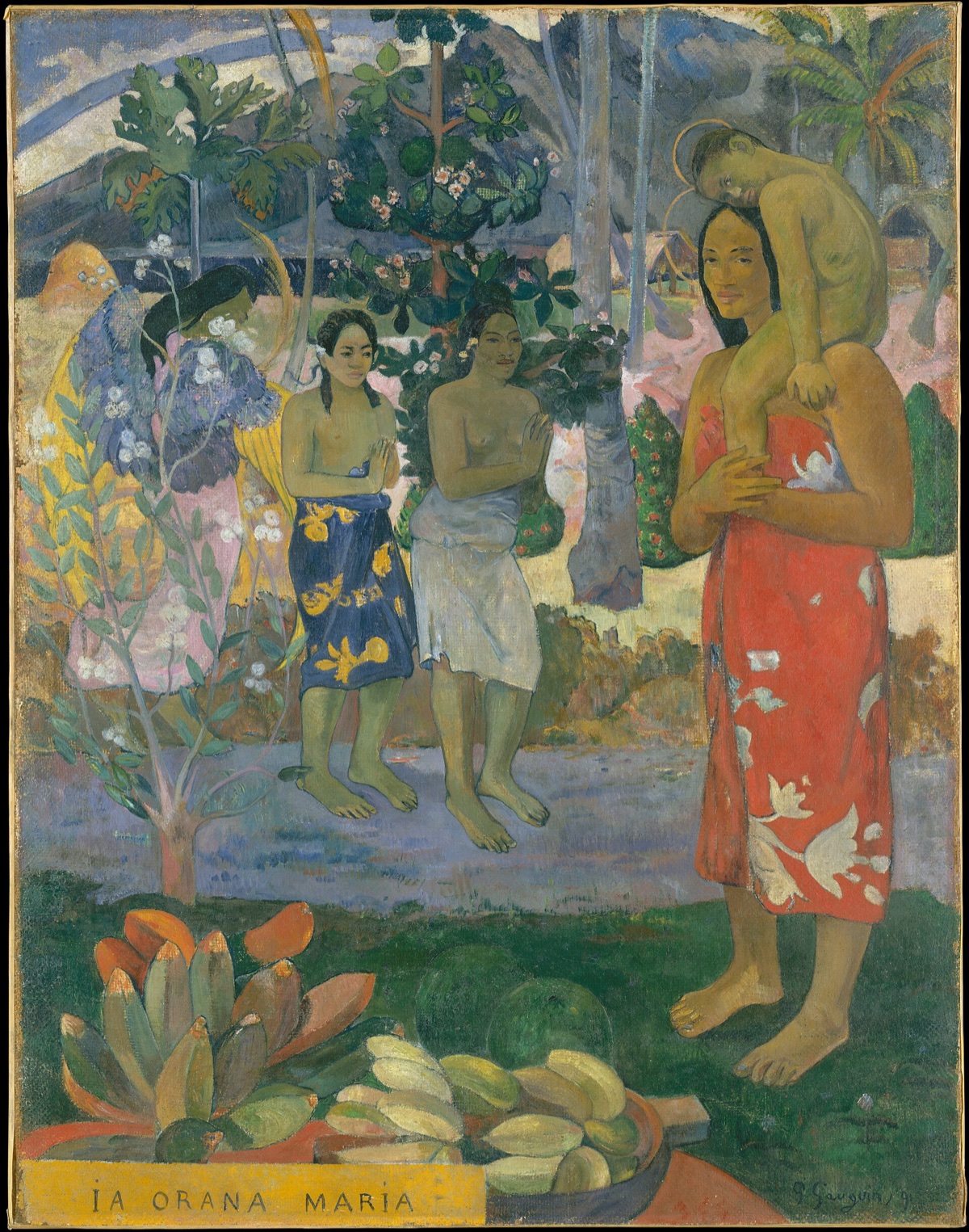
Ia Orana Maria (Hail Mary)
1891
A Tahitian mother carries her son on her shoulder, both with haloes. Two women greet them with their hands joined, an angel stands half hidden in the flowers, and fruit is laid out in front like an offering.
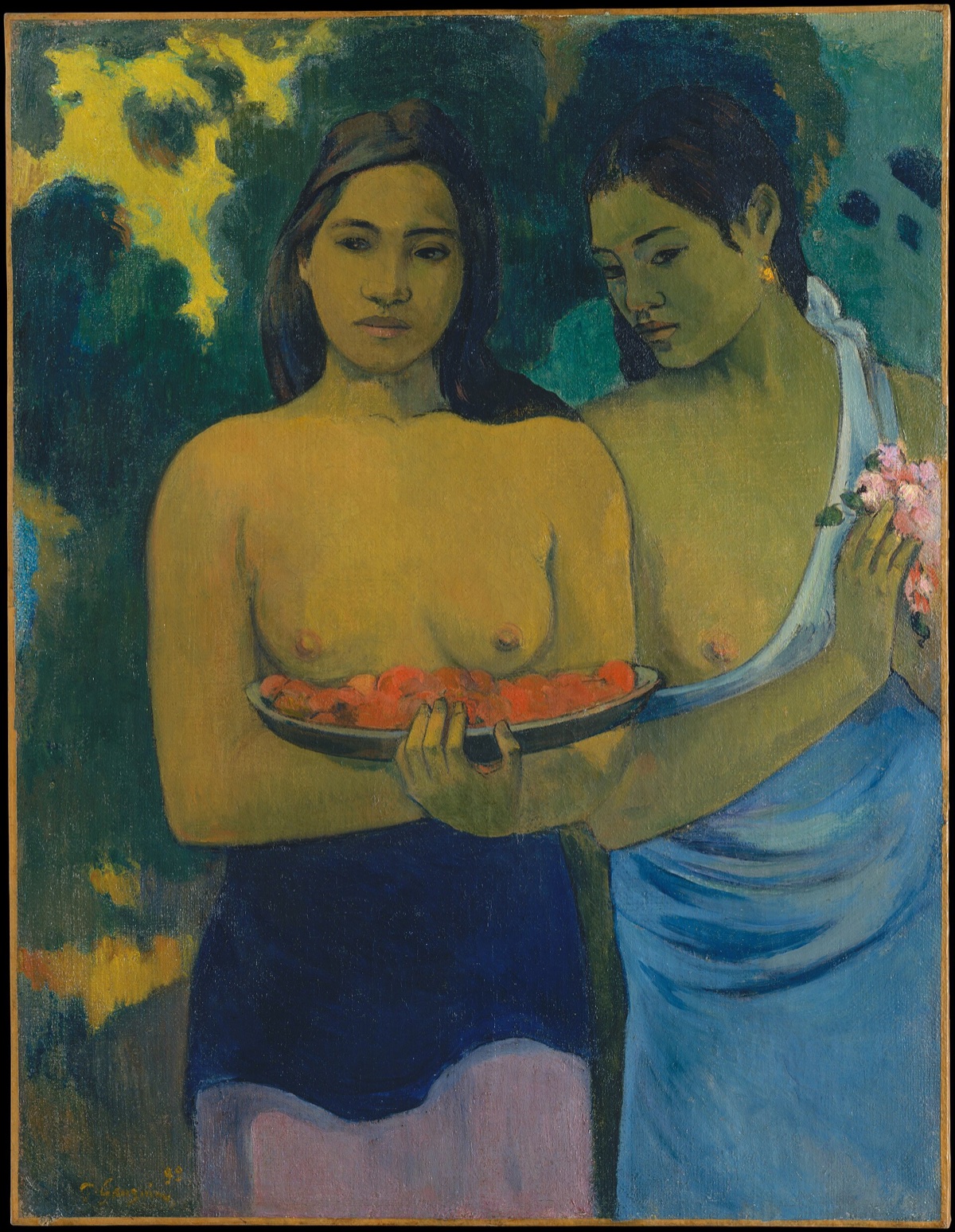
Two Tahitian Women
1899
Two women stand side by side, one holding a dish of mango blossom. It is among the calmest of his late pictures.
The Museum of Modern Art1 work
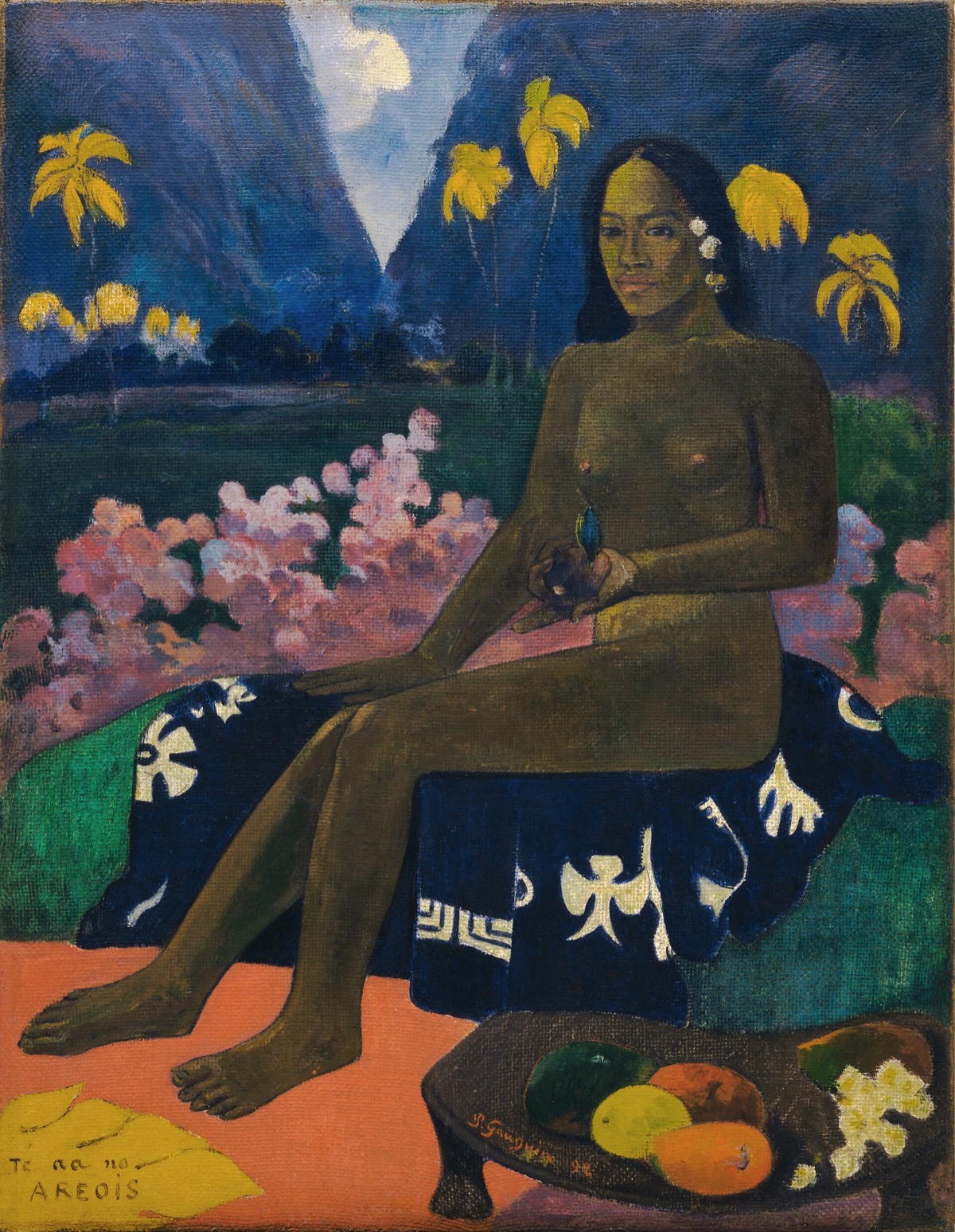
The Seed of the Areoi
1892
A young woman sits on a blue and white cloth with a sprouting seed in her hand: the earthly bride of the god Oro, from a Polynesian myth Gauguin had read about in a French book.
The life of Paul Gauguin
Paul Gauguin was born in Paris in 1848, spent part of his childhood in Peru, and was a stockbroker with a wife and five children before he gave everything up to paint. In 1891 he sailed for Tahiti. He came back once, sold little, and returned to the Pacific for good in 1895. He died in the Marquesas Islands in 1903.
What he sent home were flat, strongly coloured pictures of Polynesian women, in which Christian subjects and island myths are mixed. They had more effect on the painters who came after him than almost anything else of their time.
What to know
- Ia Orana Maria is Tahitian for Hail Mary
- He counted it the best thing he had done in his first year on the island
- It came to the Met in 1951
- Born
- 7 June 1848, Paris, France
- Died
- 8 May 1903, Atuona, Marquesas Islands
Paul Gauguin: common questions
- Where can you see Paul Gauguin in New York?
- At the Metropolitan Museum of Art: Ia Orana Maria (Hail Mary) and Two Tahitian Women. At the Museum of Modern Art: The Seed of the Areoi. Museums move and lend their works, so check before a special journey.
- What is Paul Gauguin's most famous work in New York?
- Ia Orana Maria (Hail Mary), of 1891, at the Metropolitan Museum of Art. A Tahitian mother carries her son on her shoulder, both with haloes. Two women greet them with their hands joined, an angel stands half hidden in the flowers, and fruit is laid out in front like an offering.
- When and where was Paul Gauguin born?
- On 7 June 1848, at Paris, France. Paul Gauguin died on 8 May 1903, at Atuona, Marquesas Islands, aged about 55.
- What is Paul Gauguin known for?
- Ia Orana Maria is Tahitian for Hail Mary. He counted it the best thing he had done in his first year on the island. It came to the Met in 1951. Paul Gauguin was a French painter, of Post-Impressionism.
Tickets and tours: Paul Gauguin in New York
Things to do near the Met
The nearest of this site's best things to do in the city. Distances are in a straight line.
- 13Walk down the spiral of the Guggenheim550 m awayMuseum, 1.5 to 2 hours, ticket
- 4Walk through Central Park900 m awayGarden, 2 to 4 hours, free
- 11Meet the dinosaurs at the Museum of Natural History950 m awayMuseum, 2.5 to 4 hours, ticket
- 18See the Frick's Vermeers in the house they were bought for1.0 km awayMuseum, 1.5 to 2 hours, ticket
Where to eat near the Met
The nearest of the famous tables this site lists in New York. Distances are in a straight line.
- Café Sabarsky4.3Viennese café, Inside the Neue Galerie300 m away
- Barney Greengrass4.4Appetizing shop and restaurant, Upper West Side1.4 km away
- Tavern on the Green4.4Restaurant in the park, Inside Central Park1.4 km away
- P.J. Clarke's4.5Saloon, Midtown East2.3 km away
Hotels near the Met
The five-star hotels closest to it, of those this site lists in New York. Distances are in a straight line.
- The Mark4.5Five-star hotel, Madison Avenue at 77th Street450 m away
- The Surrey4.4Five-star hotel, Madison Avenue at 76th Street550 m away
- The Pierre4.5Five-star hotel, Fifth Avenue at 61st Street1.7 km away
- The Sherry-Netherland4.6Five-star hotel, Fifth Avenue at 59th Street1.8 km away
Other artists
Painter, 1844 to 1910
Henri Rousseau
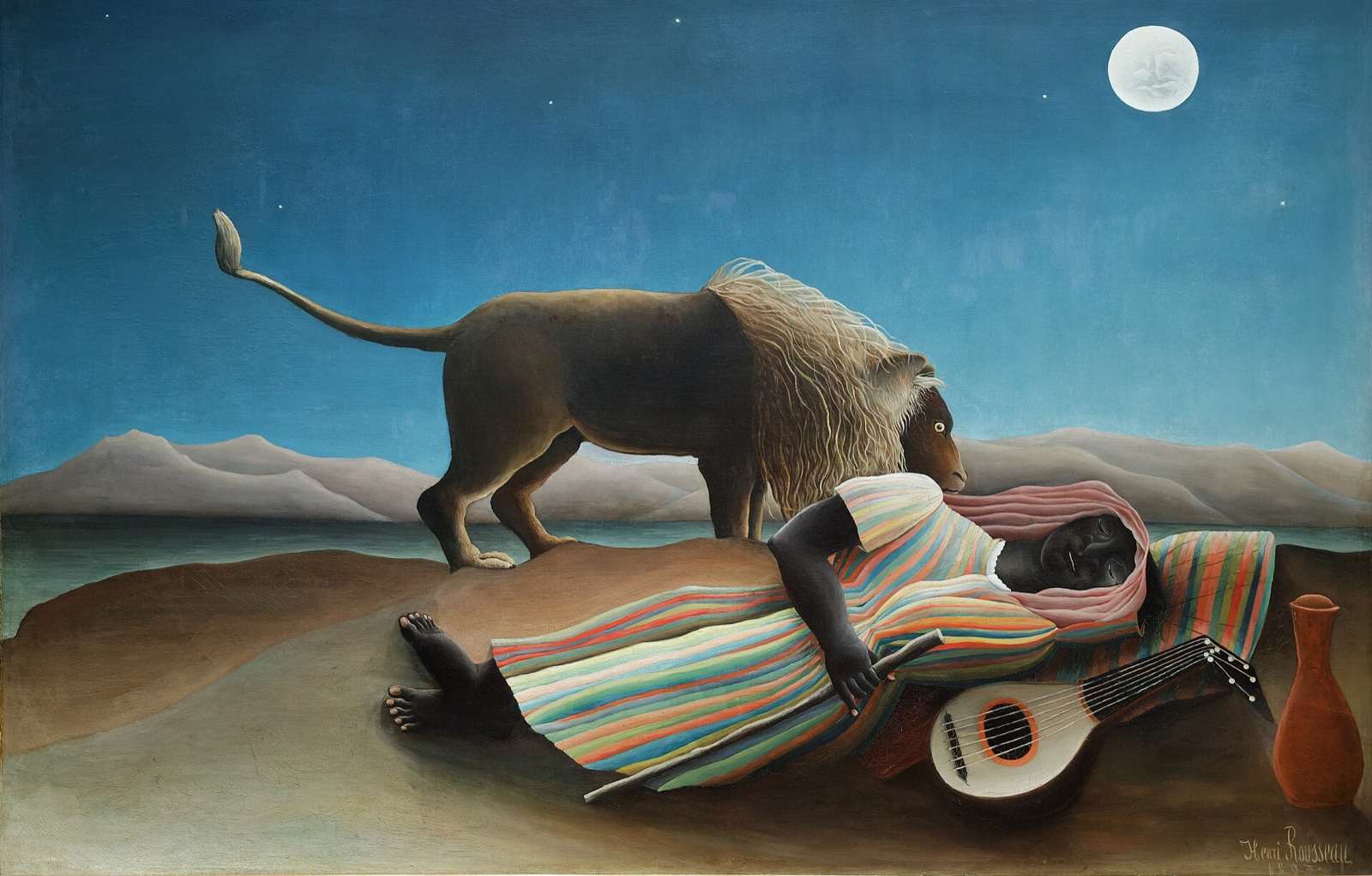
The Museum of Modern Art has Rousseau's two most famous paintings: The Sleeping Gypsy, with a lion sniffing at a woman asleep in the desert, and The Dream.
Naive painting. 3 works in 2 museums
See the artist
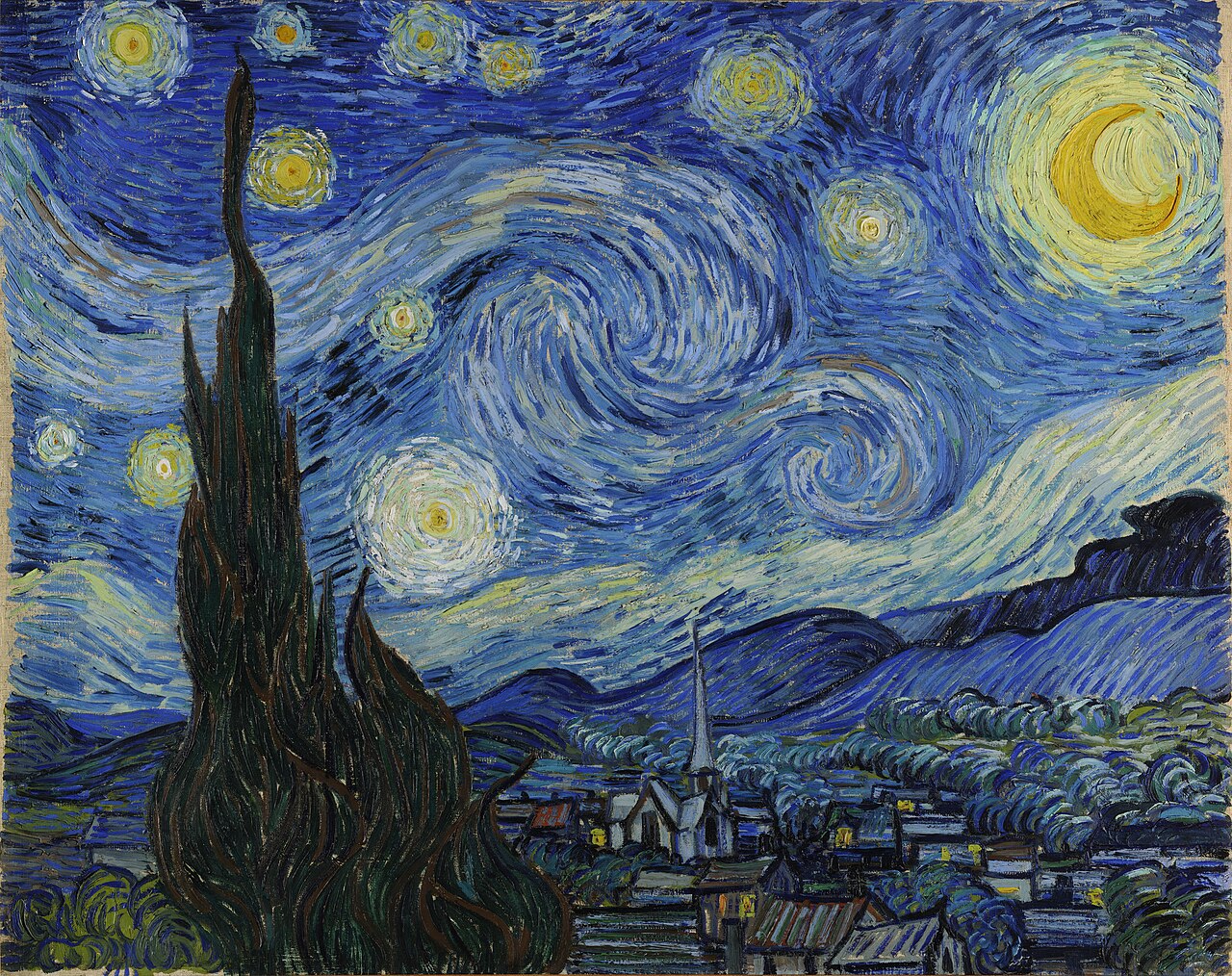
Painter, 1853 to 1890
Vincent van Gogh
The Starry Night is at the Museum of Modern Art. The Met, a short walk across the park, has Wheat Field with Cypresses, painted the same month, and a self-portrait in a straw hat.
Post-Impressionism. 5 works in 3 museums
See the artist
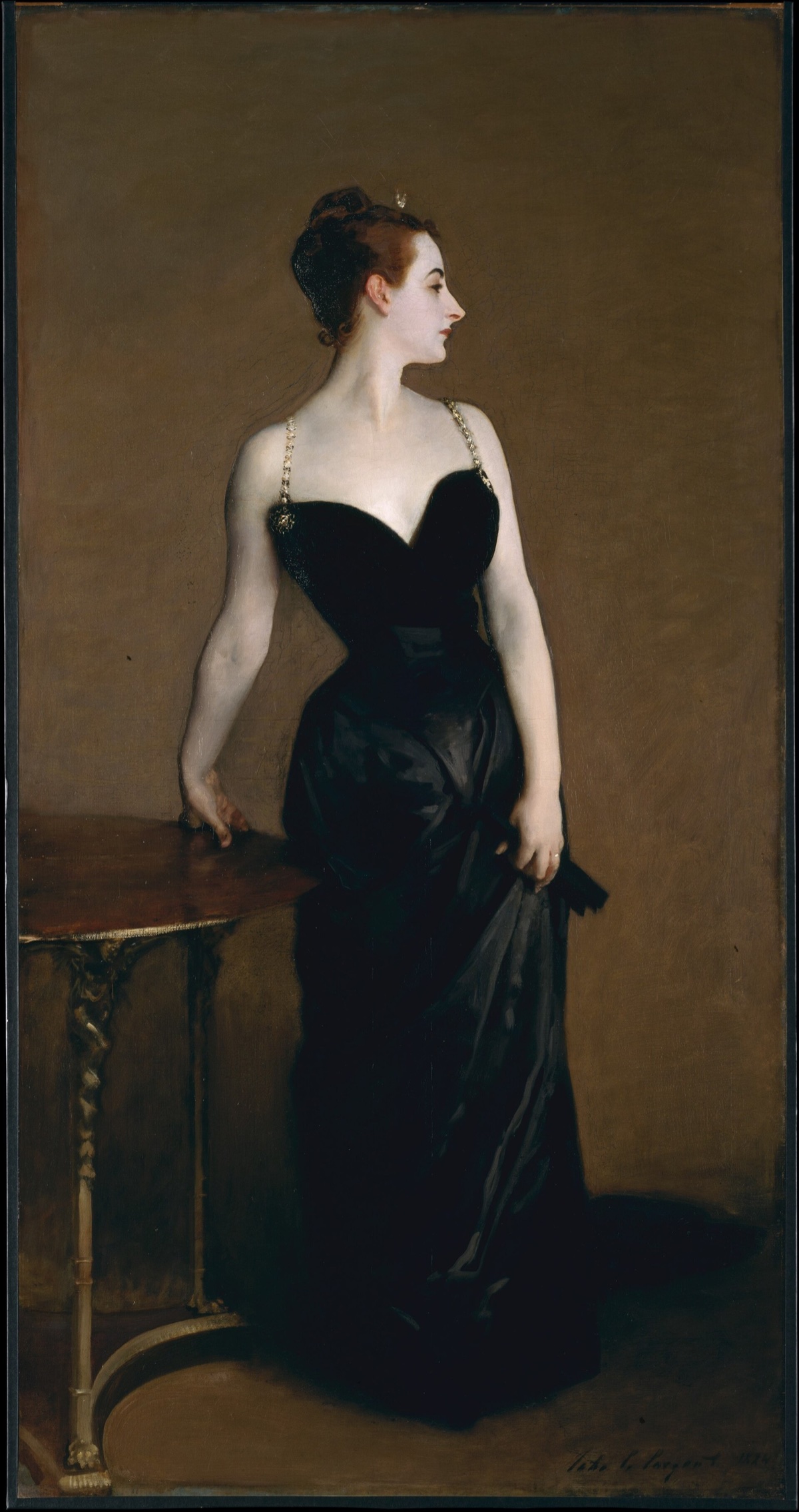
Painter, 1856 to 1925
John Singer Sargent
Madame X, the portrait that caused a scandal in Paris and drove Sargent to London, hangs in the American Wing of the Met. He sold it to the museum himself.
Realism. 3 works in 1 museum
See the artist