Painter, 1632 to 1675
Johannes Vermeer
No city has more Vermeers than New York. You can see nearly a quarter of everything he painted in a morning on Fifth Avenue, without leaving the edge of Central Park.
- Born
- 1632, Delft, Netherlands
- Died
- 1675, Delft, Netherlands
- Movement
- Dutch Golden Age
- In New York
- 8 works in 2 museums
Where to see Johannes Vermeer in New York
Each work with the museum it hangs in. Museums move and lend their works, so check before a special journey.
The Metropolitan Museum of Art5 works
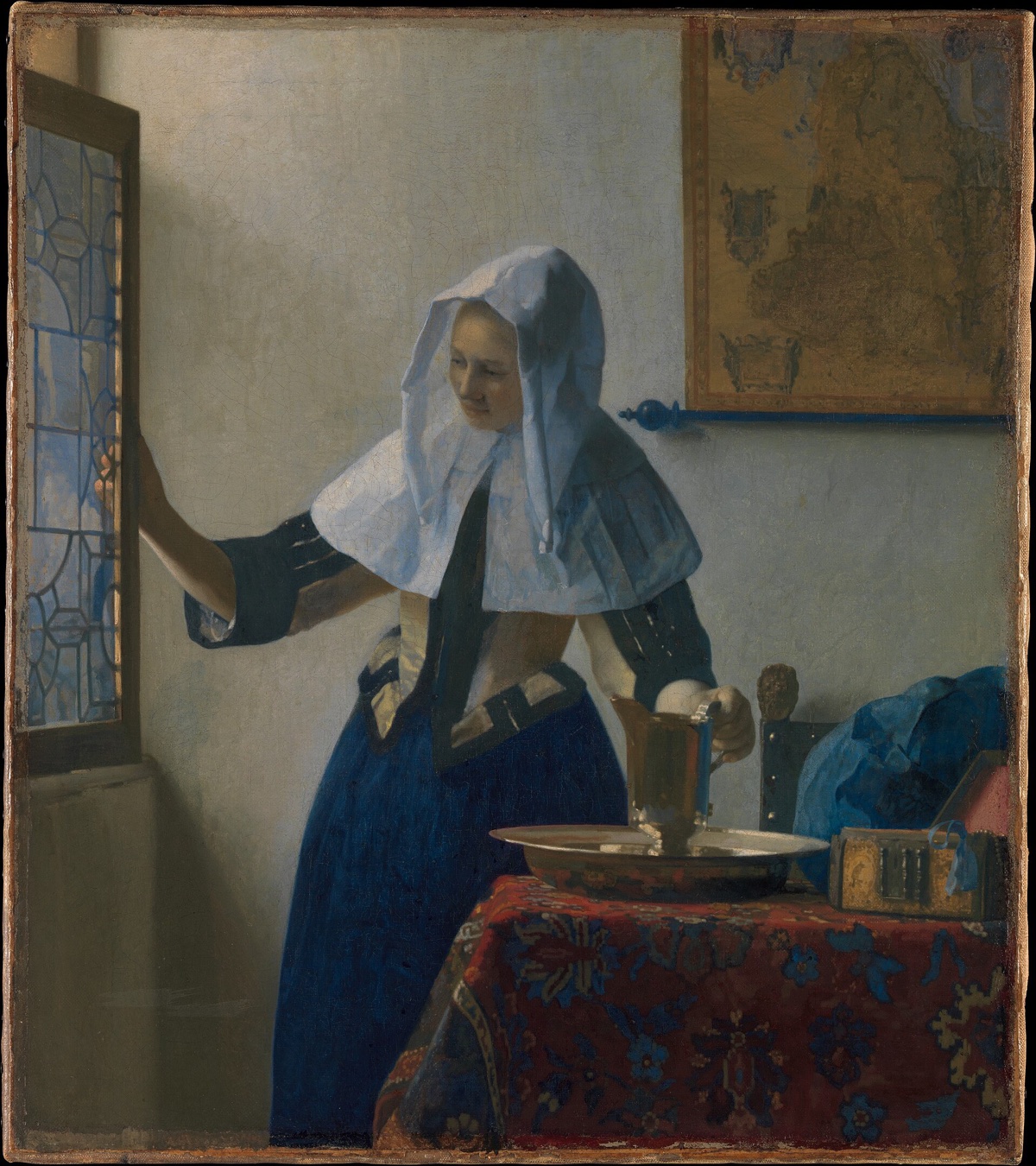
Young Woman with a Water Pitcher
about 1662
A woman in a white headdress opens a window with one hand and holds a silver jug with the other. Blue, white and the light of a morning: the whole of Vermeer in one small canvas.
A Maid Asleep
about 1656 to 1657
One of his earliest scenes of daily life: a servant dozing at a table with a jug of wine, and a door left open behind her.
Woman with a Lute
about 1662 to 1663
A young woman tunes a lute and looks out of the window, waiting for someone. A map of Europe hangs on the wall behind her.
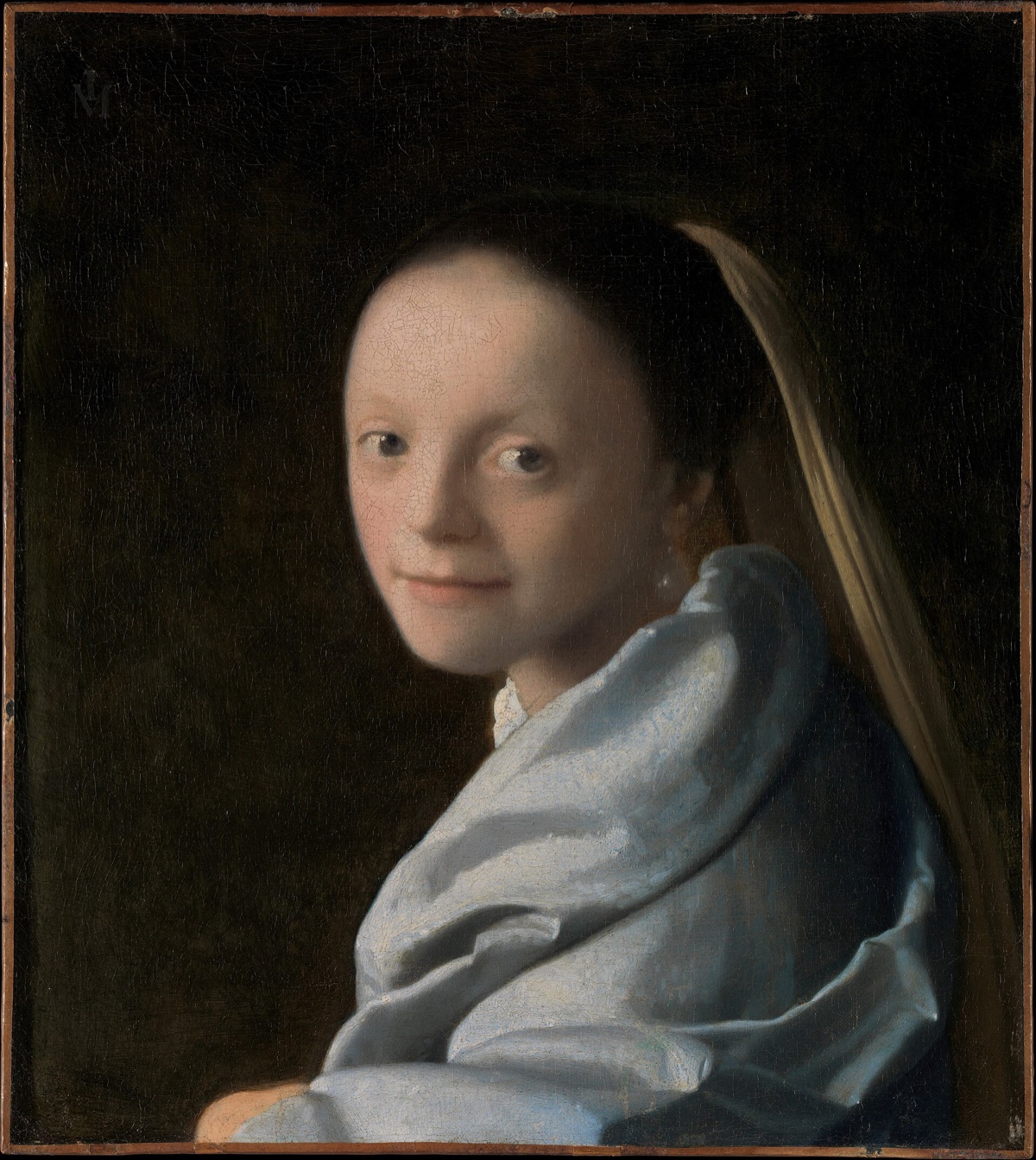
Study of a Young Woman
about 1665 to 1667
A girl with a wide, plain face turns to look at us over her shoulder, against black. It is the sister of the Girl with a Pearl Earring in The Hague.
Allegory of the Catholic Faith
about 1670 to 1672
A late and unusual work, painted for a Catholic patron: Faith as a woman in white and blue, her foot on a globe, in a Dutch room hung with a tapestry.
Frick Collection3 works
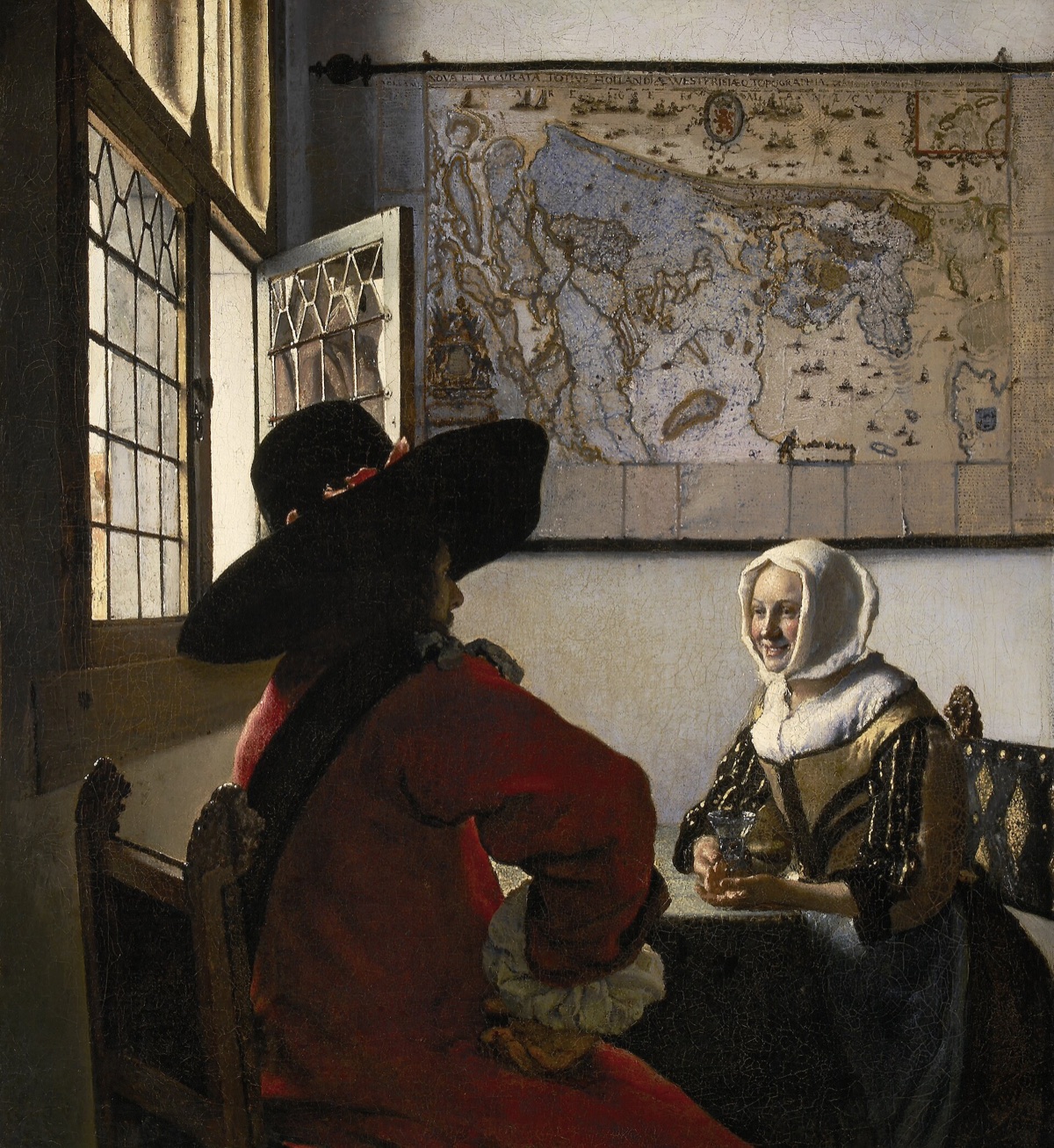
Officer and Laughing Girl
about 1657
A soldier in a great black hat, seen from behind and very close, and a girl smiling at him across a table in the sun.
Girl Interrupted at Her Music
about 1658 to 1659
A girl at a music lesson looks up from her sheet as if we had just come in.
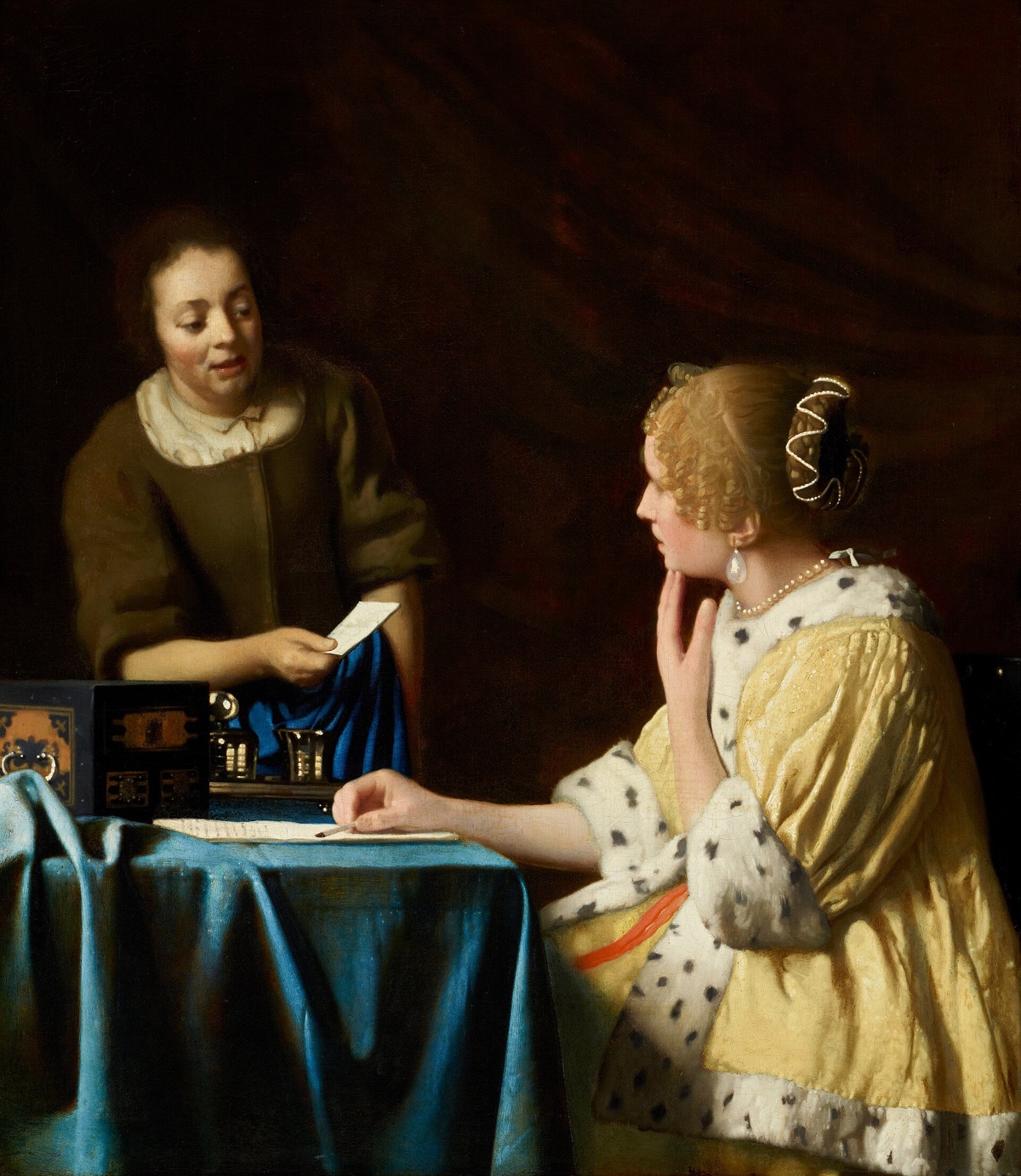
Mistress and Maid
about 1666 to 1667
A lady in a yellow jacket trimmed with fur is handed a letter by her maid. It was the last painting Henry Clay Frick bought.
The life of Johannes Vermeer
Johannes Vermeer was born in Delft in 1632 and died there in 1675, leaving a widow, eleven children and debts. He painted slowly, two or three pictures a year, most of them of one or two figures in the corner of a room with light falling from a window on the left. He was almost forgotten for two centuries.
His rediscovery in the 1860s came just as American fortunes were being made, and the new collectors bought what they could find. Henry Marquand gave the Met its first Vermeer in 1889. Henry Clay Frick bought three, the last of them, Mistress and Maid, in the year he died.
What to know
- Eight of his thirty-five or so paintings are in New York
- Young Woman with a Water Pitcher, at the Met, was the first Vermeer to reach America, in 1887
- Mistress and Maid, at the Frick, was the last painting its founder bought
- Born
- October 1632, Delft, Netherlands
- Died
- 15 December 1675, Delft, Netherlands
Johannes Vermeer: common questions
- Where can you see Johannes Vermeer in New York?
- At the Metropolitan Museum of Art: Young Woman with a Water Pitcher, A Maid Asleep, Woman with a Lute, Study of a Young Woman and Allegory of the Catholic Faith. At the Frick Collection: Officer and Laughing Girl, Girl Interrupted at Her Music and Mistress and Maid. Museums move and lend their works, so check before a special journey.
- What is Johannes Vermeer's most famous work in New York?
- Young Woman with a Water Pitcher, of about 1662, at the Metropolitan Museum of Art. A woman in a white headdress opens a window with one hand and holds a silver jug with the other. Blue, white and the light of a morning: the whole of Vermeer in one small canvas.
- When and where was Johannes Vermeer born?
- In October 1632, at Delft, Netherlands. Johannes Vermeer died on 15 December 1675, at Delft, Netherlands, aged about 43.
- What is Johannes Vermeer known for?
- Eight of his thirty-five or so paintings are in New York. Young Woman with a Water Pitcher, at the Met, was the first Vermeer to reach America, in 1887. Mistress and Maid, at the Frick, was the last painting its founder bought. Johannes Vermeer was a Dutch painter, of the Dutch Golden Age.
Tickets and tours: Johannes Vermeer in New York
Things to do near the Met
The nearest of this site's best things to do in the city. Distances are in a straight line.
- 13Walk down the spiral of the Guggenheim550 m awayMuseum, 1.5 to 2 hours, ticket
- 4Walk through Central Park900 m awayGarden, 2 to 4 hours, free
- 11Meet the dinosaurs at the Museum of Natural History950 m awayMuseum, 2.5 to 4 hours, ticket
- 18See the Frick's Vermeers in the house they were bought for1.0 km awayMuseum, 1.5 to 2 hours, ticket
Where to eat near the Met
The nearest of the famous tables this site lists in New York. Distances are in a straight line.
- Café Sabarsky4.3Viennese café, Inside the Neue Galerie300 m away
- Barney Greengrass4.4Appetizing shop and restaurant, Upper West Side1.4 km away
- Tavern on the Green4.4Restaurant in the park, Inside Central Park1.4 km away
- P.J. Clarke's4.5Saloon, Midtown East2.3 km away
Hotels near the Met
The five-star hotels closest to it, of those this site lists in New York. Distances are in a straight line.
- The Mark4.5Five-star hotel, Madison Avenue at 77th Street450 m away
- The Surrey4.4Five-star hotel, Madison Avenue at 76th Street550 m away
- The Pierre4.5Five-star hotel, Fifth Avenue at 61st Street1.7 km away
- The Sherry-Netherland4.6Five-star hotel, Fifth Avenue at 59th Street1.8 km away
Other artists
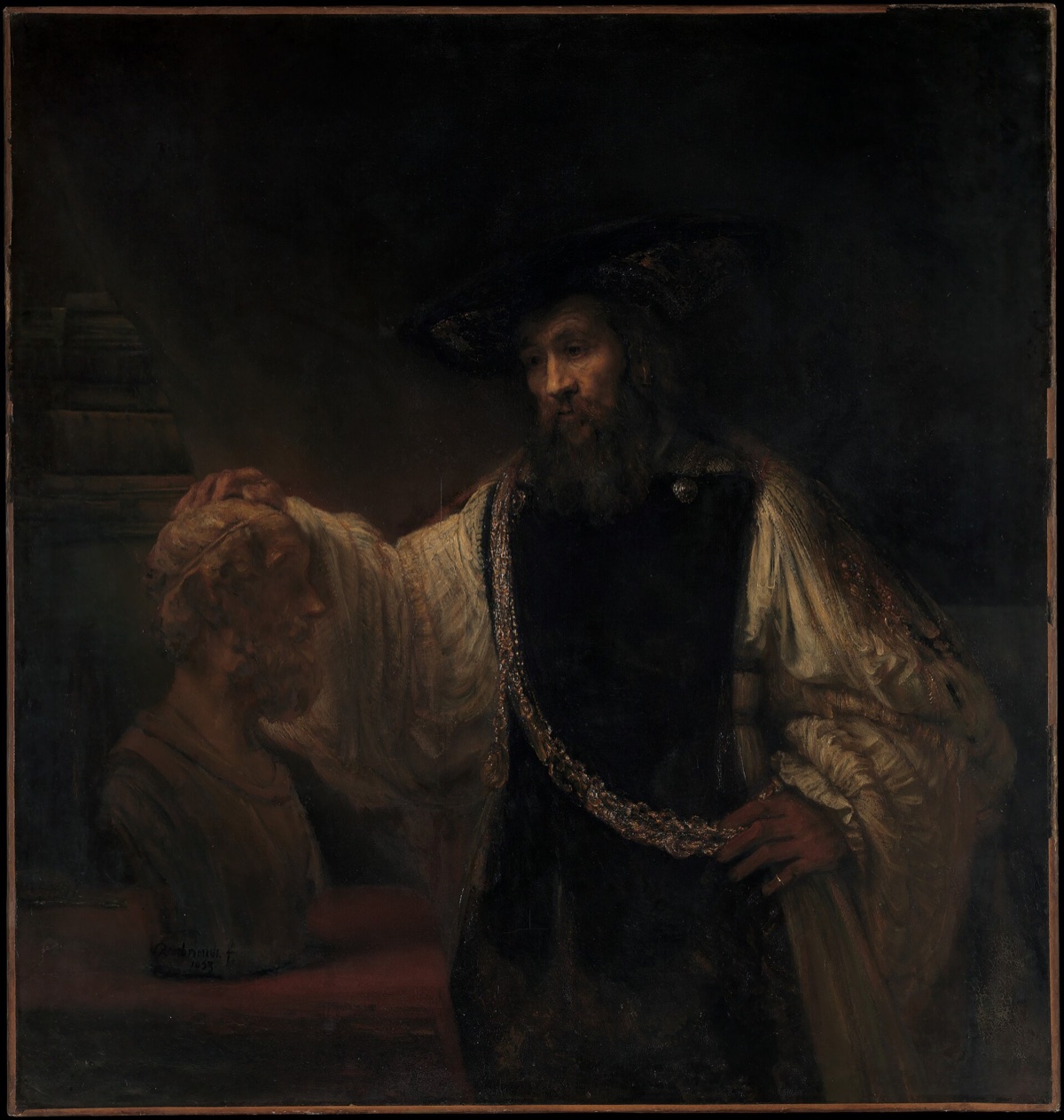
Painter, 1606 to 1669
Rembrandt
New York has two of Rembrandt's greatest late paintings a mile apart: Aristotle with a Bust of Homer at the Met and the self-portrait of 1658 at the Frick.
Dutch Golden Age. 4 works in 2 museums
See the artist
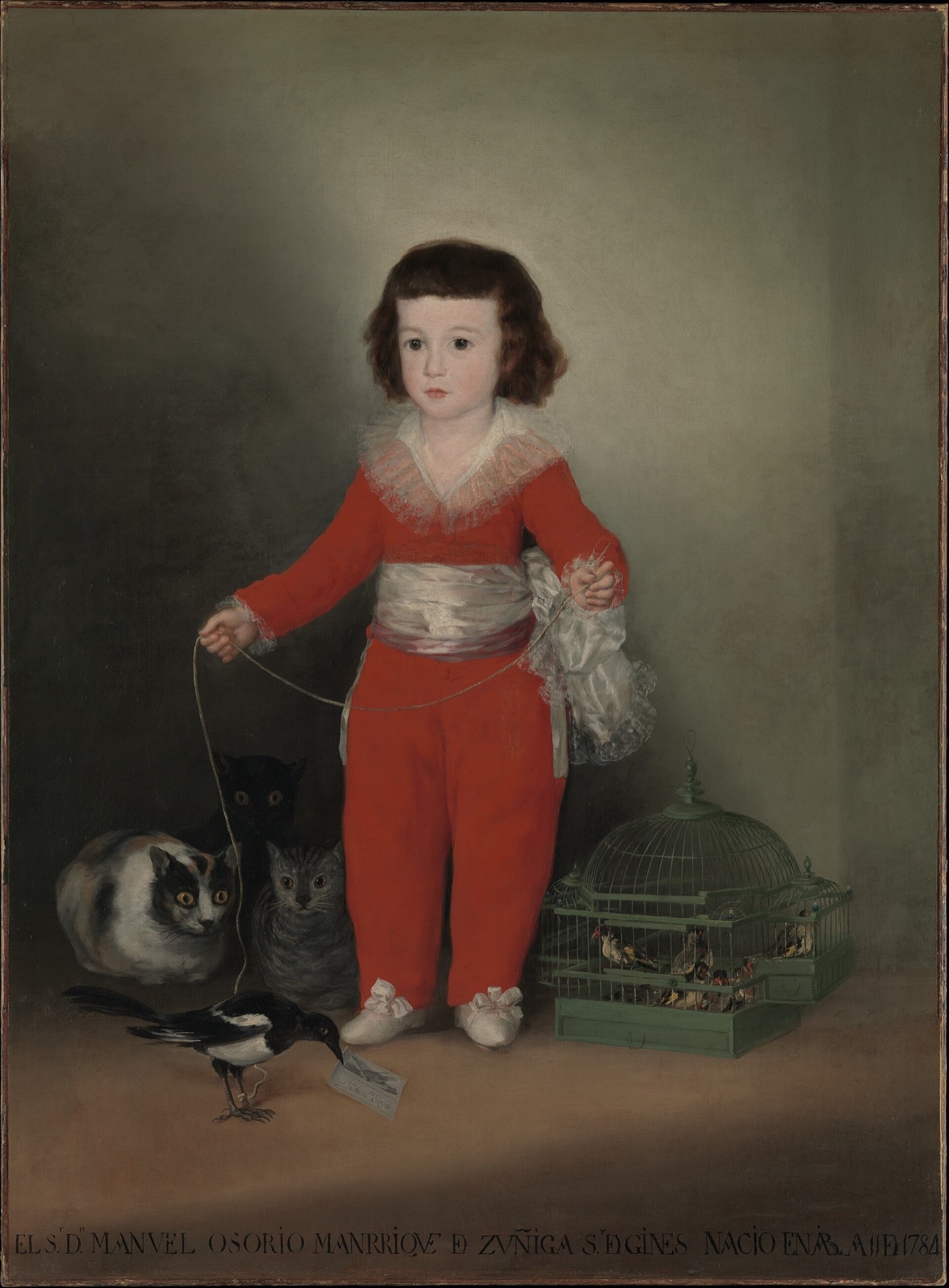
Painter, 1746 to 1828
Francisco Goya
The Met has Goya's portrait of a small boy in red with his pet magpie and three cats, one of the best-loved pictures in the museum. The Frick has The Forge.
Romanticism. 3 works in 2 museums
See the artist
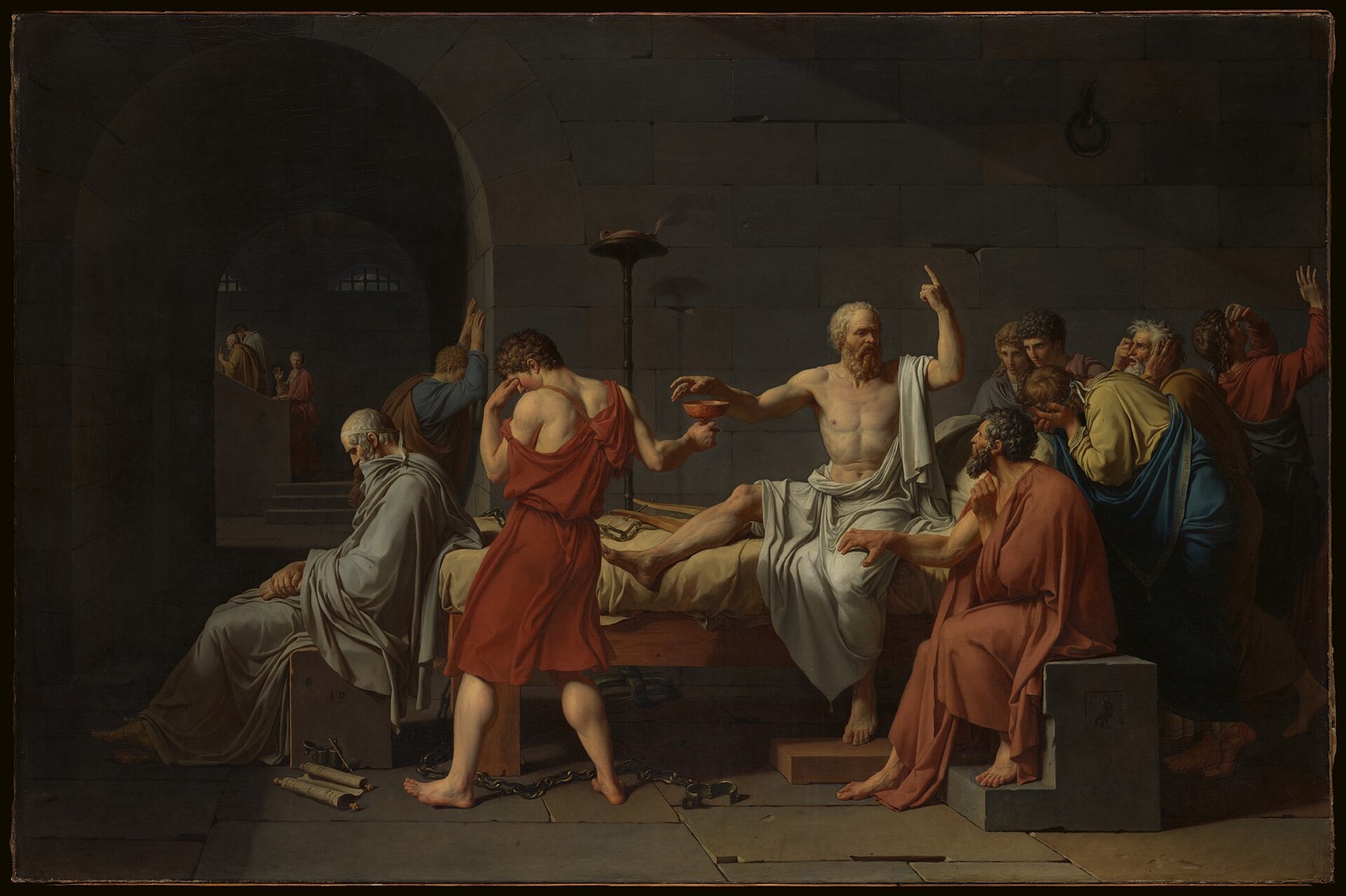
Painter, 1748 to 1825
Jacques-Louis David
The Met owns David's Death of Socrates, the picture that made Neoclassicism a moral cause, and his great double portrait of the chemist Lavoisier and his wife.
Neoclassicism. 2 works in 1 museum
See the artist